
Lieferung heute & morgen

Qualitätsgarantie

Willkommens-Angebote freischalten: KOSTENLOSE Lieferung | Bis zu 80 % RABATT | Kostenlose 30-Tage-JoyPlus-Testphase
App herunterladen
Anyone looking to buy vitamin supplements online will find a wide range of tablets, capsules, effervescent tablets and lozenges. However, the right choice depends on more than just claimed benefits or the number of nutrients included. Dosage, format, your personal diet and possible interactions are all important considerations.
Figures such as 600 mg of vitamin C, 4,000 I.U. of vitamin D3 or high NRV percentages can look convincing at first glance. However, the NRV, or Nutrient Reference Value, is primarily intended as a guide to the daily reference amount for healthy adults. It is not a personalised dosing plan.
Several products containing vitamin D3 tablets, zinc, iodine or selenium should not be combined without proper consideration. If you already use a multivitamin, compare its nutrient quantities with those of any additional individual supplements.
One product may contain ten vitamins, while another may also provide minerals and trace elements. The name alone says little about the actual composition. For example, according to the product information, SUNLIFE Multivitamin Effervescent Tablets provide ten vitamins, each at 100% NRV per tablet, but do not contain an extensive combination of minerals.
If you are specifically looking for vitamin C supplements, vitamin B12 or vitamin D, check the nutritional information rather than just the front of the packaging.
Effervescent tablets are convenient, but they require water and often contain sweeteners, acidifying agents or sodium compounds. Capsules are easy to take on the go, but may contain gelatine or soya. For vegan consumers, details such as vegan, gelatine-free and the capsule shell are relevant.
Terms such as “gluten-free” or “lactose-free” should also be stated clearly in the product information wherever possible. An ingredients list without declared allergens does not automatically mean that a product is suitable for every individual intolerance.
Always compare the recommended daily serving. For some supplements, this is one tablet; for others, it may be two capsules or a weekly serving. Important details include:
Vitamin C and zinc are a good example of a clearly stated combination: according to the product description, WeightWorld’s product contains 1,000 mg of vitamin C and zinc citrate per daily serving, and is vegan, gluten-free and lactose-free. With dosages of this kind, any additional source of vitamin C should be considered particularly carefully.
With a vegan or vegetarian diet, choosing individual nutrients may be important. Vitamin B12 is found naturally mainly in animal-based foods, so a B12 supplement may be worth considering for some people. This does not mean that every product containing B12 is suitable for every requirement.
The following details are useful for specific preferences:
Iodine and selenium are often associated with normal thyroid function. According to the product information, the taxofit supplement contains 150 µg of iodine and 55 µg of selenium per tablet, each providing 100% NRV, and is intended for adults. The warnings explicitly state that it should not be taken in cases of hyperthyroidism.
Dosages vary considerably between vitamin D3 products. SUNLIFE Vitamin D3 Weekly Depot is designed as a weekly serving and, according to the product information, must not be taken more often than once every seven days. Another product contains 4,000 I.U. of vitamin D3 per daily microtablet. High-dose supplements of this kind should only be used according to the label and, where appropriate, after consulting a healthcare professional.
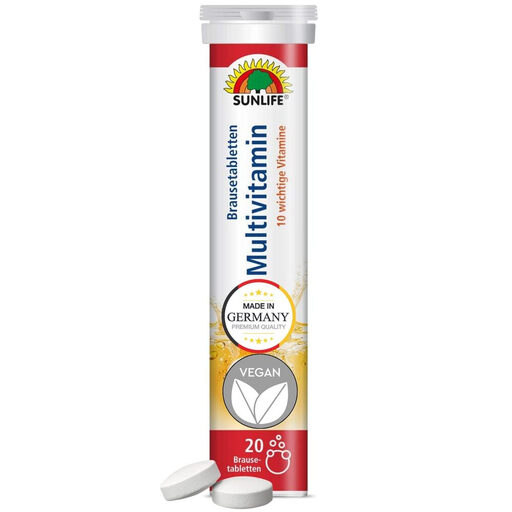
Why this product suits this profile: This effervescent tablet is suitable for adults who prefer a simple daily multivitamin routine with an orange flavour.
The nutritional information lists ten vitamins individually, with each providing 100% NRV per tablet. This makes the composition easy to check.
Gluten-free and lactose-free, made in Germany, and dissolves quickly in 200 ml of water.

Why this product suits this profile: The A-Z formula is designed for adults who want to combine vitamins and minerals in a single effervescent tablet.
The product data lists 21 vitamins and minerals, together with the quantities per tablet. This means the choice is not based solely on the term “multivitamin”.
Contains vitamin D, calcium, magnesium, zinc, selenium and iodine, among other nutrients; one tablet is dissolved in 200 ml of water.
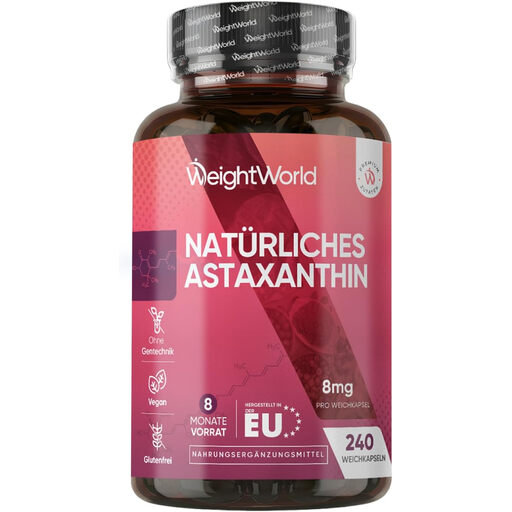
Why this product suits this profile: This pack is aimed at adults who use astaxanthin as an individual supplement and prefer a larger pack size.
The product information states the amount of 8 mg per softgel, the source from Haematococcus-pluvialis microalgae and the recommended daily intake.
Vegan and gluten-free, with 240 softgels for daily use; free from magnesium stearate according to the product description.
We have put together a complete, regularly updated list of products that fully meet these strict selection criteria and the safety regulations applicable in the EU.
The best-before date can be found on the packaging. Store tablets and capsules according to the manufacturer’s instructions, usually in a dry place, protected from light and below 25 °C. Opened effervescent tablets should be resealed tightly, as moisture can affect their quality.
There is no one-size-fits-all answer. Your requirements and dosage depend on factors including your diet, age, exposure to sunlight and state of health. A balanced diet remains the foundation. If you have a diagnosed deficiency, are pregnant, take medication or are receiving medical treatment, discuss your choice with a healthcare professional.
A higher amount is not automatically more suitable. With vitamin D3, zinc, iodine and selenium, unnecessary combined intake can be problematic. Pay attention to the daily serving, warnings and how the product combines with supplements you already use.