
Lieferung heute & morgen

Qualitätsgarantie

Willkommens-Angebote freischalten: KOSTENLOSE Lieferung | Bis zu 80 % RABATT | Kostenlose 30-Tage-JoyPlus-Testphase
App herunterladen
Finding the right vlogging camera can quickly become overwhelming. The market is saturated with technical specs, marketing promises, and a multitude of models all claiming to be the ideal choice. However, these exaggerated claims often lead to disappointment and poor purchasing decisions. Many beginners invest in equipment that fails to meet their needs or quickly becomes unusable due to hidden defects.
This guide will help you navigate the common pitfalls. We'll focus on the objective criteria that truly matter and show you how to find a camera that aligns with your goals as a content creator.
The 3 Most Common Traps When Buying a Camera:
To make an informed decision, you should focus on the technical parameters that directly impact the quality and usability of your footage.
Image quality depends heavily on the size of the image sensor. A larger sensor can capture more light, resulting in less noise and more detailed images. A 4K camera is now the standard for creating content for platforms like YouTube. Ensure the camera records in true 4K (3840 x 2160 pixels) at a frame rate of at least 30 frames per second (fps). Higher frame rates (60 fps or 120 fps) allow for smooth slow-motion shots. A basic digital camera for beginners should meet these fundamental requirements to be future-proof.
For vlogs where you're often on the move, effective image stabilisation is indispensable. There are several technologies:
For dynamic shots, gyro-based or optical stabilisation is preferable to basic EIS.
A good camera for YouTube is defined by its user-friendliness. A front-facing flip or articulating screen is crucial for framing yourself while recording. A 3.5mm microphone jack is equally important, as built-in camera microphones rarely deliver satisfactory audio quality. Other useful features include a USB-C port for fast charging and data transfer, and a reliable Wi-Fi function for app-based control.
Based on the criteria above, we have identified several models that are well-suited for different user profiles.
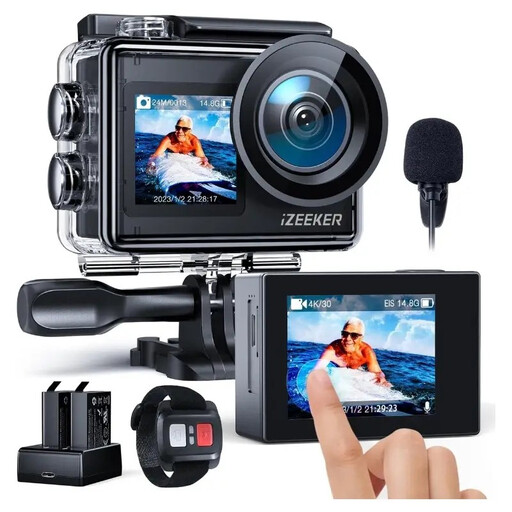
Why this model is a good fit: Ideal for beginners looking for a complete package without having to immediately invest in expensive accessories. The camera is easy to use and covers the basic requirements for vlogging and action shots.
This model avoids the hidden costs trap, as an extensive accessory kit—including a waterproof case, remote control, and various mounts—is already included in the box.
Offers 4K video at 30 fps, a front display for selfies and vlogs, and a port for an external microphone to improve audio quality.
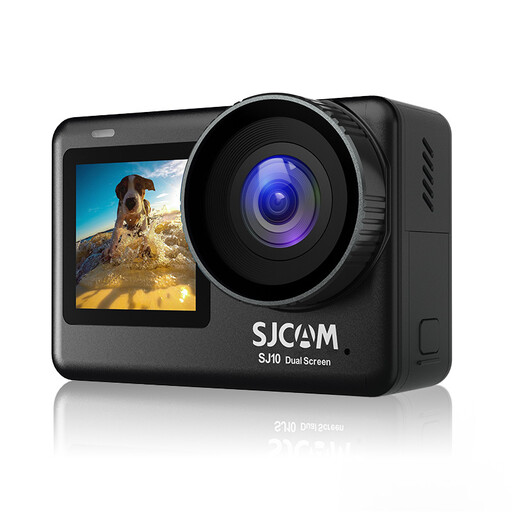
Why this model is a good fit: Designed for users who need a robust and powerful waterproof camera for travel and sports. It is waterproof up to 5 metres without an additional case and delivers stable footage even during fast movements.
This model avoids the inadequate stabilisation trap by featuring advanced 6-axis gyro stabilisation. This ensures significantly smoother videos than basic EIS, which is crucial for action shots.
Records in 4K at up to 60 fps, features a dual-screen design for easy framing, and supports external microphones for enhanced audio quality.
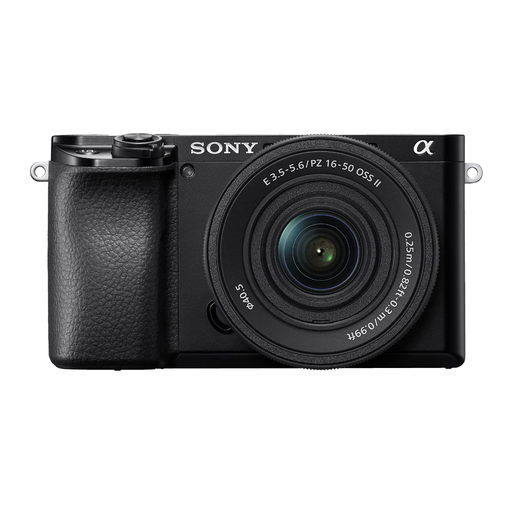
Why this model is a good fit: For vloggers aiming for higher image quality and more creative control. The ability to change lenses offers flexibility for various shooting scenarios, from wide-angle vlogs to portraits with a blurred background.
This model debunks the megapixel myth. Despite its 24.2 MP, the large APS-C sensor delivers image quality that surpasses many compact cameras with a nominally higher resolution, especially in low light.
Outstanding autofocus with eye detection for humans and animals, 4K video recording, and a tilting screen that is ideal for vlogging.
We have compiled a complete, up-to-date list of products that fully meet these strict selection criteria and quality standards.
While 1080p (Full HD) is sufficient for getting started, a 4K camera offers significant advantages. It provides more flexibility in post-production, as you can zoom in and reframe your shot without losing quality. Furthermore, your content will be future-proof, as 4K monitors and TVs become more widespread. For a camera for YouTube, 4K is therefore a recommended investment.
Optical zoom physically changes the lens's focal length to magnify a subject without any loss of quality. Digital zoom, on the other hand, simply enlarges a portion of the already captured image, which inevitably leads to lower resolution and visible pixels. Many compact cameras advertise a high digital zoom, but in practice, it is barely usable. For sharp close-ups, optical zoom is always the better choice.
An external microphone jack is critically important for high-quality vlogging. The microphones built into cameras often pick up ambient noise and handling sounds, which severely compromises audio quality. An external port allows you to use a shotgun or lavalier microphone that will record your voice clearly and distinctly. For audience retention, good audio is at least as important as good video quality.