
Lieferung heute & morgen

Qualitätsgarantie

Willkommens-Angebote freischalten: KOSTENLOSE Lieferung | Bis zu 80 % RABATT | Kostenlose 30-Tage-JoyPlus-Testphase
App herunterladen
Whether you are creating a travel video, livestream, family film or short TikTok clip, a vlogging camera and smartphone gimbal can make recording much easier. However, technical buzzwords do not automatically guarantee the right results. What matters is whether the device, smartphone, app and intended use are compatible.
The term 4K initially describes resolution only. For smooth movement, frame rate, stabilisation, autofocus and lighting conditions are also important. A 4K vlogging camera can still produce visible noise in low light. 4K/240fps is not always available for standard recording either: according to the product information, the Osmo Pocket 4 supports this frame rate only in slow-motion mode.
A smartphone gimbal with tracking may require a specific app, Bluetooth connection or compatible operating system, depending on the model. Features such as face tracking, gesture control and automatic framing may be limited if an app is not supported. The Insta360 Flow 2 Pro is advertised as offering native tracking in over 200 compatible iOS apps; availability nevertheless depends on the iPhone being used and the individual app.
A compact selfie stick with gimbal is easy to carry, but often has less room for a large battery. If you are planning long hikes, events or livestreams, check the battery life and charging time. The hohem smartphone gimbal with OLED display, for example, is advertised with up to 18 hours of battery life and a capacity of 2,600 mAh. Other models can be used for considerably less time, but may be lighter or more compact.
3-axis stabilisation compensates for movement in several directions. This is particularly useful when walking, panning or filming handheld. With smartphone gimbals, the phone must be secured correctly and the permitted weight must be observed. According to the product information, the hohem gimbal is designed for a maximum payload of 400 g. Accessories such as cases, additional lenses or microphones count towards the total weight.
A pocket gimbal camera such as the DJI Osmo Pocket 3 or Osmo Pocket 4, on the other hand, has its own camera unit with mechanical stabilisation. This reduces dependence on the smartphone battery and a separate camera app.
For indoor scenes, evening shots and backlit subjects, sensor size and lens aperture are important points of reference. The DJI Osmo Pocket 3 and several Osmo Pocket 4 variants are described as featuring a 1-inch CMOS sensor. The Osmo Pocket 4P is additionally specified with a 20 mm wide-angle lens with an f/2.0 aperture and a dynamic range of 17 stops.
The frame rate should suit the intended use:
Before buying, check the smartphone’s width, weight, operating system and available connections. Mounting options are also important: an integrated tripod, extension pole or 1/4-inch thread can make additional mounts unnecessary.
Gimbals are generally not designed for heavy rain or submersion. A stated protection rating such as IPX5 means protection against splashing water under certain conditions, not complete waterproofing. Lithium batteries should only be charged with suitable power adapters and must not be opened or exposed to high heat.
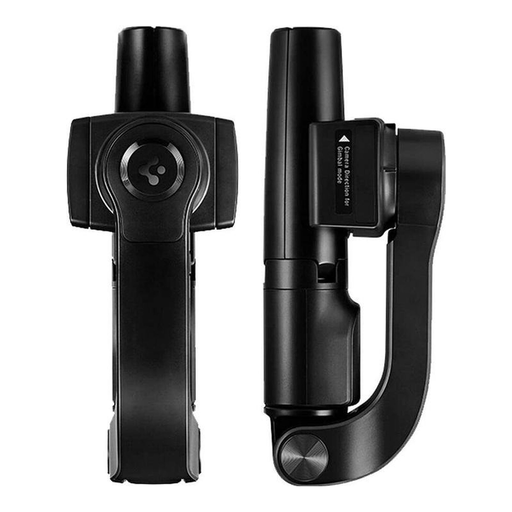
Why this product suits this profile: This compact smartphone gimbal combines selfie stick, tripod and Bluetooth functions. Weighing 220 g, it is suitable for getting started with iOS or Android smartphones.
The technical specifications state compatibility, weight and maximum length, making it easier to assess the actual transport and storage requirements before buying.
220 g weight, Bluetooth remote shutter and integrated tripod function.
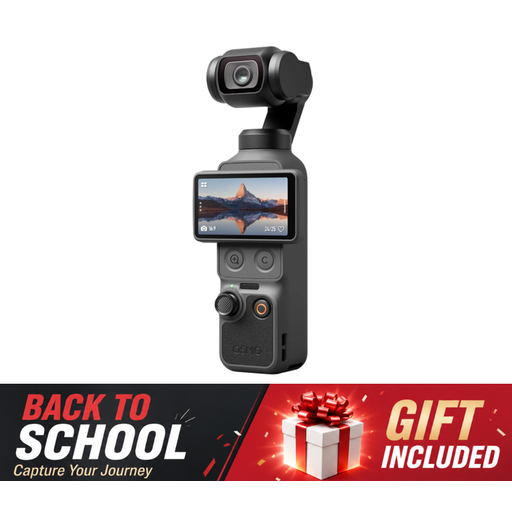
Why this product suits this profile: This pocket gimbal camera is aimed at users looking for a standalone travel vlogging camera with a 1-inch CMOS sensor, 2-inch rotating screen and integrated stabilisation.
The product specifications distinguish between standard 4K recording and 4K/240fps in slow-motion mode. This makes it easier to assess the advertised frame rate realistically.
1-inch sensor, 20 mm f/2.0 wide-angle lens and 4K video resolution with 3-axis stabilisation.
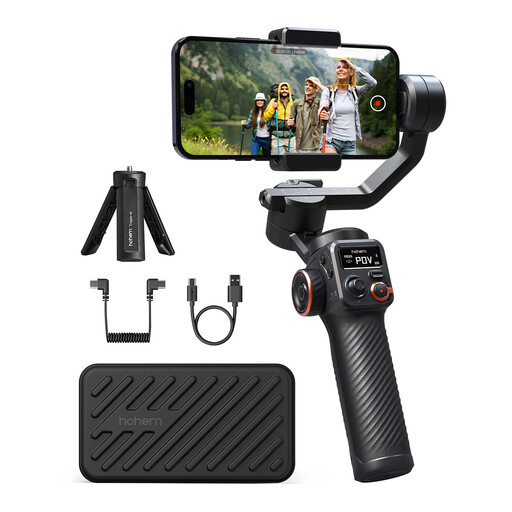
Why this product suits this profile: For long shooting days, livestreams and mobile recording, this model offers an advertised battery life of up to 18 hours, an OLED display and a maximum payload of 400 g.
The payload and IPX5 splash-resistance limit are clearly stated. This helps prevent overloading and unsuitable use in heavy rain.
OLED status display, 3-axis design, up to 18 hours of battery life and reverse charging.
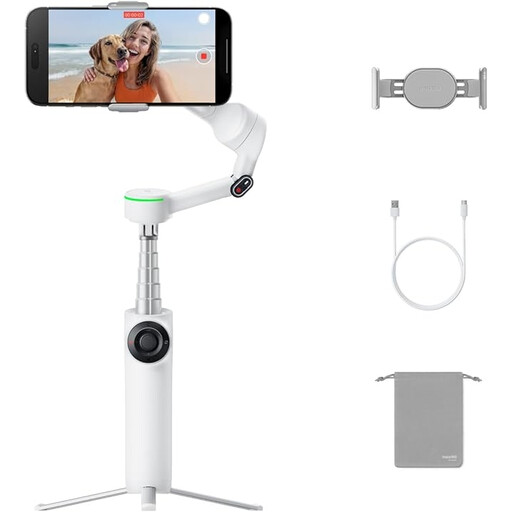
Why this product suits this profile: This foldable AI-tracking gimbal combines smartphone recording, an integrated tripod and a selfie stick. The specifications mention multi-person tracking, 360-degree panning and up to 10 hours of battery life.
Compatibility with Apple DockKit and iOS models is explicitly stated. Before buying, check whether your smartphone and preferred app are supported.
3-axis stabilisation, integrated tripod, selfie stick and multi-person tracking.
We have put together a complete, regularly updated list of products that fully meet these strict selection criteria and the safety regulations applicable in the EU.
A smartphone gimbal is often the easier way to get started if you already have a suitable smartphone. A standalone vlogging camera, on the other hand, provides a separate recording platform and, depending on the model, may offer advantages in terms of sensor size, stabilisation and handling.
Battery life depends on the battery, motor load, smartphone weight and tracking usage. Depending on the model, product specifications range from around 80 minutes to up to 18 hours. For longer sessions, consider charging time, the USB-C connection and, where necessary, a power bank.
Not every model works in the same way. Some gimbals use Bluetooth and the smartphone’s camera app, while others require a manufacturer app for tracking, gesture control or special effects. Before ordering, compare the operating system, smartphone model and apps you want to use.