Who are these devices for?

Learners doing short repetition exercises

If you record short sentences and want to compare your pronunciation or pace straight away, check the playback features of the specific device. Sony lists A/B repeat and speed control for the ICD-UX570; OM SYSTEM describes a Shadowing playback function for the WS-883.

Learners in booths with challenging acoustics

If clear recordings at your actual speaking position matter to you, check the setup and microphone distance with a test recording. Zoom warns that reflections may occur when the H1essential is placed directly on a table; Shure explains that a microphone cannot later separate recorded room reverberation from direct sound.

Teachers managing lots of practice files

If you create several recordings, you’ll need a storage option that suits you and a straightforward way to transfer files to a computer. OM SYSTEM lists internal storage for the WS-883, while Tascam specifies a USB-C interface function for the DR-05XP. Check the connection and transfer method for the specific model too.

What should you look for when buying?

Compact voice recorder

A good fit if: you want to listen back to short passages and repeat them often. OM SYSTEM lists Shadowing playback for the WS-883; Sony lists A/B repeat and speed control for the ICD-UX570.

Bear in mind: A compact design or voice function doesn’t prove that a recording made from further away will be clear enough in your booth.

Handheld audio recorder

A good fit if: you want to adjust the microphone position, connect a suitable external microphone or work with passages recorded at different volumes. For certain models, Zoom and Tascam list features including external microphone inputs and 32-bit float recording.

Bear in mind: Depending on the model, you may need to prepare a storage medium and power supply. Extra recording options won’t eliminate reverberation or compensate for poor microphone positioning.

Priority What to check when buying Who is this important to?
Clear recording Test the sound at your usual speaking position and compare stable microphone positions. If I mainly want to hear my voice clearly in the booth, I’ll listen for reverberation and background noise in a test recording. Around 31% of consumers put clarity first.
Repeating passages Check that the repeat and playback speed functions suit your exercises. If I want to listen to individual sentences and repeat them straight away, the controls should be easy to use. Around 31% of consumers prioritise being able to repeat short passages selectively.
Storing and transferring files Compare the storage type, recording format, computer connection and what’s included. If I save lots of practice files, I want to be able to find them again and transfer them the way I prefer. Around 19% of consumers say file storage is their main priority.
Varying volume levels Listen back to quiet and emphasised sections of a test recording and check whether you’ll need to edit it later. If I record both quiet articulation and strong emphasis in an exercise, I want to know whether I can edit the file afterwards to suit my needs. Around 19% of consumers prioritise this flexibility.

Common misconceptions

  • 32-bit float or a noise filter will solve every acoustic problem

    A recording format won’t remove room reverberation from a voice after the fact. A microphone can’t simply separate direct sound from reverberation that has already been recorded.

    Make a test recording in the intended spot. If the sound isn’t right, try a different setup or a suitable microphone positioned closer to you.

  • Handheld recorders always come ready to use with storage and power

    For the Zoom H1essential, you’ll need to allow for a compatible microSD card and a suitable power supply.

    Compare the requirements of the exact model with what’s included in the specific listing.

    Depending on the device, you may also need a compatible memory card or suitable power supply.

  • Transcription assesses pronunciation

    A written transcript serves a different purpose from listening to emphasis and sound formation in the original recording.

    If you want to practise your pronunciation, focus more on playback and the sound you can hear than on an advertised transcription feature.

Key brands at a glance

OM SYSTEM

The WS-883 combines a compact voice recorder with playback features that OM SYSTEM also recommends for language study.

  • OM SYSTEM lists Shadowing playback, a simple mode and 8 GB of internal storage.
  • These features don’t prove that recordings will be clearer in a particular booth. Information about connections and battery life varies between manufacturer pages, so check the details for the specific model.

Sony

The ICD-UX570 is a compact voice recorder with features for repeating and playing back recordings selectively.

  • Sony lists A/B repeat, speed control, Linear PCM/MP3 and 4 GB of internal storage.
  • A test by vergleich.org described voice recordings made with the ICD-UX570 as quiet and tinny under its test conditions. This isn’t a measurement for every booth.

Zoom

The H1essential is a handheld recorder offering flexible positioning and recording options for speech.

  • Zoom lists built-in X/Y microphones, a 3.5 mm microphone input and playback speed control.
  • You’ll need a compatible microSD card for recording. Neither the recording format nor the included features prevent room reverberation.

Tascam

The DR-05XP is a handheld option if you need an external input or USB audio interface function as well as built-in microphones.

  • Tascam lists 32-bit float recording, built-in omnidirectional microphones, an external input and a USB-C interface function.
  • These manufacturer specifications are no substitute for a suitable recording space or appropriate microphone positioning.

Philips

The VoiceTracer DVT4115 is an option for voice files, with internal storage and possible app features.

  • Philips lists 8 GB of internal storage and MP3 and PCM recording.
  • For pronunciation practice, listen to the original recording. An advertised transcription feature doesn’t prove phonetic accuracy.

Joybuy products for speaking practice

This selection includes voice recorders for short exercises, repeated listening and saving recordings, as well as devices with more advanced recording options.
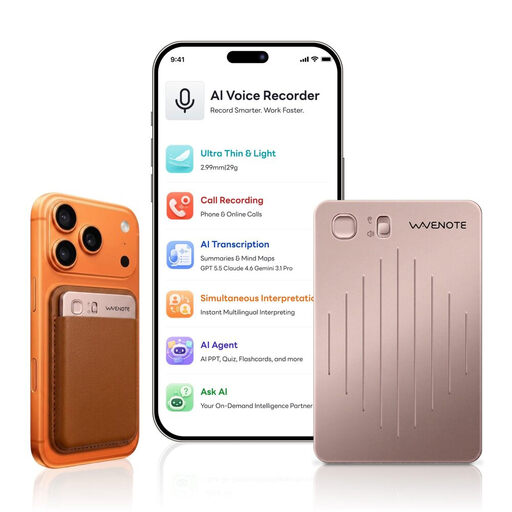
WaveNote AI Voice Recorder, 64 GB, rose gold

WaveNote AI Voice Recorder, 64 GB, Rose Gold

For speaking exercises where you want to save recordings and listen back to them later.

Features listed include 64 GB of storage, WAV recording and a physical slide switch for recording.

View at Joybuy
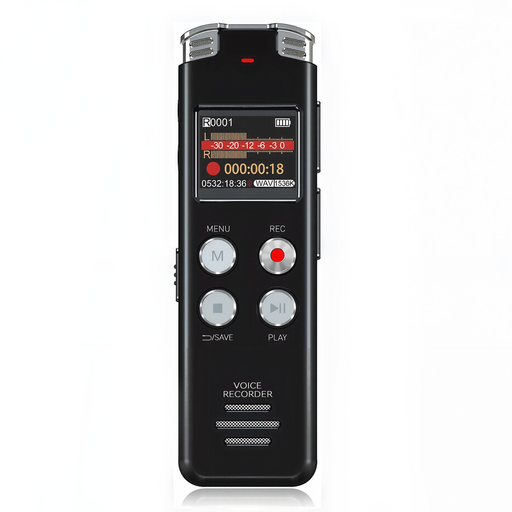
Rexsun L357 digital voice recorder, 128 GB

Rexsun L357 digital voice recorder, 128 GB

For short passages you want to repeat selectively and transfer as practice files.

Features listed include A-B repeat, MP3 and WAV recording, file timestamps and USB-C transfer. The description also lists one-button recording.

View at Joybuy
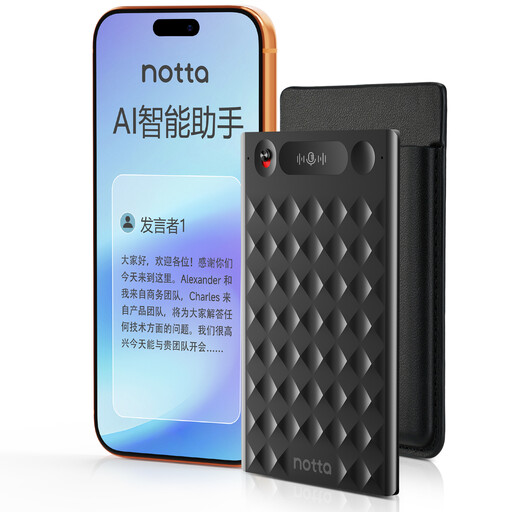
AI Voice Recorder with case, 32 GB

AI Voice Recorder with case, 32 GB

For recordings at your speaking position and file storage that, according to the description, can also be managed through an app.

Features listed include a 4-microphone array, one-button recording, Wi-Fi and Bluetooth connectivity, and 32 GB of storage. The description also lists a magnetic protective case.

View at Joybuy

Frequently asked questions

How should I set up a recorder in a small booth?

Start with a short test recording at your usual speaking position. Keep the microphone position steady to begin with, and listen for reflections, reverberation and background noise. Zoom advises against placing the H1essential directly on a table and suggests a tripod as one alternative.

Which memory card and power supply do I need for the Zoom H1essential?

Zoom specifies microSDHC cards from 4–32 GB or microSDXC cards from 64 GB–1 TB, and lists batteries or a suitable USB-C power supply. Before buying, check which accessories are included in the specific listing.

What should I bear in mind if other people can be heard in the booth?

Recording your own speaking practice is not legally the same as recording other people’s words. Under § 201 of the German Criminal Code (StGB), recording another person’s privately spoken words without authorisation is a criminal offence. So check that you’re authorised before making such a recording. If recordings containing personal data are then processed, you should also check the purpose and the appropriate legal basis under data protection law. The BfDI explains that consent is one possible legal basis, but not the only one.

Are a guarantee and statutory warranty the same thing?

No. The Verbraucherzentrale distinguishes between the statutory warranty provided by the seller and a voluntary guarantee. If a product is faulty, the first step may be to seek a repair or replacement. Keep the product description and any assurances given by the seller.