Which recorder is right for you?

Preserving one person’s stories

You want to record one particular person as clearly as possible despite the fan, and can attach a microphone close to them. Shure points out that a microphone placed further away cannot reliably separate speech from room echo.

Capturing conversations with different speakers

You want to listen to several people and be able to point the device towards each of them. Zoom lists built-in X/Y microphones for the H1essential and says the recorder can be used on a tripod; Tascam describes the DR-05XP as having built-in microphones.

Archiving memories with minimal fuss

You want to start recording, check it is working and transfer the files afterwards without delay. OM SYSTEM lists a Simple Mode and direct USB for the WS-883; Sony lists recording monitoring and internal memory for the ICD-UX570.

What matters when recording with a fan running?

Recorder with a lavalier microphone

A good fit if: One person is going to speak for a while and you can attach the microphone to their clothing. Zoom says the F2 comes with a lavalier microphone and clip.

Trade-off: If the speaker changes, you’ll need to reposition the microphone or use a different recording setup.

Compact voice recorder

A good fit if: A straightforward recording process, internal memory or direct file transfer matters more than attaching a specific microphone. OM SYSTEM describes these features, among others, for the WS-883.

Trade-off: A device placed further away will also pick up ambient sound. A low-cut filter does not guarantee that it will sufficiently reduce the noise from your particular fan.

Handheld stereo recorder

A good fit if: You want to point the device towards different speakers or capture the atmosphere as well. Zoom lists built-in X/Y microphones for the H1essential; Tascam says the DR-05XP also has an input for external microphones.

Trade-off: Built-in microphones won’t automatically separate voices from fan noise. Check the positioning and results with a listening test.

Buying criterion What to check before buying Who is it important for?
Clear recording of one voice Check whether you can use a lavalier microphone or position the recorder nearby and securely; listen to a test recording with the fan running. If I want to preserve one particular person’s story, it’s important to me that their voice is easy to understand despite the fan. Around 42% of consumers say this is their main priority in this situation.
Different speakers Test how easy the device is to handle and position with people actually taking turns to speak. If several people are going to speak, I want to be able to point the device in different directions. Around 25% of consumers prioritise capturing conversations with different speakers.
A straightforward recording process Check how to start and monitor a recording, as well as how to transfer it to your computer. If I want to spend as little time as possible adjusting settings during the gathering, an easy start, monitoring and transfer process matter. Around 17% of consumers prioritise a straightforward setup.
Longer recordings and archiving Check the recording format, storage medium, power supply and how you’ll back up the files afterwards. If I want to record longer conversations and save them for later, I’ll plan for storage and power too. Around 16% of consumers prioritise longer recordings and archiving.

Common buying misconceptions

  • Assuming a noise-reduction feature will remove all fan noise

    A low-cut filter targets certain frequencies. What’s more, a microphone placed further away cannot reliably separate speech from the sound of the room.

    Position the microphone as close as possible to the person speaking, and listen to a test recording with the fan running before recording a longer story.

  • Choosing a lavalier recorder without a plan for speaker changes

    A clip-on microphone is attached to one person. A handheld recorder is easier to point towards different speakers, but it will also pick up ambient sound.

    Think in advance about whether one person or several people taking turns will be the focus.

    If the speakers change, you may need to keep moving the microphone or repositioning it.

  • Working out recording time from storage capacity alone

    How long you can record also depends on the recording format, storage and power supply. Recording times for different formats are not directly comparable.

    Check the recording mode you want and test a longer recording with the power supply you plan to use.

    Depending on the device and your plans, you may need a suitable memory card or an additional power supply.

Key brands and their recorders

Zoom

Zoom’s F2 is an option for recording with a lavalier microphone, while the H1essential is a handheld recorder with built-in X/Y microphones.

  • Zoom says the F2 comes with a lavalier microphone and offers 32-bit float; the H1essential is described as offering stereo recording and tripod use.
  • These manufacturer’s specifications do not prove that fan noise will disappear from a recording. With the F2, changing speakers is less straightforward.

Tascam

The DR-05XP is a handheld stereo recorder for conversations, with built-in microphones or the option to connect external ones.

  • Tascam lists built-in microphones, an input for external microphones, a low-cut filter and 32-bit float.
  • The manufacturer’s specifications do not prove that the low-cut filter will completely remove noise from your particular fan.

OM SYSTEM

The WS-883 is aimed at anyone looking for a voice recorder with a simple operating mode, internal memory and direct USB.

  • OM SYSTEM describes its Simple Mode and a low-cut filter for low-frequency noise below 300 Hz.
  • The feature description does not guarantee that the filter will be effective enough for every fan or across all audible frequencies.

Sony

The ICD-UX570 is a compact voice recorder with internal memory and recording monitoring.

  • Sony lists 4 GB of internal memory and PCM and MP3 recording.
  • Without a listening test at the recording location, the Clear Voice function does not prove that fan noise will disappear from a recording.

Philips

The VoiceTracer DVT4115 is a voice recorder option with internal memory and stereo recording formats.

  • Philips lists 8 GB of internal memory, PCM and MP3 recording, and USB-C charging.
  • The manufacturer’s claims about sound quality are not an independent comparison made with a fan running.

Joybuy products for recording conversations

The Joybuy products below are compact voice recorders for conversations and capturing memories. If you’re recording with a fan running, a listening test at the actual recording location is still essential.
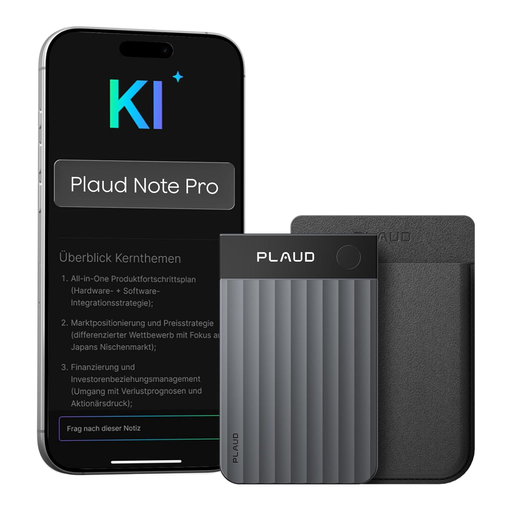
PLAUD Note Pro voice recorder, 64 GB

PLAUD Note Pro, 64 GB

This compact voice recorder could be suitable for longer conversations. The only way to find out whether voices remain clear with fan noise is to test it at the recording location.

Features listed include 64 GB of storage, up to 30 hours of recording time, four MEMS microphones, USB-C and app connectivity. The product title lists Android and iOS as compatible systems.

View at Joybuy
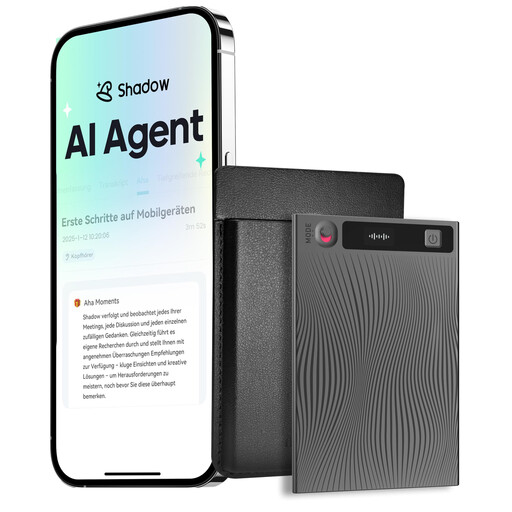
Mobvoi TicNote Standard voice recorder, 64 GB

Mobvoi TicNote Standard, 64 GB

This voice recorder could be suitable for recording conversations. Test it at the venue to check how clearly it captures speech with fan noise in the background.

The product title lists 64 GB, a three-microphone array, up to 20 hours of recording time, Wi-Fi and Bluetooth.

View at Joybuy
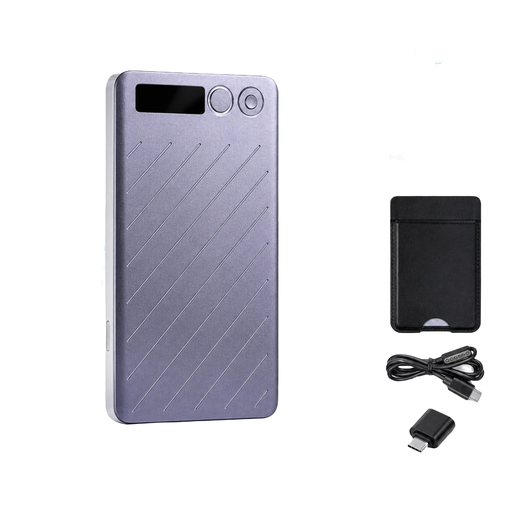
Digital voice recorder with 64 GB and transcription function

Digital voice recorder, 64 GB

This model could be suitable for recording conversations and interviews. A transcription function does not tell you how clearly it will capture voices with a fan running.

The title lists 64 GB of storage and a transcription function.

View at Joybuy
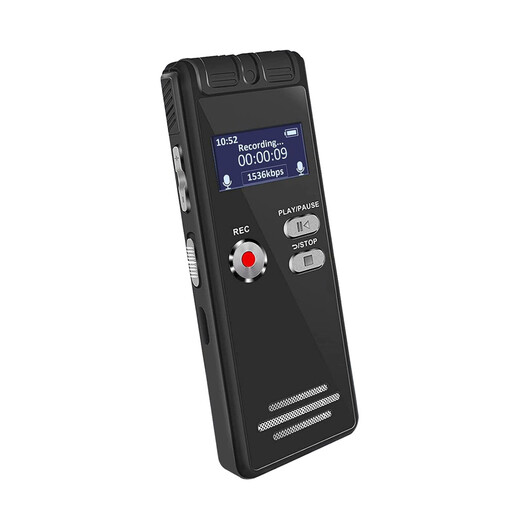
Rexsun L15 voice recorder with 64 GB TF card

Rexsun L15, 64 GB TF card

The stated multi-microphone recording capability could be useful for group conversations. A claimed 360° recording range does not mean fan noise will be filtered out.

The product description lists two omnidirectional microphones, up to 22 hours of recording time and a 64 GB TF card. One-touch recording is also listed.

View at Joybuy
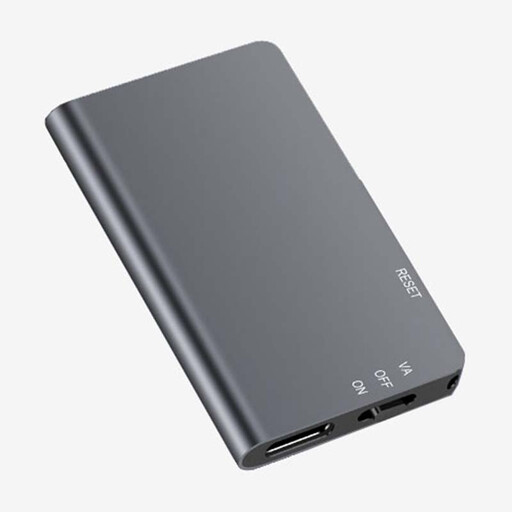
Rexsun L810 voice recorder, 64 GB

Rexsun L810, 64 GB

One-button operation could be useful for starting a recording quickly. Test how clearly it captures speech with fan noise in the background: a 360° recording range does not prove that the noise will be filtered out.

The product title lists 64 GB and one-button recording. The product description lists USB-C file transfer and voice activation.

View at Joybuy

Frequently asked questions

Does 32-bit float help with fan noise?

No. It does not prove that voices will be separated from fan noise. Zoom and Tascam list 32-bit float as a device feature; microphone placement and a listening test at the recording location are what matter for clarity.

How should you prepare to record at the venue?

Position the microphone as close as possible to the person you want to record, then make a short test recording with the fan running. Listen out for quietly spoken words, and check your power supply and storage medium in advance.

What should you check before making longer recordings?

Check the recording format, available storage and power supply for the setup you’re planning. A longer test recording lets you check the recording process and how you’ll back up the files afterwards, before the gathering.

Can you record and share conversations at a village gathering without asking?

There is no blanket yes: § 201 StGB covers, among other things, the unauthorised recording of another person’s non-publicly spoken words, as well as certain uses or disclosures. The Federal Ministry of Justice and the Federal Office of Justice list this provision in the German Criminal Code. Check that you have permission before recording and consider how you plan to share the recording. Whether a particular conversation is non-public, and which other data protection obligations apply, depends on the circumstances.