Which recorder is right for you?

Neighbourhood interviewers who want a simple set-up

If you’re recording people while they’re seated, you’ll want to capture the conversation without having to wire up several microphones. Check how clearly voices come through with a test recording in the actual location.

Oral history collectors

If you want to organise and preserve conversations for the future, consider the recording format, available storage and how you’ll transfer the files. Also make a note of what you’ve agreed about how the recording may be used later.

Interviewers recording several audio sources

If you want separate microphones for both sides of the conversation or to capture additional ambient sounds, check that the recorder has the inputs you need.

What should you look for when buying?

Basic voice recorder

A good fit if: one person is speaking in a quiet setting and a straightforward recording process, with playback and file transfer, is all you need.

Bear in mind: microphone placement still matters. Simple controls are no substitute for listening to a test recording from the intended seat.

Compact handheld recorder

A good fit if: you want to place a recorder with built-in microphones on a table or stand, with the option of connecting an external microphone if needed.

Bear in mind: the positioning, storage and power supply need to suit the conversation. A particular recording format alone won’t guarantee clear speech.

Recorder with separate microphone inputs

A good fit if: you want separate microphones for each side of the conversation or need to connect additional audio sources.

Bear in mind: extra microphones may mean a more involved set-up, with additional microphones, cables and power supplies as required.

Criteria What to check when buying Who is this especially important to?
Clear speech Positioning of the built-in microphones or connection of an external microphone; make a short test recording in the actual seating position. If I want to understand the story clearly later, I check the sound in the place where the conversation will take place. Around 34% of consumers prioritise clear speech.
Easy recording start Check the controls, recording indicator and playback on the device; find out whether a simple mode suits your way of working. If you want to focus on the person telling their story, look for controls that are easy to prepare. Around 27% of consumers prioritise a straightforward start.
Battery life and storage Compare the figures for your intended recording format, and plan for the power supply, available storage and file transfer. For longer sessions, I don’t want to have to stop because the battery has run out or there’s no storage left. Around 20% of consumers prioritise sufficient battery life and storage.
Separate audio sources Check the number and type of inputs, along with the microphones and cables you’ll need and how they’re powered. If I want to record both sides of the conversation separately, the recorder needs the right microphone inputs. Around 13% of consumers prioritise separate microphones.
File format and reviewing recordings Check the available recording formats and transfer options. If you’re considering cloud transcription, assess how the recording will be processed separately. For reviewing a recording later, I want to be able to transfer files in a suitable format and continue working with them in an organised way. Around 6% of consumers prioritise this workflow.

Avoid common misconceptions

  • A recording format can’t make up for poor positioning

    Features such as 32-bit float or advertised noise reduction won’t tell you whether a voice will be captured clearly from the actual seat.

    Position the device carefully, reduce avoidable room noise and listen back to a test recording.

  • Comparing maximum recording times without checking the format

    For the Sony ICD-PX470, Sony’s stated maximum recording times vary depending on whether you use MP3 or LPCM.

    Plan for power and available storage based on the format you’ll actually use and the length of the interview.

    Depending on the device, you may need extra batteries or a suitable storage medium to prepare.

  • Assuming inputs mean microphones are included

    The Zoom H4essential’s two XLR/TRS inputs are connection options; they don’t mean that separate microphones are already set up for you.

    First decide whether each side of the conversation needs its own microphone, then check the connections and the complete set-up.

    Separate microphones may require additional compatible microphones and cables.

  • Assuming permission to record also covers later use

    In Germany, Section 201 of the German Criminal Code (StGB) covers the unauthorised recording of another person’s non-public speech, as well as the use or sharing of a recording made without authorisation. The Federal Ministry of Justice and the Federal Office of Justice include this provision in the text of the law.

    Before you start, check that you’re entitled to make the recording. Also discuss how it will be stored, shared and, if applicable, transcribed.

Brands to consider

Zoom

Zoom’s H1essential and H4essential handheld recorders cater for different set-ups at the interview location.

  • For the H1essential, Zoom describes its use on a stand for conversations and an acoustic menu guide in German. The manufacturer lists two XLR/TRS inputs for the H4essential.
  • These features don’t prove that voices will be clear in every room. Additional inputs may mean a more involved set-up.

Tascam

According to Tascam, the DR-05XP combines built-in microphones with an input for external microphones or line-level signals.

  • Tascam lists several recording formats, a stereo mini-jack input and USB-C interface functionality.
  • The manufacturer’s claim about low-distortion recording isn’t independent proof of performance in every interview. Check that an external microphone is correctly positioned and compatible with your set-up.

OM SYSTEM

The WS-883 is designed as a voice recorder for conversations in a fixed location.

  • OM SYSTEM lists a simple mode, a built-in stand, 8 GB of internal storage and integrated USB data transfer.
  • The advertised recording quality is a manufacturer’s claim. A test recording will show whether the microphone position suits the seating arrangement.

Sony

The ICD-PX470 is a voice recorder with internal storage and several recording formats.

  • Sony lists 4 GB of internal storage, MP3 and LPCM recording, and a headphone socket.
  • According to Sony, the stated recording times vary by format and settings. The specification sheet for this model does not list manual recording level adjustment or USB charging.

Philips VoiceTracer

The DVT4115 is aimed at people considering different file formats and the option of transcribing recordings later.

  • Philips lists MP3 and PCM recording, microSD expansion, and app and cloud transcription options.
  • Claims about quality and accuracy come from the manufacturer. Cloud processing is a separate data protection decision and isn’t required for local recording.

Related products from Joybuy

The following Joybuy products are described as voice recorders or AI voice recorders. To check whether a device captures speech clearly during a seated neighbourhood interview, make a test recording in the intended location.
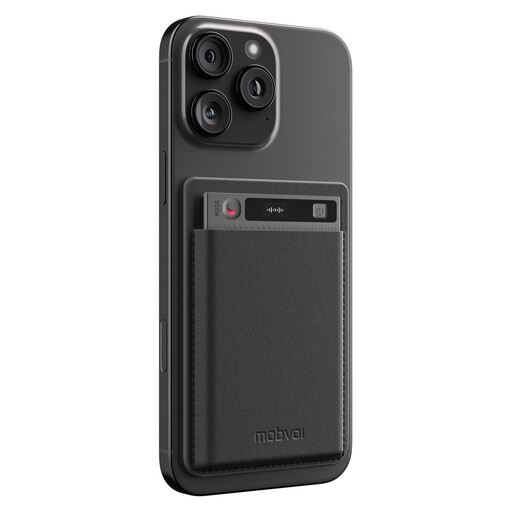
Mobvoi TicNote Lite AI Voice Recorder, 4GB Storage, Black

Mobvoi TicNote Lite AI Voice Recorder, 4GB Storage, Black

Described as an AI voice recorder; make a test recording before the interview to check whether speech is clear in the intended location.

The product name lists 4GB storage. Before using AI features, check how the recording will be processed.

Joybuy
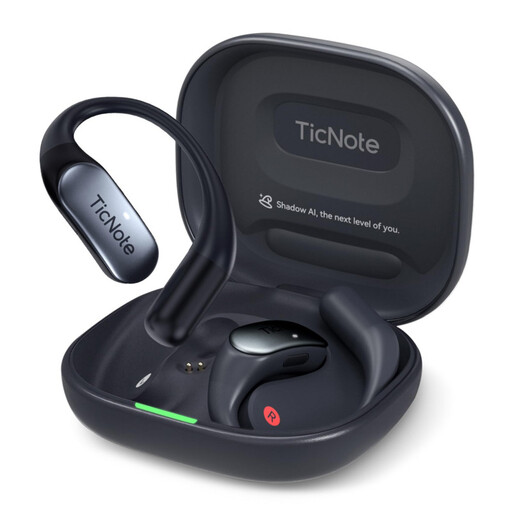
Mobvoi TicNote Pods 4G AI Voice Recorder, 32GB Storage, Navy Blue

Mobvoi TicNote Pods 4G AI Voice Recorder, 32GB Storage, Navy Blue

Described as an AI voice recorder; a test recording can help you check whether speech is captured clearly with your planned seating arrangement.

The product name lists 32GB storage and 4G. Before transferring a recording, check how and where it will be processed.

Joybuy
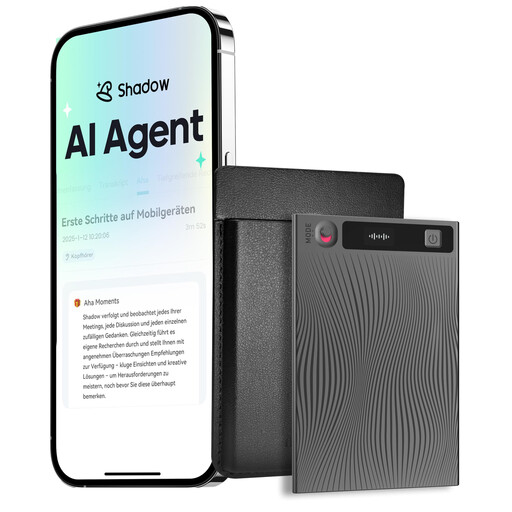
Mobvoi TicNote Standard AI Voice Recorder, 64GB, Dark Grey

Mobvoi TicNote Standard AI Voice Recorder, 64GB, Dark Grey

Described as an AI voice recorder; check how clearly speech comes through in the intended seating position before relying on the device for an interview.

The product name lists 64GB, Wi-Fi and Bluetooth, as well as AI transcription and summaries. Check how these features process and transfer recordings.

Joybuy
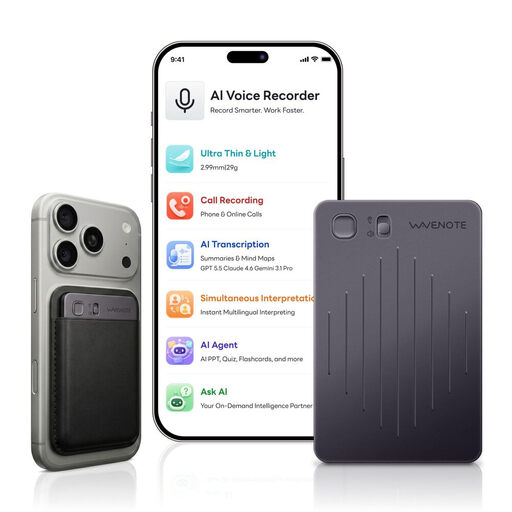
WaveNote AI Voice Recorder, 64GB, Black Grey

WaveNote AI Voice Recorder, 64GB, Black Grey

Described as an AI voice recorder; a test in the actual interview location will show whether speech is clear enough for your needs.

The product name lists 64GB storage. Before use, check which recording and transfer features you need for your workflow.

Joybuy
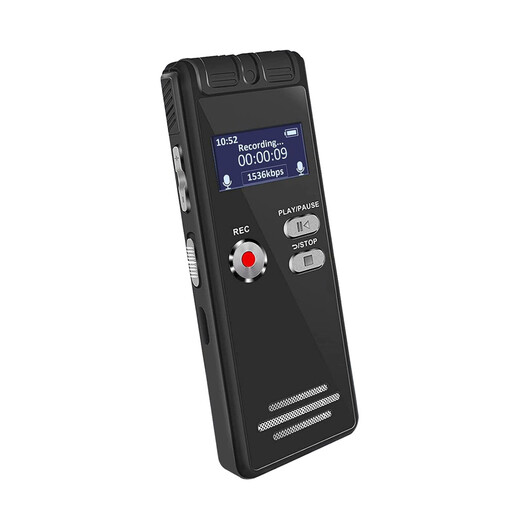
Rexsun L15 64GB Portable Digital Voice Recorder, Gray

Rexsun L15 64GB Portable Digital Voice Recorder, Gray

Described as a digital voice recorder; for a seated interview, check how clearly it captures speech in the actual location beforehand.

The product name lists 64GB. Before the interview, check that the power supply, available storage and file transfer suit your planned recording time.

Joybuy

Frequently asked questions

How should I prepare the room and recorder for a seated interview?

If possible, choose a quiet spot, mute any noisy devices and make a short test recording. Before the conversation starts, check the voices, power supply, available storage and settings.

Do I need 32-bit float for recording one person who is seated?

No, 32-bit float isn’t essential for this type of conversation. Zoom and Tascam offer the format on the handheld recorders mentioned here; what matters is whether a test recording captures speech clearly in your chosen location.

Can stated recording times be compared directly?

Only when the recording formats and settings are comparable. Sony lists different maximum recording times for LPCM and various MP3 settings on the ICD-PX470, so check the figures for the format you plan to use.

Can I record a conversation about changes in the neighbourhood without the person telling the story knowing?

In Germany, unauthorised audio recording of another person’s non-public speech is an offence under Section 201 of the German Criminal Code (StGB). Before you start, check that you’re entitled to make the recording; the same provision also covers the use or sharing of a recording made without authorisation.

Does permission to record also cover publication or cloud transcription?

No. Treat recording, later use and any transfer to a service as separate purposes that need to be discussed in advance. Where data protection law applies to the processing of personal data, that processing needs a lawful basis; consent must be informed and freely given. The Oral History Association also recommends discussing storage and access arrangements in advance.