Teachers recording their own speech
If you want to record your pronunciation or explanations, pay particular attention to placing the microphone nearby. RØDE explains how a greater distance can make speech sound more distant and reverberant.


If you’re recording one person and can position a microphone close to their voice, a lapel mic or a suitably connected external microphone could be a good option. For straightforward recordings, consider a compact voice recorder, while a handheld recorder with a microphone input gives you more flexibility with your set-up. Neither the recording format nor voice enhancement can replace good microphone placement or eliminate room echo. In Germany, you must establish whether it is lawful to record another person’s non-public speech before doing so (§ 201 StGB, Federal Republic of Germany, Gesetze im Internet).
If you want to record your pronunciation or explanations, pay particular attention to placing the microphone nearby. RØDE explains how a greater distance can make speech sound more distant and reverberant.
If you want to listen back to a permitted lesson recording, features such as repeat playback or adjustable playback speed may be useful. Sony Germany lists these playback features for the ICD-UX570.
When several people are speaking, position the microphone with the voices that matter most in mind. A microphone worn close to one person won’t automatically pick up everyone else equally well.
A good fit if: you want to record one voice without setting up an additional microphone, then easily find or slow down lesson sections when listening back.
Bear in mind: room echo can still be an issue at greater distances. Voice enhancement doesn’t prove that distant voices will remain clear in your particular room.
A good fit if: you want to switch between built-in microphones and an external microphone placed closer to the speaker.
Bear in mind: the recorder and microphone must be compatible in terms of connection and power supply. Zoom and Tascam describe 32-bit float as a way to manage recording levels, not as a solution to room echo.
A good fit if: one person is doing most of the talking and moving around, and can wear a microphone.
Bear in mind: the microphone is positioned close to the person wearing it, so other voices may be further away.
RØDE notes that placing a microphone too far away can make a voice sound distant and reverberant. So first decide whose voice you want to focus on.
| Priority | What to check before buying | Who is this important to? |
|---|---|---|
| Clear recording of one voice | Microphone distance; option to connect a suitable external microphone | If I mainly want to record the teacher’s voice clearly, the distance between the microphone and the speaker matters to me. Around 42% of consumers share this priority. |
| Easy lesson recording | Recording indicator; power supply and storage for the planned duration | For a recording that doesn’t need a complicated set-up, I want to keep an eye on recording, storage and power easily. Around 25% of consumers prioritise straightforward recording. |
| Several speakers | Decide which voices matter; check the position with a test recording | If teachers and learners take turns speaking, I need to consider which parts of the room the microphone should cover. Capturing several voices is the main priority for around 17% of consumers. |
| Replaying and practising | Repeat playback and speed control; file format and transfer to your own device | For pronunciation practice, I want to be able to replay short sections or play them back more slowly. These playback options are the main priority for around 16% of consumers. |
A greater microphone distance can make speech sound distant and reverberant; the recorder itself won’t change the position of the voice relative to the microphone.
Plan the microphone position first, then check how clear the recording sounds with a short test from the intended spot.
Level processing and microphone distance address different recording conditions. A recording format won’t eliminate room echo.
First decide how you want to record the voices that matter, then choose additional features to suit.
The microphone sits close to the person wearing it, while other speakers may be further away.
Before buying, decide whether you only need to record the teacher or whether answers from other parts of the room matter too.
The ICD-UX570 is a compact voice recorder for recording speech at close range and listening back to specific sections.
The H1essential is a handheld recorder with built-in X/Y microphones and a 3.5 mm microphone input.
The DR-05XP is a handheld recorder with built-in microphones and an input for an external microphone; the DR-10L Pro is designed for use with a lapel microphone.
The WS-883 is a compact stereo voice recorder for notes and conversations.
The German VoiceTracer range includes the DVT4115, which has built-in microphones and internal storage.
The voice recorders below are described as suitable for recording lessons and then transcribing or summarising them. The product details don’t prove that distant voices will remain clear in a reverberant room.
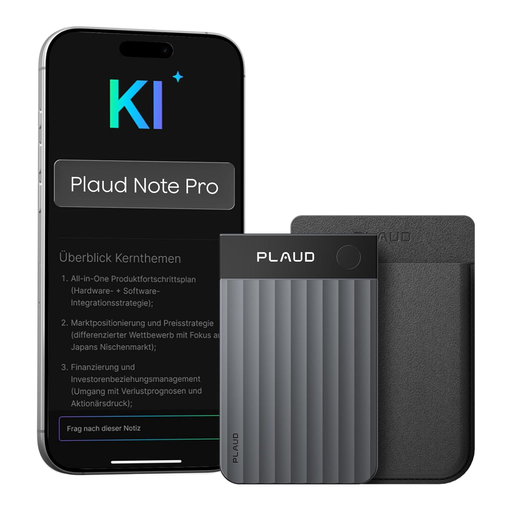 No product image available
A good fit if you want to record a lesson and then transcribe or summarise it; these features are listed in the product description.
Other listed features include 64 GB of storage, 30 hours of recording time and four MEMS microphones.
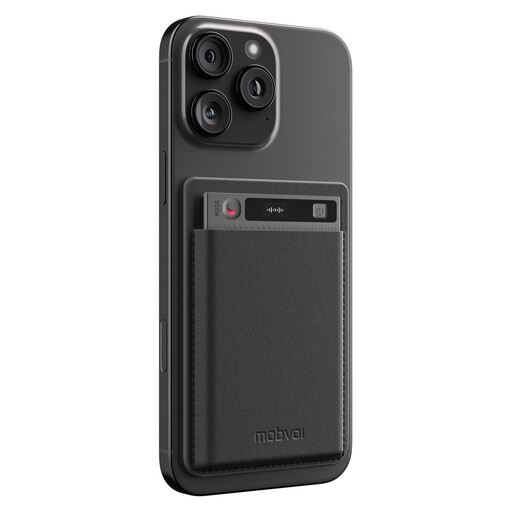 No product image available
Worth considering if you want to transcribe or summarise a lesson recording afterwards; these features are listed in the product description.
Listed features include 4 GB of storage and support for 120+ languages.
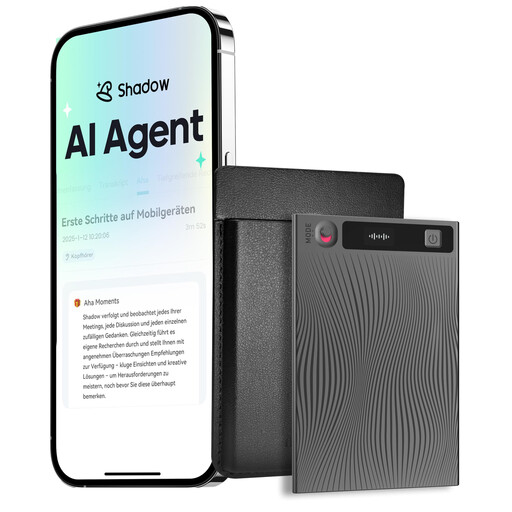 No product image available
A good fit for a lesson you want to transcribe or summarise later; these features are listed for the model.
Listed features include 64 GB of storage, up to 20 hours of recording time, a triple-microphone system, Wi-Fi and Bluetooth.
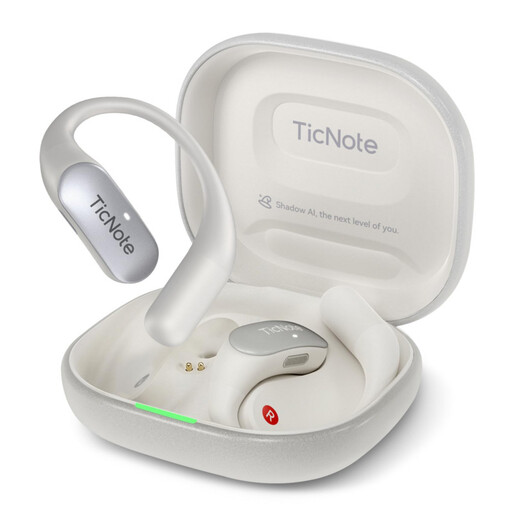 No product image available
The product description lists recording, transcription and summaries. Before choosing it, check that these features suit the way you’ll use it for lessons.
Listed features include 32 GB of storage, two microphones, five hours of battery life and 4G upload.
 No product image available
May suit you if you mainly want to record the person wearing it; the product description lists several ways to wear it, as well as transcription.
Listed features include 64 GB of storage and up to 20 hours of recording time. A microphone worn close to one person won’t automatically pick up other voices equally well.
Not necessarily. Under § 201 StGB, making an unauthorised recording of another person’s non-public speech is a criminal offence. Before recording, check with the people concerned whether you may record and what the recording may be used for. The specific teaching situation and any sharing of the recording must be considered separately. This doesn’t mean that every language practice session you do on your own falls under § 201 in all circumstances. (Federal Republic of Germany, Gesetze im Internet)
Place it as close as possible to the voice you want to record clearly, and make a short test recording. RØDE explains that a greater distance can make room echo and background noise more noticeable. If several people are spread around the room, you’ll need to reconsider the position.
No. Zoom and Tascam describe 32-bit float as a way to manage recording levels. By contrast, as RØDE explains, placing a microphone too far away can make recordings sound reverberant. Recording format and microphone position address different problems.
Check the specific listing to see whether a memory card, any external microphone you need and a suitable power supply are included. For manuals and support, refer to the information for the relevant model.