For short recordings of your own speech, an easy-to-use voice recorder is usually enough, as long as it has the playback and search features you need. A handheld recorder with extra inputs makes sense if you genuinely want to use an external microphone or a specific computer-based workflow. Either way, test the sound in the place where you plan to record: a recorder won’t eliminate room echo.
Which approach is right for you?
Fine-tuning your pronunciation
If you want to compare individual sounds and emphasis across repeated recordings, the recording location and a microphone you can position appropriately are key. Shure’s guidance on microphone positioning and the Goethe-Institut’s practice materials can help you assess what you need.
Practising through repetition
If you record lots of short exercises, useful features include repeating a specific passage, adjusting playback speed and finding older files again. Zoom documents these playback features for the H1essential, while Sony lists them for the PCM-A10.
Editing your recordings
If you want to edit practice files on your computer or use an external microphone, check the connections and file-transfer options on the specific model. Tascam describes these features for the DR-05XP, for example; Sony’s information on the PCM-A10 applies to that model only.
What should you look for when buying?
| What matters |
What to check |
Who is it important to? |
| Your voice, not room echo |
Recording position and microphone placement; listen to a short test recording from the place you plan to use. |
If I want to assess details in my speech, I need to hear how my voice and the room sound in my usual practice spot. This is the main concern for around 33 % of consumers. |
| Repeating passages |
Check A/B repeat, playback speed and file search on the specific model. |
When I compare short exercises, I want to return to the passage in question quickly and find older recordings again. Around 27 % of consumers prioritise this ability to repeat and compare. |
| Computer and microphone |
Check that the recording format, USB function and input are compatible with the microphone you plan to use. |
If I want to edit files on my computer or connect an external microphone, the connections need to work with the setup I have in mind. This is the main concern for around 20 % of consumers. |
| Easy to get started |
Check storage, whether a memory card is required, the power supply and how easy the recorder is to use. |
If I want to record short exercises regularly without much preparation, I pay particular attention to storage and ease of use. Around 20 % of consumers prioritise getting started easily. |
Buying decisions to consider
-
Assuming a high resolution means better room sound
A high-resolution format won’t fix distracting echo. This can make it harder to compare speech recordings, even if the recorder supports that format.
Record a short test in the place you plan to use and try different microphone positions before giving extra format features too much weight.
-
Leaving storage and power requirements until later
You can’t record or play back on the Zoom H1essential without a microSD card inserted. Other models may have built-in storage, so check the requirements of the specific device.
Check the individual product listing to see what storage you need and how the device is powered.
Depending on the model, you may need to buy a memory card or batteries separately before you can get started.
-
Assuming extra inputs are always an advantage
Multiple inputs are only useful if your recording setup actually uses them. They won’t solve room echo or help you find a particular practice passage.
First decide whether you’ll record with the built-in microphones or want to use a specific external microphone.
An external microphone may also require compatible cables or other accessories, so check what your setup needs.
Brands and suitable model ranges
Zoom
The H1essential, H2essential and H5 ranges offer different options for speech recordings and recording setups.
- According to Zoom, the H1essential supports features including A/B repeat and adjustable playback speed.
- The H1essential requires a microSD card for recording and playback on the device. The H5’s extra inputs are only relevant if your setup uses them; they don’t establish that it sounds better.
Tascam
The DR-05XP combines built-in microphones with a mini-jack input, while the Portacapture X8 is an option for more extensive multi-input setups.
- Tascam lists several recording formats for the DR-05XP, including 32-bit float and MP3, as well as a USB-C audio function.
- These specifications don’t prove a pronunciation benefit or guarantee compatibility with every external microphone. Check the connection on the specific microphone you plan to use.
OM SYSTEM
The LS-P5 offers built-in storage and adjustable microphone directionality for different recording scenarios.
- OM SYSTEM lists 16 GB of built-in storage, calendar search and directional control for the LS-P5.
- The German product page lists playback speed control as “N/A”. If you need this feature for your exercises, don’t assume it’s available on this model. Directional control is no substitute for testing how it sounds in the room.
Sony
The PCM-A10 is a compact PCM option if repeat playback, playback controls and finding files again are important to you.
- Sony lists A/B repeat, speed control, calendar search, 16 GB of built-in storage and a stereo mini-jack input for the PCM-A10.
- These features apply to the PCM-A10 and not to voice recorders across the board. The specifications don’t prove that it sounds better than other models.
Philips
The VoiceTracer DVT4110 and DVT4115 models are another option for speech recordings, with preset recording scenes.
- Philips describes scenes designed to adapt recording settings to different situations.
- Check the features and what’s included with the specific DVT variant. Presets don’t prove that they can eliminate difficult room acoustics.
Joybuy products for speech practice
This selection includes compact voice recorders for recording your own practice sessions and listening back to them afterwards.
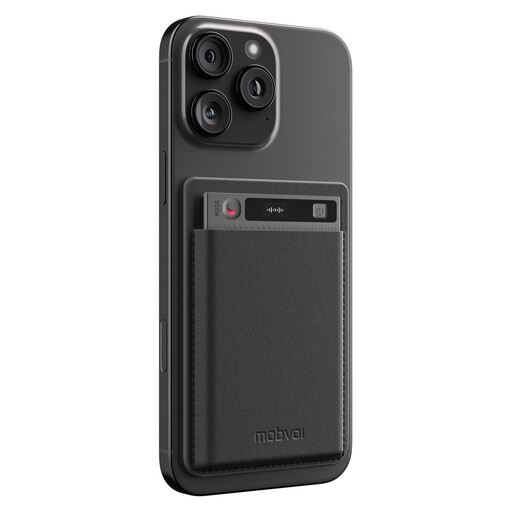 No image available
Mobvoi TicNote Lite AI Voice Recorder, 4GB
An option if you’re looking for a voice recorder with 4 GB of storage; check that its playback and file management features suit your exercises.
Joybuy
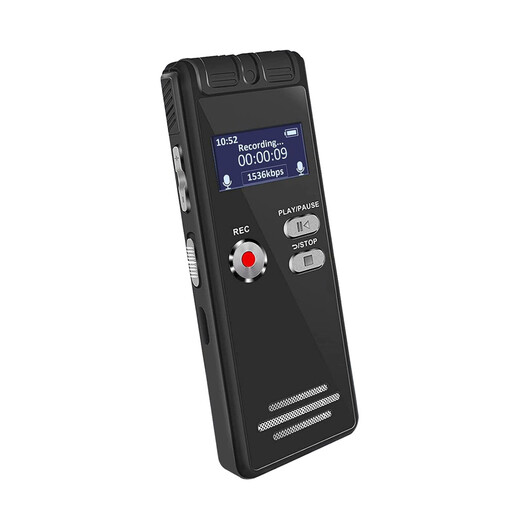 No image available
Rexsun L15 Digital Voice Recorder, 16GB
For short, independent practice sessions, if the listing’s details about one-button recording and headphone playback suit your routine.
16 GB storage; model designation L15.
Joybuy
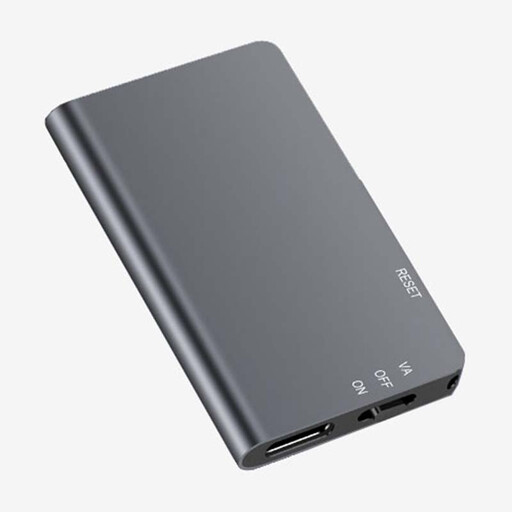 No image available
Rexsun L810 Digital Voice Recorder, 64GB
May suit regular recording and playback on the device if you’re looking for a model with 64 GB of storage; check that its available playback features work for your practice routine.
64 GB storage; model designation L810.
Joybuy
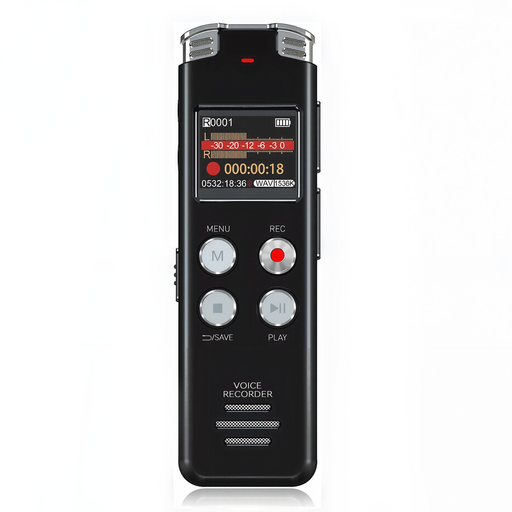 No image available
Rexsun L357 Digital Voice Recorder, 128GB
An option if you want to replay specific passages and transfer recordings via USB-C; check that the features described suit your computer-based workflow.
128 GB storage; model designation L357.
Joybuy
Frequently asked questions
Does 32-bit float help with echo during pronunciation practice?
No. The recording format and room acoustics are two different things: Shure explains that a microphone can’t effectively separate direct speech from reverberation or improve room acoustics. So listen to a test recording made from your intended speaking position rather than assuming bit depth will make speech clearer in the room.
Can I record with the Zoom H1essential without a memory card?
Not on the device itself: according to Zoom, recording and playback aren’t possible without a microSD card inserted. Check the specific listing to see whether a compatible card is included.
What if the recorder is faulty after I buy it?
Under EU consumer information, if goods are faulty, the seller generally has to repair or replace them free of charge. The rights that apply in a particular case depend on the purchase; any additional manufacturer’s guarantee offered is separate from these rights.
Can I record other people in my home studio?
Under § 201 StGB, you must not record another person’s private conversation without authorisation; make sure you have permission before you start. This rule applies to making the recording and does not give blanket permission to publish it or process the data further.


