People collecting individual, quiet stories
If you mainly want to capture quiet memories from individuals, position the microphone to suit the speaker and make a test recording.


For one-to-one, quiet conversations, a simple voice recorder is a good place to start, provided you can position it close enough to the speaker and listen back to a test recording. If volume levels vary considerably or you want to position an external microphone precisely, a handheld recorder may be a better option. 32-bit float can make it easier to handle different recording levels, but it’s no substitute for a suitable position or a quiet environment.
If you mainly want to capture quiet memories from individuals, position the microphone to suit the speaker and make a test recording.
If there are side conversations, speakers change frequently or volume levels vary, check the position and recording on site before you begin.
For longer recordings, make sure you have enough storage, a straightforward recording set-up and a way to back up the files after the gathering.
For quiet memories at a village gathering, first consider the distance between the microphone and speaker, as well as the room acoustics. Then weigh up ease of use, recording levels and file storage.
| What matters when buying | What to check | Who is it important to? |
|---|---|---|
| Making quiet voices clear | Microphone distance and positioning options; make a test recording from the intended spot. | If I want to capture individual, quiet memories, I need a suitable place for the microphone and should listen to a test recording first. Around 40% of consumers put the clarity of individual quiet voices first. |
| Background noise and sudden changes in volume | Check whether you can connect an external microphone; test the recorder in the actual room conditions. | When conversations include background noise or changing volume levels, I want to hear in advance what will be picked up from the intended position. Around 25% of consumers prioritise handling hall noise and sudden changes in volume. |
| A straightforward recording process | Practise using the recorder before the gathering; check that there is enough storage for your plans. | If spontaneous stories are not to be interrupted by complicated preparation, I value straightforward controls. Around 18% of consumers mainly look for an uncomplicated recording process. |
| Recording time and backing up files | Consider the recording format, available storage and power supply for the planned recording time; plan how to transfer the file and play back a copy. | For longer conversations, I want to prepare storage and power in advance, then back up the memories reliably. Around 17% of consumers make recording time and file storage their top purchase considerations. |
The recording format cannot compensate for a poor microphone position, quiet signals drowned out by background noise or distracting sounds in the room.
Start by testing the position and making a test recording. If the volume really does vary considerably, also check whether a suitable recorder can handle the changes in level you need it to.
For the Zoom H1essential, Zoom recommends testing a suitable microSD card before recording. An independent Bonedo review noted that the tested device did not include storage media or a connection cable.
Before buying, compare what’s included with your recording plans and prepare any storage media you need.
Depending on the offer, you may need to buy a suitable memory card or other accessories separately.
An independent Bonedo review found that the Zoom H1essential picked up noticeable handling noise. Placing it poorly on a table can also increase distracting sound reflections.
Before you start, test a stable position close enough to the speaker, and avoid moving the recorder unnecessarily while recording.
Recording, making a recording accessible and publishing it are different actions. The legal and data protection rules may vary depending on the conversation and how you plan to share it.
Before sharing or publishing files, clarify the purpose of the recording and how you intend to share it with the people involved.
The ICD-PX470 is a compact voice recorder with internal storage and a stereo microphone.
The WS-883 combines voice recording with internal storage, microSD expansion and a simple operating mode.
The H1essential is a handheld recorder with X/Y microphones, 32-bit float recording and a 3.5 mm microphone/line input.
The DR-05XP is a handheld recorder with built-in omnidirectional microphones, a 32-bit float mode and an external microphone input.
According to the retailer, the DVT4115 offers internal storage and MP3 and PCM recording; a smartphone app is available for remote control.
The products below are voice recorders for recording conversations. For quiet voices, microphone distance, a test recording and how you plan to handle the files remain key considerations.
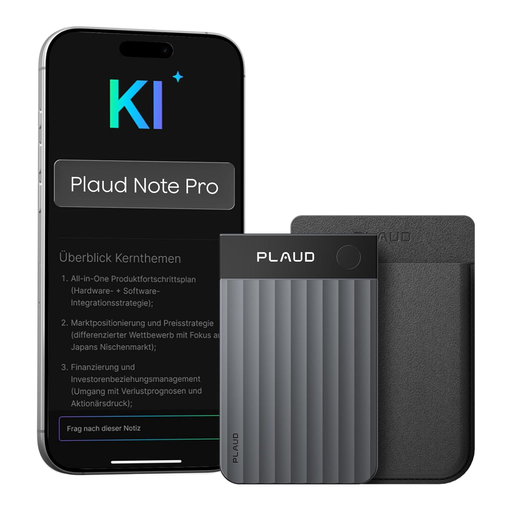 No image available
Listed as a voice recorder for conversations; test it with quiet voices from the intended position first.
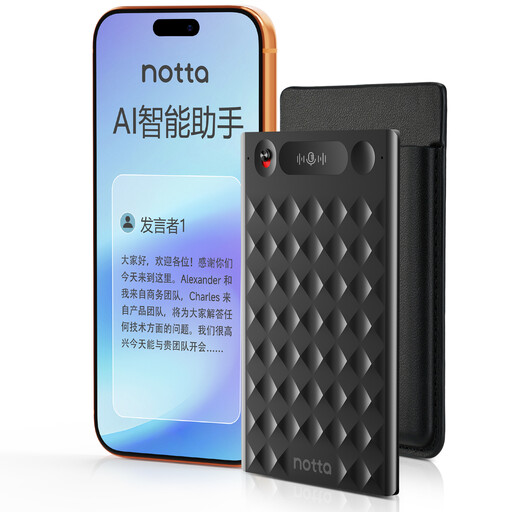
64 GB storage, 30-hour battery life and 4 MEMS microphones.
The product name also mentions AI transcription and summaries; check whether these features suit the way you plan to handle personal recordings.
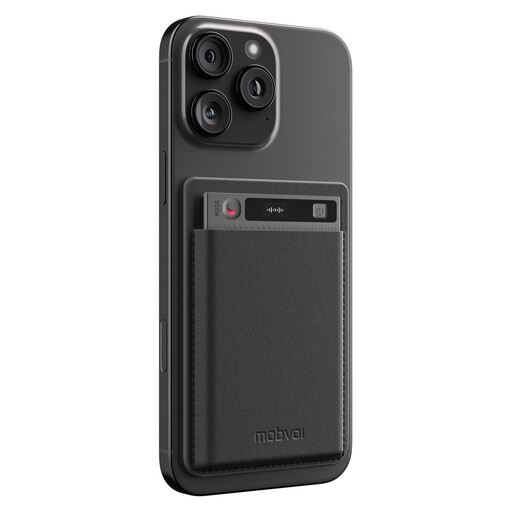 No image available
Listed as a voice recorder for conversations; test it with quiet voices from the intended position.
The product name lists 4 GB of storage and support for more than 120 languages.
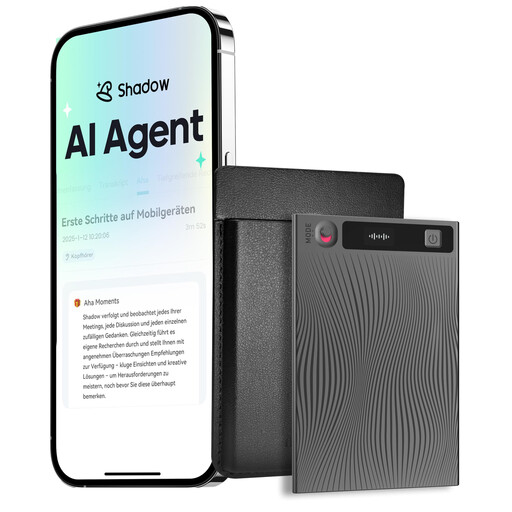 No image available
Listed as a voice recorder for conversations; a test recording can help you assess the conditions from the intended position.
64 GB storage, 20 hours of recording time according to the product name, three microphones, Wi-Fi and Bluetooth.
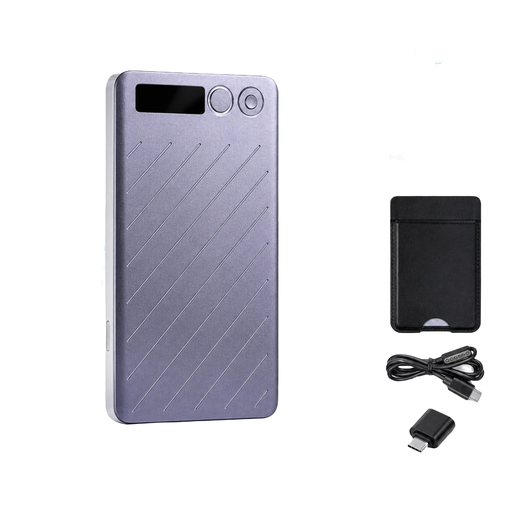 No image available
Described as a digital voice recorder for conversations; test how clearly it captures quiet passages in the environment you plan to use.
The product name lists 64 GB of storage and a transcription function.
 No image available
Listed as a voice recorder for conversations; test a quiet passage from the intended recording position.
The product name lists 32 GB of storage, 30-hour battery life and 2,000 hours of storage time.
Make a recording of a quiet test passage at the intended location, with typical background noise, then listen back with headphones. If needed, move the microphone closer to the speaker or find a quieter spot; a recording format alone cannot compensate for poor room acoustics.
No, not for every model: Sony lists internal storage for the ICD-PX470, as does OM SYSTEM for the WS-883. For the H1essential, Zoom describes using a suitable microSD card and recommends testing new or previously used cards. Check what’s included with the specific offer.
Transfer the files to a suitable device, play back the copy to check it and keep the original for now. Only share recordings for the purpose agreed with the people involved.
Not in every case. § 201 StGB makes it a criminal offence to record another person’s non-public spoken words without authorisation, as well as certain uses of such a recording. The relevant text is available on Gesetze im Internet, provided by the Federal Ministry of Justice and the Federal Office of Justice. Before recording, clarify who will be recorded and whether you have authorisation. You cannot tell whether a specific conversation is non-public from the event’s name alone.
Not necessarily. The Federal Commissioner for Data Protection and Freedom of Information explains that processing solely for personal or family activities is exempt, and notes that this may no longer apply if, for example, something is published online. If the GDPR applies and processing is based on consent, that consent must be freely given, among other things. The GDPR exemption does not override § 201 StGB.