Club historians conducting long one-to-one interviews
If you want to record stories with as few interruptions as possible and find them again later, consider battery life and storage together for your chosen format.


For long one-to-one interviews, an easy-to-use voice recorder is a natural place to start. The key things to consider are battery life and storage for your chosen recording format. A handheld recorder offers more flexibility when it comes to positioning, and may suit you if you want to capture several voices or the atmosphere in the garden. Microphone distance, wind and a test recording still matter. Philips states that the DVT4115 offers up to 36 hours of recording time, while Tascam gives up to 17.5 hours of operation from two AA alkaline batteries for the DR-05XP. You should also check that you have permission before recording a private conversation.
If you want to record stories with as few interruptions as possible and find them again later, consider battery life and storage together for your chosen format.
When several people are speaking, the right microphone position and a set-up that captures each contribution clearly are important.
For outdoor recordings, wind and changing distances between the microphone and speakers can affect the sound. A test recording in the spot you plan to use will help you assess this.
A good fit if: You usually interview one person, want to get started easily and find specific recordings again later.
Things to consider: The maximum recording time won’t necessarily apply to every format. A tabletop device won’t solve problems with distant voices through its recording features alone.
A good fit if: You want to record several voices or the atmosphere in the garden, position the recorder carefully or connect a suitable external microphone.
Things to consider: Microphone position and wind still matter. For long recordings, also check the specific model’s power supply, storage and file management.
| Buying priority | What to look for | Who is this important to? |
|---|---|---|
| Long recording without interruption | Check the format, planned duration, available storage and power supply together. | If I can’t simply repeat a conversation, the battery and storage need to last for the planned duration and chosen format. Around 40% of consumers put reliable long recordings first. |
| Clear main voice | Test the seating positions with headphones and check whether you can place the device close to the person telling the story. | If I want to understand the stories clearly later, the position of the main speaker matters more to me than extra features. Around 31% of consumers prioritise a clear speaking voice. |
| Several voices and atmosphere | Decide in advance whether you mainly want to record the conversation or capture the sense of the surroundings too; consider positioning and playback. | If several club members are sharing stories or I want the garden to be audible, I pay attention to the set-up and what I want to capture. Around 15% of consumers prioritise multiple voices or atmosphere. |
| Wind and outdoor conditions | Check which wind protection is suitable for the exact model and make a test recording at the location. | For an outdoor conversation, I want to spot wind noise as early as possible and adjust the microphone position. Around 14% of consumers put changing outdoor conditions first. |
Philips lists MP3 and PCM for the DVT4115, along with a maximum battery recording time. However, its German product page doesn’t specify which format the stated recording time applies to.
Choose your format first, allow for the storage it requires and test the planned recording duration with the device fully charged before your club event.
The recording features listed by Tascam and Zoom don’t replace good microphone positioning. Wind can hit the microphone directly and affect speech.
Position the microphone appropriately for the speakers and listen back to a test recording made in the actual conditions.
According to the user manual, the Zoom H1essential creates a new file once it reaches 2 GB without interrupting the recording.
Transfer and name related files in a way that keeps the interview in the right order.
The DVT4115 is a voice recorder option for longer conversations, with internal storage and MP3 and PCM recording.
The DR-05XP is a handheld recorder with built-in stereo microphones and the option to connect compatible external microphones.
The H1essential is a compact handheld recorder with X/Y microphones. Zoom describes it as suitable for tripod mounting and offers a mono mode for interviews.
The ICD-UX570 is a compact voice recorder option if you want to monitor recordings and find specific points more easily later.
The products below include digital voice recorders and a portable audio device with a meeting recording function. For each device, check that the recording format, battery life and file management suit your interview.
 Image unavailable
The product description lists interviews as a potential use. Compare the stated recording time with your format and planned duration.
64 GB of storage; stated battery life: 36 hours. The description also mentions transcription in 118 languages.
 Image unavailable
The glasses are described as having a meeting recording function. Before a long interview, check that continuous recording, exporting and file management meet your needs.
The product description lists two microphones and a usage time of 12 hours.
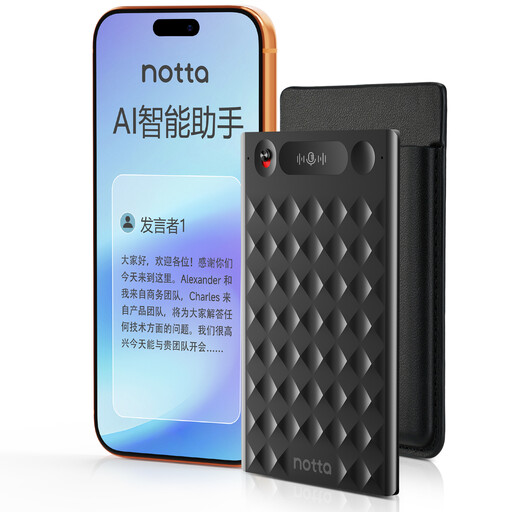 Image unavailable
The title lists interviews as a potential use. Compare the stated recording time with your chosen format and plan in advance how you’ll back up the files.
32 GB of storage and a stated recording time of 30 hours; the product description also mentions real-time transcription.
Under § 201 of the German Criminal Code (StGB), you may not record privately spoken words on an audio medium without authorisation. Before the conversation, let the people involved know that you intend to record it. Permission to record is separate from permission to publish the recording later. Whether a particular club conversation is public or private depends on the specific circumstances.
According to guidance from the German Federal Commissioner for Data Protection and Freedom of Information, processing personal data requires a legal basis under Article 6 of the GDPR. If you rely on consent as that legal basis, it must be informed and freely given, among other requirements. The appropriate legal basis depends on how you use the recording.
Not necessarily. According to Zoom’s user manual, a new file is created automatically when the recording exceeds 2 GB, without interrupting it. Bear this in mind when transferring and archiving files, as one conversation may be split across several files.
Check the recording format, available storage, power supply and planned duration together, and make a test recording in the intended location. Tascam lists two AA alkaline batteries for the DR-05XP; Philips describes the DVT4115 as having a rechargeable battery that charges via USB-C. Also check whether suitable wind protection or any required storage media are included with the specific offer.