
Lieferung heute & morgen

Qualitätsgarantie
App herunterladen
Kategorien
Upgrading from conventional W5W halogen bulbs to modern LED technology is a common step in modernising vehicle lighting. The primary reasons are the higher efficiency, longer lifespan, and superior light characteristics of LEDs. A key technical challenge in this process is ensuring compatibility with the vehicle's electrical system, particularly the CAN bus system. This article analyses the technical criteria for selecting the right bulbs and presents a curated selection of products.
The selection of suitable W5W LED CAN bus bulbs is based on several technical parameters that ensure error-free operation and the desired illumination.
Modern vehicles monitor lighting functions via a diagnostic system known as the Controller Area Network (CAN bus). This system measures the electrical resistance of the connected bulbs. Because LEDs have significantly lower power consumption than halogen bulbs, the system incorrectly interprets this as a fault, triggering a "defective bulb" error message on the dashboard.
Error-free W5W LED bulbs bypass this issue with an integrated load resistor. This resistor simulates the electrical load of a traditional 5-watt halogen bulb, preventing the CAN bus system from registering an error. Compatibility is achieved in approximately 99% of vehicle models, but can vary in individual cases.
The W5W designation is an ECE standard for a glass wedge base type. This base is also known by other names, including T10 LED, 501 LED, or 168 LED. All these designations refer to the same physical interface. Before purchasing, it is advisable to check the dimensions of the LED bulb against the available space in the vehicle's lamp housing, as LED assemblies with heat sinks can be larger than the original halogen bulb.
Most passenger cars use a 12V electrical system. However, many LED bulbs are designed for a wider voltage range (e.g., 12V-24V), making them more resilient to voltage fluctuations.
A critical factor for LED longevity is thermal management. High-quality bulbs use an aluminium heat sink to efficiently dissipate the heat generated by the LED chips. Inadequate cooling can significantly reduce both lifespan and light output.
Based on the technical criteria above, we have compiled a selection of products for various applications.
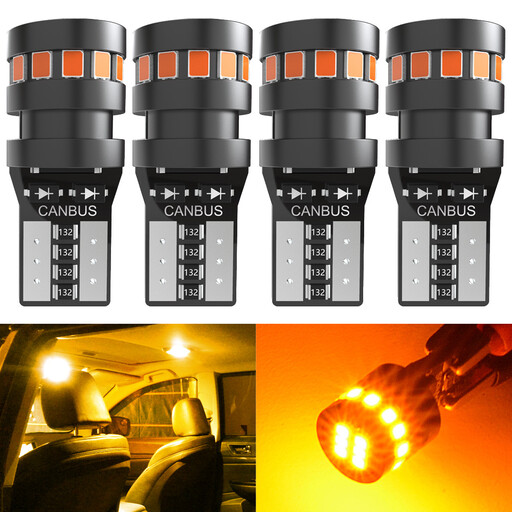
Why We Recommend It This bulb from OUSHI is designed for users seeking a specific amber yellow light colour. Each bulb is equipped with 18 individual 2015 chipsets, enabling 360-degree illumination with no dark spots. The aluminium body aids in heat dissipation, supporting the manufacturer-stated lifespan.
Pros
Who It's For This product is suitable for vehicle owners who want an amber yellow light for car interior LED lighting, side marker lights, or as a stylistic element, and who value even light projection.
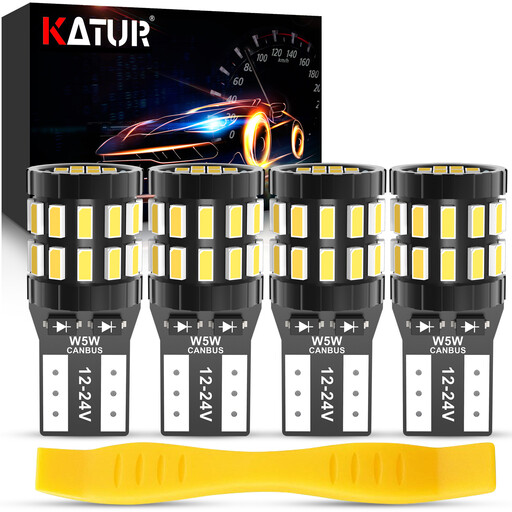
Why We Recommend It The model from KATUR stands out for its high light output, achieved with 30 individual 3014-SMD LED chips per bulb. With a colour temperature of 6000 K, it produces a bright, cool xenon white light. The body, made from 6063 aviation-grade aluminium, supports heat dissipation, which is crucial for longevity under high-performance conditions.
Pros
Who It's For Ideal for users seeking maximum brightness for functional applications such as parking light LEDs, licence plate LED lights, or boot lighting, and who prefer a modern, white light aesthetic.
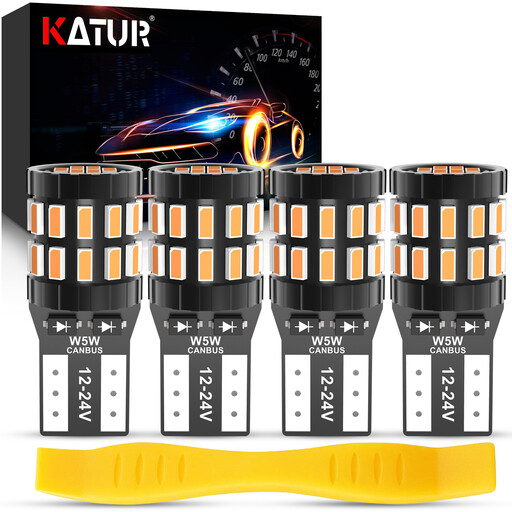
Why We Recommend It This bulb from KATUR combines the high light output of the xenon white model with an amber yellow light colour. It also uses 30 individual 3014-LED chipsets and achieves a luminous flux of 450 lumens, according to the manufacturer. It represents a high-performance alternative for applications where yellow light is required or desired.
Pros
Who It's For This product is aimed at users who need very bright, amber yellow lighting, for instance, for side marker lights on larger vehicles or for particularly intense interior illumination in this colour.
While W5W LEDs cover many lighting needs in and on the vehicle, more comprehensive projects or repairs may involve other components. For example, work on vehicle doors may also require upgrading the courtesy or warning lights installed there.
1. What does "CAN bus Error-Free" mean for W5W LEDs? "CAN bus error-free" means the LED bulb is equipped with an integrated resistor. This simulates the higher power consumption of a halogen bulb to prevent the vehicle's diagnostic system (CAN bus) from erroneously triggering a "defective bulb" error message.
2. Can I replace any T10 halogen bulb with a W5W LED? In principle, yes, as the T10 and W5W bases are mechanically identical. The replacement is typically a simple plug-and-play process. However, it is crucial to check the dimensions of the LED bulb, as it may be larger than the original bulb due to its heat sink and must fit into the lamp housing.
3. Do W5W LED bulbs require specific approval or certification for road use? For use in a vehicle's exterior lighting, bulbs must have the appropriate legal approval for road use in your region (e.g., an ECE approval or E-mark in Europe). Many aftermarket LEDs, especially those intended for interior lighting, do not have this certification. Their use in headlights or tail lights is often not permitted on public roads. Before installation, always check the legal regulations and the product's certification for its intended application.