People comparing sugar content
You want to keep an eye on how much sugar is in the wafers you choose for a sweet breakfast, so you check the nutritional information and ingredients list rather than relying on the front of the pack.


If you’re looking for wafers for a sweet breakfast with less sugar, compare the sugar content per 100 g and for the amount you plan to eat. A claim such as “less sugar” initially describes a comparison with another product: according to Manner, its wholegrain wafer contains 30% less sugar than the classic Manner wafer, but still has 26 g of sugar and 480 kcal per 100 g. If you’re having wafers with a sweet topping, remember to check its nutritional information too.
You want to keep an eye on how much sugar is in the wafers you choose for a sweet breakfast, so you check the nutritional information and ingredients list rather than relying on the front of the pack.
You want to choose a sweet wafer and take its wholegrain content and stated fibre content into account. You check the sugar content separately.
Before buying, you need to check whether the ingredients, highlighted allergens and, where relevant, dietary information meet your requirements.
When choosing wafers for a sweet breakfast, start by checking the sugar content per 100 g and for the portion you plan to eat. Then check any other features that are important to your choice.
| What to check | What to look for | Who it matters most to |
|---|---|---|
| Sugar content | Sugar per 100 g and for the amount you’ll eat; if the pack says “less sugar”, check which product it is compared with. | If I want to eat less sugar, the actual amount matters to me, not just the claim on the pack. Around 50% of consumers prioritise this comparison. |
| Wholegrain and fibre | Wholegrain claim and fibre per 100 g; consider sugar and energy separately. | For my sweet breakfast, I want to choose a wholegrain wafer without assuming that this tells me how much sugar it contains. Around 30% of consumers put this feature first. |
| Ingredients and allergens | The current ingredients list, highlighted allergens and any precautionary allergen information on the pack. | If certain ingredients aren’t suitable for me, I need to check the specific pack before buying. Around 20% of consumers give this check priority. |
A reduction compared with a reference product doesn’t tell you how much sugar a wafer contains. Despite the “30% less sugar” claim, Manner states that its wholegrain wafer contains 26 g of sugar and 480 kcal per 100 g.
Use the reduction claim as a point of comparison, then check the sugar and energy figures in the nutritional information. Consider the amount you actually plan to eat.
Biscuits and wafers are sometimes listed alongside one another in shops. So a claim about a butter biscuit doesn’t tell you anything about a wafer: for example, ALDI Nord sells a LEIBNIZ butter biscuit labelled “30% less sugar”.
If you’re buying wafers, compare wafer products using the information on their individual packs.
A claim about reduced sugar or dietary suitability doesn’t replace checking the specific ingredients. The German Consumer Advice Centre highlights the importance of ingredients and allergen labelling on packaged foods.
Check the ingredients list and highlighted allergens on the current pack, especially if the recipe may have changed.
Manner’s wholegrain wafer is a specific product you can use to compare sugar reduction claims and wholegrain content.
ALDI SÜD sells a range of BISCOTTO products, including wafer fingers and other types of wafer.
EDEKA24 lists Herzstücke Bourbon vanilla wafers in its biscuits and wafers range.
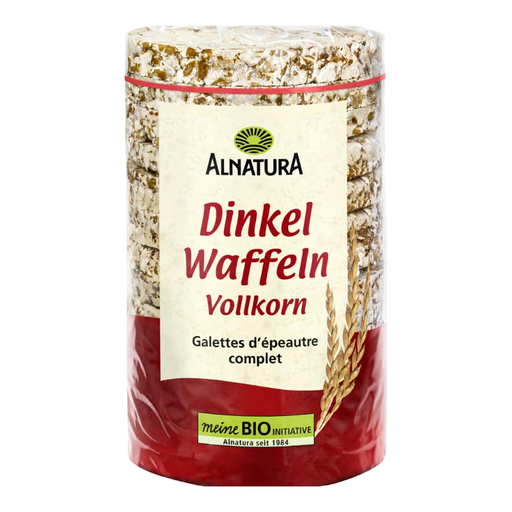
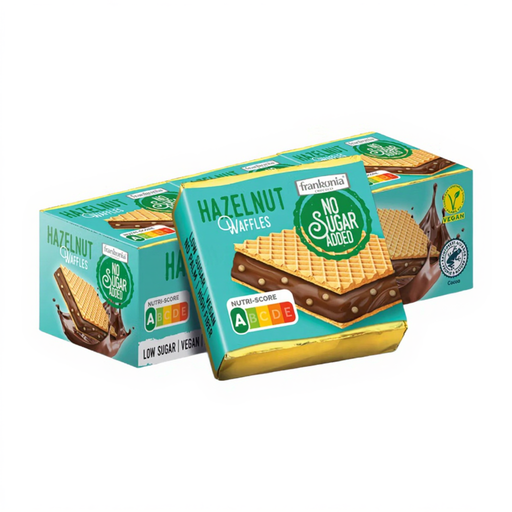
This selection includes spelt wafers as a base for a sweet breakfast, and hazelnut wafers labelled “No Sugar Added”. To choose between them, compare the nutritional information and ingredients on each pack. The two descriptions address different aspects of sugar content.
 No image available
If you’d like to have spelt wafers with a sweet topping, include the topping’s ingredients and nutritional information in your comparison too.
The pack contains 100 g. Check the pack to see how much sugar is in the amount you plan to eat.
 No image available
If you’re looking for hazelnut wafers labelled “No Sugar Added”, still check the sugar content per 100 g and for the amount you plan to eat. The claim alone doesn’t tell you the absolute sugar content.
This variety is listed as 9 × 19.4 g. Check the ingredients and highlighted allergens on the current pack too.
No. The percentage describes a reduction compared with a reference product, not the absolute sugar content. So compare the sugar per 100 g and for the amount you plan to eat.
Above all, check the ingredients list and highlighted allergens on the specific pack. The German Consumer Advice Centre identifies ingredients and allergens as important information on packaged foods; if the recipe has changed, check the current labelling.
No, the figure initially describes only the wafer, based on the stated serving size. If you have it with a sweet topping, take its ingredients and nutritional information into account as well.
No, not if you’re specifically choosing wafers. ALDI Nord describes its LEIBNIZ variety labelled “30% less sugar” as a butter biscuit; when buying wafers, compare the information on wafer packs.