For people comparing labels on the go
You need a waffle that’s ready to eat and want to assess its sugar content using the nutrition information. Terms such as “less sweet” aren’t enough to do that, as explained by the Verbraucherzentrale.


If you’re looking for a ready-to-eat waffle with less sugar to take on the go, compare the sugar content per 100 g and in the portion you actually plan to eat. According to Lebensmittelklarheit, “reduced sugar” means a comparison with a food of the same type; it doesn’t automatically mean the sugar content is low in absolute terms. Making waffles yourself gives you more control over the ingredients, but takes time and requires suitable packaging for the journey.
You need a waffle that’s ready to eat and want to assess its sugar content using the nutrition information. Terms such as “less sweet” aren’t enough to do that, as explained by the Verbraucherzentrale.
You can make waffles before heading out and choose which ingredients to use, including how much added sugar. Recipe ideas from EDEKA and REWE offer a different starting point from ready-packed waffles.
You want a waffle that’s easy to carry, while also paying attention to how much you eat and what it contains. If you have allergies, always check the label on the specific pack.
First decide whether you need a waffle you can take with you straight away or whether you have time to prepare one. For ready-made products, compare the nutrition information and portion size. Check the ingredients and allergens on the pack you’re buying.
| What to check | How to check it | Who it matters to |
|---|---|---|
| Sugar comparison | Check the sugar and energy per 100 g; only compare a reduced-sugar claim with waffles of the same type. | If I’m specifically looking to choose less sugar, I need comparable figures rather than simply judging how sweet something seems. For around 42% of consumers, this clear indication of sugar reduction comes first. |
| Portability and portion size | Check the packaging, the weight of each waffle and the nutrition information for the amount you’ll actually eat. | If there’s no time to prepare breakfast in the morning, I want a waffle that’s easy to take with me and to know how much I’m eating. Around 33% of consumers put this need first. |
| Ingredients and allergens | Read the ingredients list and allergen information on the specific pack; if making waffles yourself, check the recipe ingredients. | If there are ingredients I need to avoid, I want to know exactly what’s in the waffle and, if applicable, its filling. For around 25% of consumers, this check takes priority. |
Lebensmittelklarheit describes the claim as a comparison with a food of the same type. The nutrition information is what tells you how much sugar the waffle actually contains.
Compare waffles of the same type per 100 g, then take into account the portion you plan to eat.
EDEKA lists 43.7 g of sugar per 100 g for GUT&GÜNSTIG Neapolitaner Wafers, while ALDI SÜD lists 43 g per 100 g for BISCOTTO Wafer Slices. A compact size doesn’t mean a product has reduced sugar.
For filled waffles, check the sugar per 100 g and how much you plan to eat from the pack.
According to EDEKA, the individually wrapped GUT&GÜNSTIG Liège Sugar Waffles contain 24.1 g of sugar per 100 g. The packaging makes them easier to take with you, but doesn’t tell you how much sugar is in one waffle.
Check the weight of each waffle and calculate the sugar in the amount you’ll actually take with you.
A sugar claim is no substitute for checking the ingredients. EDEKA lists wheat, egg and soya, among other ingredients, in its Liège Sugar Waffles; hazelnuts are among the ingredients to note in its filled Neapolitaner Wafers.
If you need to avoid certain ingredients, check the ingredients and allergen information on the pack you’ve bought before eating the waffles.
EDEKA’s own-brand range includes Liège Sugar Waffles and filled Neapolitaner Wafers.
ALDI SÜD’s own-brand range includes filled Neapolitaner Wafer Slices in a pack containing four portions of 65 g each.
ALDI SÜD’s own-brand range includes plain mini waffles in a reusable box.
REWE provides waffle recipes, including low-sugar spelt waffles and mini waffles to take with you.
The recipe for quark waffles with no added sugar is one way to prepare breakfast in advance.
These two Joybuy products are different types of waffles to consider when checking ingredients, portion size and sugar information: a spelt waffle and a hazelnut waffle labelled “No Sugar Added”. This wording alone doesn’t confirm a comparative reduction in sugar.
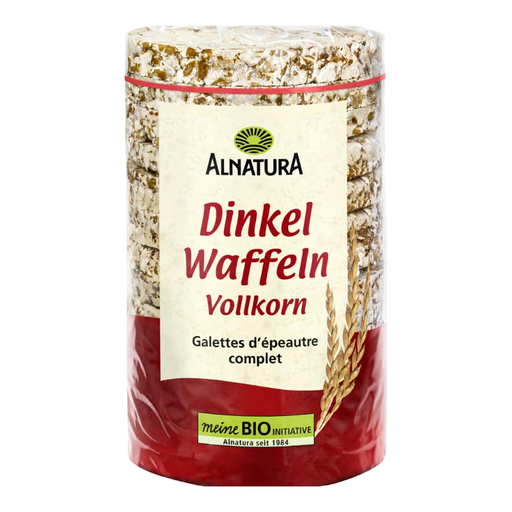 No image available
If you’re considering spelt waffles to take with you, check the sugar per 100 g on the pack and the amount you plan to eat.
The product name specifies a 100 g pack. Check separately before buying whether the waffles are individually wrapped or carry a claim about comparative sugar reduction.
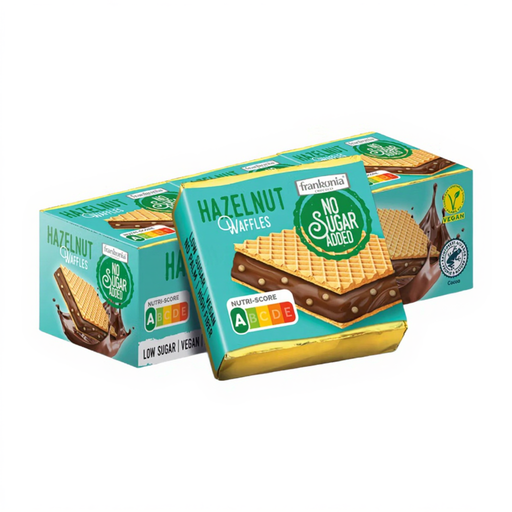 No image available
If you’re looking for hazelnut waffles with no added sugar, the “No Sugar Added” wording is a good reason to take a closer look at the ingredients list and nutrition information on the pack.
The product name specifies nine waffles weighing 19,4 g each. “No added sugar” on its own tells you neither the total sugar content nor whether there’s less sugar than in a comparable waffle.
The claim means there’s less sugar than in a food of the same type; it doesn’t automatically mean the sugar content is low. Lebensmittelklarheit says the sugar content must be at least 30% lower. Also check the nutrition information for the waffle per 100 g and for your portion.
No. Waffles with no added sugar may still contain sugar from their ingredients. The Verbraucherzentrale distinguishes this claim from “sugar-free”, so check the total sugar per 100 g as well when deciding what to buy.
First compare the sugar and energy per 100 g, then calculate the figures for the amount you plan to eat. According to EU guidance on nutrition labelling, pre-packed foods must also provide information on fat, saturates, carbohydrates, protein and salt.
Before eating, read the ingredients and allergen information on the specific pack. For example, the Liège Sugar Waffles described by EDEKA contain wheat, egg and soya; don’t assume that this information applies to other types or varieties of waffle.
Yes, as long as you make time to prepare them and store them appropriately before you leave. The quark waffle recipe from EDEKA Recipe World takes 50 minutes in total and includes perishable ingredients such as quark, eggs and milk. Follow the storage guidance for the ingredients you use.