Snackers keeping an eye on sugar
You’d like something sweet at the office and want to compare sugar levels using the nutritional information, rather than relying on claims on the front of the pack.


If you’re looking for a lower-sugar waffle for your office break, start by comparing the ‘of which sugars’ value per 100 g and for the amount you actually plan to eat, looking at similar products. Then check the ingredients, allergens and other nutritional values: reducing sugar alone tells you nothing about portion size or energy content. Baking your own waffles gives you more control over the recipe and the size of each waffle, but you’ll need to allow time for preparation and pack them suitably for taking with you.
You’d like something sweet at the office and want to compare sugar levels using the nutritional information, rather than relying on claims on the front of the pack.
You’re looking for waffles that are easy to take to your desk or share in a meeting. The weight of each waffle and how the pack is divided matter just as much as the values per 100 g.
You want to choose the recipe yourself and are happy to put in the preparation time. This is particularly relevant if the type of sweetener, specific ingredients or allergens determine what you choose.
First decide whether you want a packaged waffle that’s convenient for a break or would rather choose the ingredients and size yourself by baking at home. Then compare packaged products of similar waffle types, taking into account the portion you actually plan to eat.
A good choice if: You want a ready-to-eat snack and can compare the information on the specific pack.
The trade-off: Less sugar than in a similar product doesn’t automatically mean less energy or a smaller portion.
A good choice if: A single portion that’s easy to carry for your coffee break matters more to you than a reduced-sugar claim.
The trade-off: Individual wrapping makes it easier to plan your portion, but doesn’t change the waffle’s sugar content.
A good choice if: You want to choose the ingredients, type of sweetener and size yourself.
The trade-off: Baking, cooling and packing take time. You’ll also need to check the other ingredients in a low-sugar recipe.
| What to consider | What to check when buying | Who it matters to |
|---|---|---|
| Sugar content | For similar waffles, compare the ‘of which sugars’ value per 100 g and for your planned portion. A phrase such as ‘less sweet’ is no substitute for this comparison. | If you want to reduce your sugar intake, you need a clear figure rather than an impression of how sweet something tastes. This would be the main concern for around 33 % of consumers. |
| Portion and portability | Check the weight of each waffle and how the pack is divided. An individually wrapped waffle isn’t necessarily lower in sugar. | Whether you’re eating at your desk or sharing in a meeting, it helps to know how much you’ll be having; around 27 % of consumers would put portioning first. |
| Ingredients and allergens | Check the information on the specific pack for allergens and sweetening ingredients, even when a waffle carries a reduced-sugar claim. | If certain ingredients are off the menu, the exact recipe will determine what you choose. This check would be the priority for around 20 % of consumers. |
| Your own recipe | If you’re baking your own, plan the ingredients and number of waffles in advance. If your recipe includes nuts or dairy products, check these ingredients too. | If you want to choose the type of sweetener and portion yourself, you’ll need to put in the preparation time. This control would be the most important factor for around 20 % of consumers. |
A reduction compared with a similar product doesn’t tell you how much sugar a waffle contains overall. The German consumer advice centre points out that even a product with 30 % less sugar can still contain a lot of sugar.
Compare similar waffles using the nutritional information per 100 g and for your planned portion. Check the energy and saturated fat content too.
The German consumer advice centre lists syrups, honey and fruit juice among ingredients used to sweeten foods. Allergens can also matter in recipes using sugar substitutes: for example, an EDEKA low-carb waffle recipe contains erythritol, peanut butter and hazelnuts.
Read the full ingredients list and allergen information. If you’re baking your own, check every ingredient you use rather than assuming you know what’s in a recipe from its name alone.
Whether a waffle is individually wrapped or comes from a larger pack doesn’t tell you how much sugar you’ll eat during a break.
Check the weight of each waffle and how much you actually plan to take with you or share with your team. If you’ve opened a pack, check its storage instructions too.
These recipe and product examples can help you assess specific buying criteria. A brand name alone doesn’t mean a waffle is reduced in sugar; what matters is the information for the particular variety.
REWE’s recipe collection includes waffle varieties described as, among other things, ‘low sugar’ or vegan. These may be useful if you’re preparing your own portions for the office.
EDEKA lists the sugar content of its GUT&GÜNSTIG Liège sugar waffles as 24,1 g per 100 g. This individually wrapped standard waffle is a specific example for comparing nutritional information and portion size, not a confirmed reduced-sugar product.
ALDI Nord lists several types of waffle under the BISCOTTO brand. The type of waffle alone doesn’t tell you how much sugar it contains.
Lidl describes the Nutri-Score as an additional guide when comparing products within the same category.
As well as biscuits, Lotus Bakeries includes cakes and waffle specialities in its range.
This spelt waffle could work as a packaged snack for your office break. Check the information on the specific pack to see whether its nutritional values and your chosen portion suit your aim of cutting down on sugar; the product name alone won’t tell you.
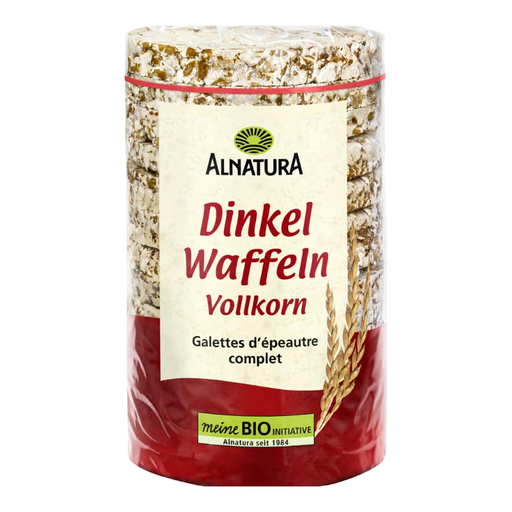 No image available
A spelt waffle that’s suitable for an office break if you want to choose the amount you eat. The pack contains 100 g; check the nutritional information on the current packaging for your portion. If you have a gluten intolerance, pay particular attention to the information about spelt and gluten.
It means the waffle has less sugar than a similar product, not that it has a set low sugar content. The German consumer advice centre points out that even 30 % less sugar can still mean a considerable amount; so check the ‘of which sugars’ figure.
No, how sweet something tastes isn’t a reliable indicator of its sugar content. Compare the nutritional information for similar waffles and read the ingredients list, which, according to the German consumer advice centre, may include sweetening ingredients such as syrups or fruit juice.
First compare the values per 100 g for similar waffles, then work out how they apply to the amount you want to eat. Check the weight of each waffle or the stated portion size; individual wrapping alone won’t tell you the sugar content per waffle.
No, a claim about sugar or carbohydrate content doesn’t tell you how much energy a product contains. For example, an EDEKA low-carb waffle recipe uses erythritol, butter, peanut butter and hazelnuts; check the other ingredients and nutritional values in recipes and ready-made products.