
Lieferung heute & morgen

Qualitätsgarantie

Willkommens-Angebote freischalten: KOSTENLOSE Lieferung | Bis zu 80 % RABATT | Kostenlose 30-Tage-JoyPlus-Testphase
App herunterladen
A walking aid for older people should not only feel sturdy, but also suit the way it will actually be used. A rollator used mainly indoors has different requirements from one used for walks, shopping or transfers from bed to chair. Many disappointing purchases happen because buyers focus only on the price, large wheels or a seat.
A rollator with a seat can provide a place to rest while you’re out and about. However, it’s important to check that the seat height and width, brakes and maximum load are suitable for the person using it. A rollator with a seat should never be treated as a transport chair unless the manufacturer specifically says it can be used that way.
The term folding rollator tells you little about whether a model will fit in your car boot, behind a door or in a lift. Before you buy, check its dimensions when folded, its weight and whether it can stand upright on its own.
Handles set too low can lead to poor posture, while handles set too high can make the walking aid harder to control. A walking aid for older people should offer several height settings, and its maximum load must account for the user’s weight and, where applicable, any shopping.
Look for a clearly stated maximum load capacity. If a model has a shopping basket, it’s not just the user’s weight that matters: the basket often has its own load limit. The frame may be made from materials such as steel or carbon steel. Steel models are often sturdy, but can be heavier.
Easy-to-reach hand brakes are important for everyday use. If the rollator has a seat, make sure the brakes can be locked securely before the user sits down. A walking aid should only be used on firm, level ground and in accordance with the instructions.
Check:
Larger wheels can be useful on uneven ground, but they don’t automatically make a model suitable for tight indoor spaces. For narrow doorways, the actual width matters more than the product name.
A walking aid with a shopping basket can be useful for short trips, provided the load is evenly distributed. Reflectors, a seat, bag or tray can make everyday use easier, but they don’t replace correct adjustment and safe operation.
A sit-to-stand aid or transfer chair for older people is a different type of product from a standard rollator. These systems can help with moving between sitting and standing, but they aren’t necessarily designed for longer walks or independent outdoor use.
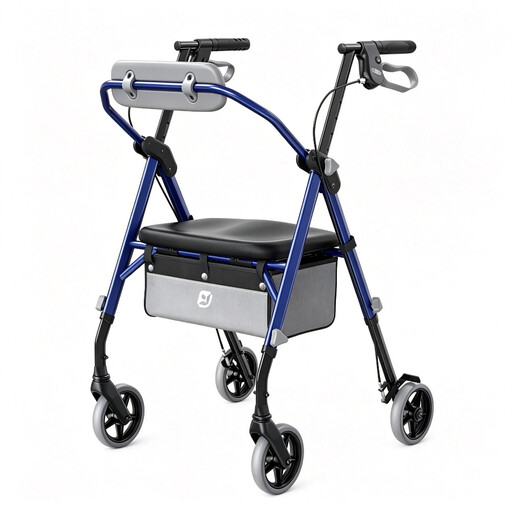
Why this product suits this profile: This model combines a seat with a folding design, making it suitable for people who want to take short trips with a chance to rest along the way.
The specifications state a load capacity of 158 kg, five handle heights from 80 to 93 cm, and a basket capacity of 5 kg. This makes it easy to check important limits before buying.
Folding design, net weight of 8.5 kg, 41 × 31.5 cm seat and 6-inch wheels.
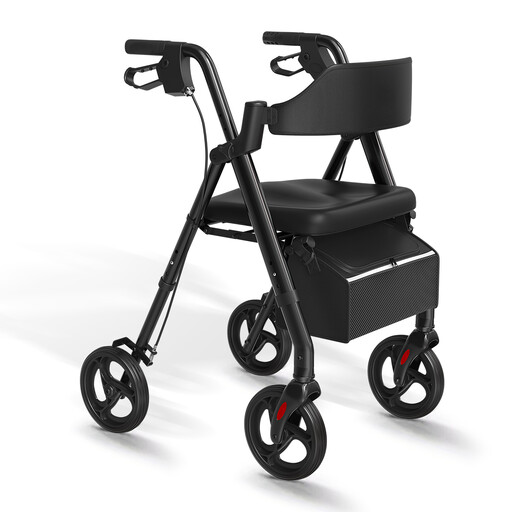
Why this product suits this profile: A good option for buyers who want to compare detailed specifications for the frame, seat, basket and adjustments.
The product details state a load capacity of 150 kg, five handle heights and a basket capacity of 10 kg. Folded dimensions are 40 × 58 × 78.5–93.5 cm; the model won’t stand upright on its own when folded.
Carbon steel frame, seat, shopping basket and a net weight of 9.35 kg.
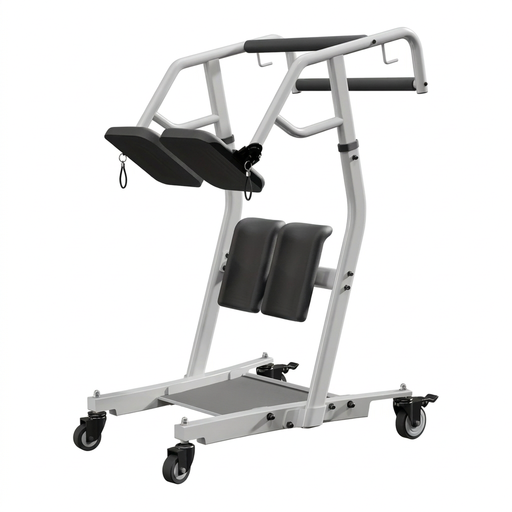
Why this product suits this profile: This system is designed for transfers between seats. It’s intended for households or care settings where a mobile transfer aid is needed.
The product details specifically state that it should be used in accordance with the instructions. It shouldn’t therefore be mistaken for a standard rollator or walking aid for everyday use.
Steel frame, stated load capacity of 180 kg, 180-degree seat rotation and two lockable rear wheels.
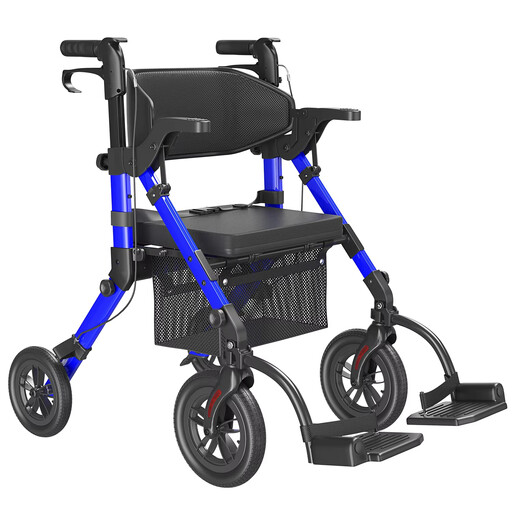
Why this product suits this profile: The combination of a folding walking aid and its specified wheel configuration makes it a portable option for people looking for a solution to suit different everyday situations.
The maximum load capacity of 136 kg and folded dimensions of 36.5 × 60.5 × 99 cm are clearly stated. This lets you check in advance whether it will fit in your car and storage space.
Two wheel sizes: 10-inch front wheels and 8-inch rear wheels, plus a folding design.
We’ve put together a comprehensive, regularly updated list of products that meet these strict selection criteria and the safety regulations in force in the EU.
Before buying a mobile walking aid, compare the following points in writing:
If you’re unsure which type of support is right, particularly after an injury or if you have significant balance problems, discuss your options with a medical or care professional. A walking aid is no substitute for individual advice.
The handles should be set so that your arms remain slightly bent when you stand upright. Both sides should be adjusted to the same height. Then check the brakes, screws and folding mechanism in accordance with the instructions. If you’re unsure, ask a professional to check the adjustment.
Its lifespan depends on how often it’s used, the load it carries, the surfaces it’s used on and how well it’s maintained. Wheels, brake cables, handles and catches are all subject to wear. Check the walking aid regularly for play, cracks, loose connections and stiff brakes. If you notice any damage, stop using it until it has been inspected.
The price depends on factors such as the frame material, folding mechanism, seat, basket, wheel size and transfer function. A basic walking frame has different features from a rollator with a seat or a sit-to-stand aid. So don’t compare price alone: consider the load capacity, dimensions, warranty and intended use too.