City walks with route directions
If you want to hear conversations and traffic at crossings and on shared paths, open-ear headphones can be a good place to start. Check that you can still understand your quietest directions at a moderate volume.


If you want to hear conversations and sounds around you while walking, start by comparing open-back Bluetooth headphones. On noisy routes, quieter recordings may be harder to understand with this style; noise-isolating in-ear headphones with a transparency mode are an alternative if speech clarity matters more and you can use the mode reliably. The recording plays on the connected playback device, not automatically through the headphones.
If you want to hear conversations and traffic at crossings and on shared paths, open-ear headphones can be a good place to start. Check that you can still understand your quietest directions at a moderate volume.
If you need to understand quiet explanations even on noisier stretches, compare open-back models with in-ear headphones that have an easy-to-enable transparency mode. A mode is no substitute for paying attention to what is happening around you.
If you plan to listen to several recordings in a row, consider the fit, easy-to-reach controls and battery life per charge. The stated total battery life with a charging case is not the same as the earbuds’ continuous playback time.
A good fit if: You want to hear conversations and sounds around you directly while walking, without blocking your ear canals.
The trade-off: The open design does less to block outside noise, so quiet directions may be harder to understand on noisy routes.
A good fit if: You would rather not wear individual earbuds and prefer a connected neckband.
The trade-off: Compare the available neckband sizes and test whether speech remains clear at your usual walking pace.
A good fit if: You want to understand quiet voice recordings more easily on noisier stretches and can reliably switch to awareness of your surroundings.
The trade-off: Transparency mode is not the same as leaving your ear canals open at all times. Test the controls outdoors, and pause playback whenever a situation calls for your full attention.
| What matters | What to check when buying | Who it matters most to |
|---|---|---|
| Awareness of your surroundings | Look for an open design or an easy-to-reach transparency mode; test it with an actual recording at a moderate volume. | If I want to hear traffic and conversations while walking, being aware of my surroundings is essential. Around 36% of consumers put this first when walking. |
| Clarity of quiet directions | Test the quietest recording available in a typical outdoor setting; don’t compare sound or noise-isolation specifications alone. | If I need to understand turns and quiet explanations even on noisier stretches, speech clarity matters to me. Around 29% of consumers give this priority. |
| Fit and controls | Try them on with your own glasses or hat; make sure you can pause and adjust the volume without looking at your phone for long. | If I’m out for longer, I want a comfortable fit and an easy way to pause or resume the recording. Around 21% of consumers prioritise fit and controls during their walk. |
| Battery life and preparation | Compare battery life per charge rather than the total figure with the case; test your download, app playback and Bluetooth connection before setting off. | If my walk includes several recordings, I want to check the connection, file and battery charge in advance. Around 14% of consumers focus on uninterrupted playback and preparing for their walk. |
The manufacturer’s stated battery life for the earbuds and the additional playback time from the charging case are two different figures. For a walk, what matters is how long the earbuds play without needing a recharge.
Compare the stated battery life per charge with the listening time you expect; manufacturer figures do not reflect your own usage.
If the battery life per charge isn’t enough, you may need to stop and recharge while you’re out.
Open-back models let outside noise through. On certain Sony models, wind noise may also increase when Ambient Sound is enabled.
Test quiet sections outdoors at a moderate volume, and try switching between playback, pause and ambient mode.
Battery life and design specifications apply to the specific model named. For example, the manufacturer’s figures differ for Shokz OpenRun and OpenRun Pro 2; Bose also sells separate generations of the Ultra Open Earbuds.
Check the full model name against the specifications for that product before comparing features.
Sony offers both open ring-style earbuds and in-ear headphones with Ambient Sound and noise cancelling. These designs suit different needs.
The OpenRun range uses an open-ear neckband with bone conduction; OpenRun Pro 2 is a separate model that combines bone and air conduction.
Soundgear Sense is an open-ear earbud with ear hooks and a detachable neckband.
The AeroFit 2 is an open-ear hook-style headphone with an adjustable fit.
The first-generation Ultra Open Earbuds are an open-ear clip alternative without a neckband.
The products shown here are open-back Bluetooth headphones in clip, ring or bone-conduction styles, for walks where you want to remain aware of sounds around you. Open designs do less to block outside noise, so quiet directions may be harder to understand on noisy routes.
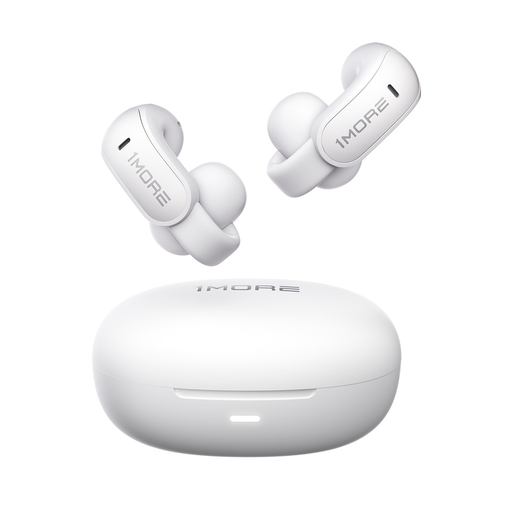 No image available
The open clip-on design is worth considering if you want to hear sounds around you while walking; it does less to block outside noise.
Bluetooth 5.4; IPX5.
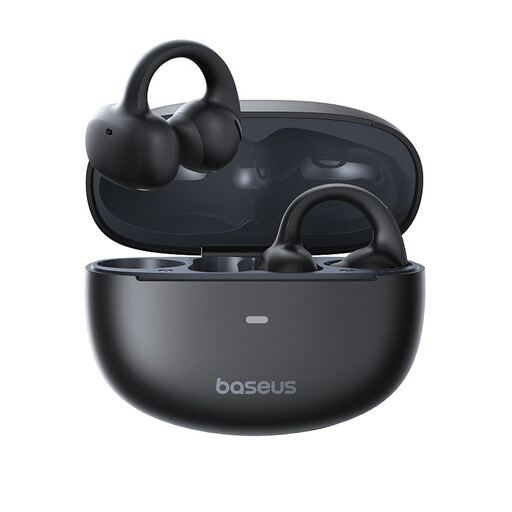 No image available
The open clip-on design is an option if you don’t want to block your ear canals; test how clearly you can hear your walking tour recording in a typical outdoor setting.
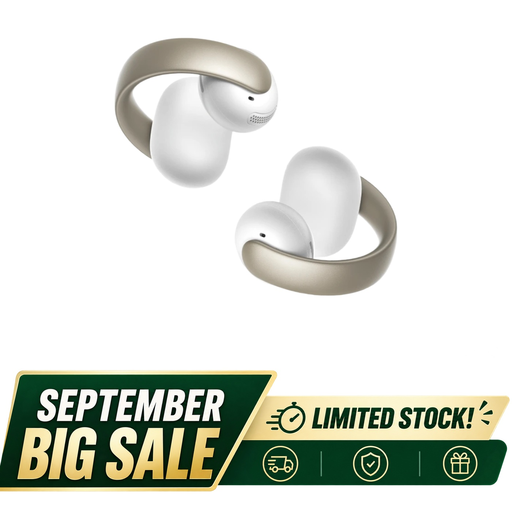 No image available
The open ring design is worth considering if you want to stay aware of your surroundings while listening; how clearly you can hear directions also depends on outdoor noise.
Bluetooth.
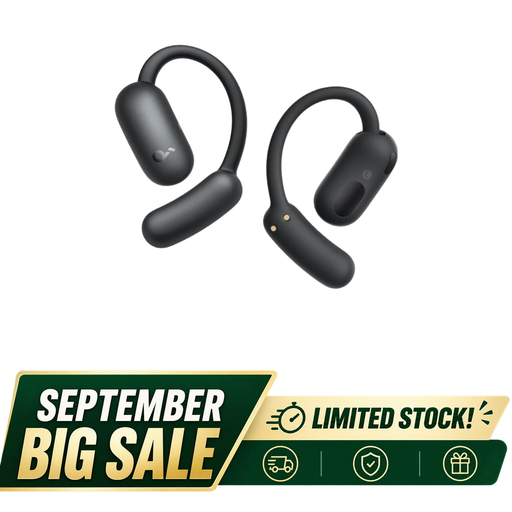 No image available
These open-ear hook-style headphones are an option if you want to hear sounds around you while walking. Anker soundcore lists four adjustable hook positions, so you can try different fits.
Anker soundcore states up to 10 hours of playback per charge.
 No image available
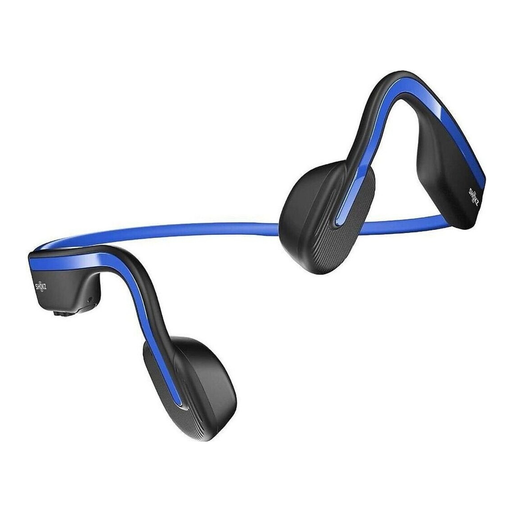
These open-ear bone-conduction headphones are worth considering if you don’t want to wear individual earbuds while walking; on noisy stretches, outside sounds may drown out quiet sections.
Bluetooth; 6 hours of playback; IP55.
No. Playback usually comes from the connected device. If the recording is on your smartphone, open it in a suitable audio app, pair your headphones and select them as the Bluetooth playback device. Test the app and file you plan to use before your walk; whether a guide app works offline depends on the app.
Test the quietest recording at a moderate volume, and try a different style or listening situation if you keep needing to turn it up. The World Health Organization recommends, among other things, keeping the volume at no more than 60% of the device’s maximum and taking listening breaks to reduce the risk of hearing damage. This is general guidance, not a product-specific safety guarantee.
The relevant regulations here do not impose a blanket ban on pedestrians wearing headphones. Section 1 of the German Road Traffic Regulations (StVO) requires all road users to exercise constant care and consideration for one another; Section 23(1) of the StVO, on devices impairing hearing, applies to people driving a vehicle. Pay particular attention to your surroundings when crossing the road and in situations with limited visibility, and don’t apply this statement to cycling or driving.
As part of its market surveillance, Germany’s Federal Network Agency checks Bluetooth products for things including the CE mark, identifiable manufacturer details, German-language instructions and a declaration of conformity. Check these details for the specific product listing; a brand name alone does not confirm that a particular item complies.
If a product is faulty, the seller is generally responsible for the statutory warranty; this is separate from any voluntary manufacturer’s guarantee. For a typical online purchase from a business seller, you generally have a 14-day cancellation period from delivery, subject to the relevant exceptions. Check the seller details and returns policy before buying.