
Lieferung heute & morgen

Qualitätsgarantie

Willkommens-Angebote freischalten: KOSTENLOSE Lieferung | Bis zu 80 % RABATT | Kostenlose 30-Tage-JoyPlus-Testphase
App herunterladen
A wall clock is more than just a timepiece. It's a central element of your interior design, blending functionality with style. However, the sheer number of options can be overwhelming, and a hasty purchase often leads to disappointment. A loud ticking in the bedroom, an unreadable dial, or a movement that fails after just a few months are common frustrations.
This guide will help you identify the crucial features to look for. We'll show you what to consider to find a clock that not only looks great but also performs its function reliably for years to come.
Before we dive into the technical details, let's look at the three most common problems that arise after buying a wall clock and how you can avoid them from the start.
To avoid these pitfalls, you should carefully examine two core aspects before making a purchase: the clock's movement and the combination of its material and size.
The movement determines the accuracy, noise level, and maintenance requirements of your wall clock.
The choice of material and size is crucial for how the clock integrates into your living concept.
Here are some recommendations tailored to specific needs and interior styles, taking the aforementioned criteria into account.

Why it's a great fit: For those who see their wall clock as a central piece of art in the living room. The striking Art Deco design makes it a statement piece that combines functionality with extravagant aesthetics.
Despite its artistic design, the time is easy to read thanks to the clear spokes and contrasting black hands. The sturdy metal construction avoids any impression of cheap materials.
Combines timekeeping with sculptural wall decor. Its 50 cm diameter makes it an ideal focal point for large walls.
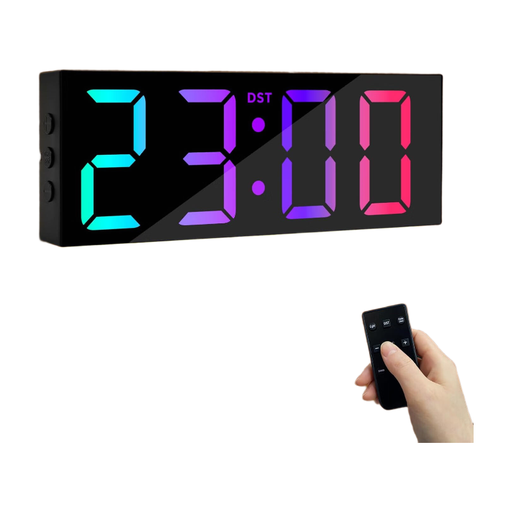
Why it's a great fit: Ideal for anyone who needs maximum functionality and legibility. Perfect for the kitchen, office, or for seniors who prefer a large, clear display without any frills.
Completely solves the problem of poor legibility. The large 12-inch LED display with customisable colours and automatic brightness adjustment ensures perfect visibility, day or night.
Multifunctional: Displays time, date, and day of the week. The memory function retains all settings during a power outage.
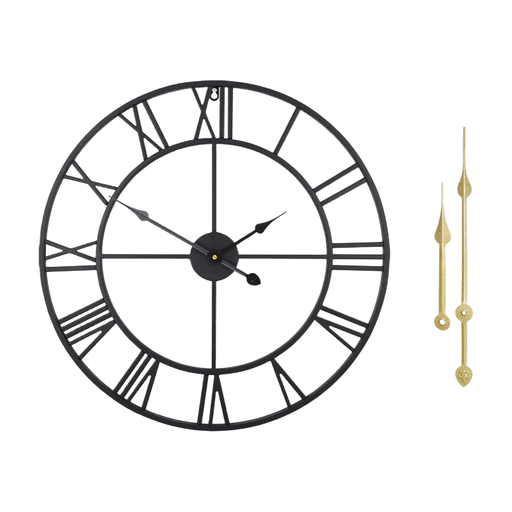
Why it's a great fit: The ideal choice for the bedroom, library, or any other place where silence is golden. Its classic design blends unobtrusively into many interior styles.
Directly addresses the pitfall of loud ticking. According to the manufacturer, the high-quality quartz movement ensures virtually silent operation, allowing for undisturbed sleep.
The solid iron construction gives the clock stability and a premium feel, while the minimalist design with Roman numerals exudes timeless elegance.

Why it's a great fit: For anyone looking to add a playful and thematically appropriate accent to their kitchen. This clock is a conversation starter, blending decoration with practical use.
Although the design is unconventional, the clock remains functional. The knife and fork hands are clearly distinguishable, and the cutlery hour markers are large enough to read the time easily in the kitchen.
A unique design conceived specifically for the kitchen. The metal construction provides the necessary durability for a busy environment.
We have compiled a complete, up-to-date list of products that fully meet these strict selection criteria and all applicable regulations.
A silent movement, often called a "sweeping second hand" movement, moves the second hand in a smooth, continuous rotation rather than in individual steps. This eliminates the typical ticking sound, making these clocks ideal for noise-sensitive environments like bedrooms or offices.
For precise alignment, it's best to use a spirit level. Mark the desired position for the nail or screw with a pencil. Place the spirit level on the mark and align it horizontally. For larger clocks, it can be helpful to align the top edge of the clock with the level's line before finalising the hanging point.
The battery life in a quartz wall clock depends on the quality of the movement and the battery itself. On average, a single AA battery in a standard analogue clock lasts about 12 to 24 months. Clocks with additional features or lighting may have higher consumption. It is recommended to use high-quality alkaline batteries and to replace them as soon as the clock starts to lose time.