
Lieferung heute & morgen

Qualitätsgarantie

Willkommens-Angebote freischalten: KOSTENLOSE Lieferung | Bis zu 80 % RABATT | Kostenlose 30-Tage-JoyPlus-Testphase
App herunterladen
A wall clock is more than just a timepiece. It's a central element of your interior design, combining functionality and style. However, the sheer number of choices can be overwhelming, and well-intentioned purchases often lead to disappointment. Certain design flaws or overlooked technical details can quickly make an initially appealing clock impractical. This guide will show you which crucial features to look for to make an informed decision.
Before diving into styles and colours, it's wise to understand the three most common issues that can severely limit a wall clock's usefulness in daily life.
To avoid the problems mentioned above, you should carefully examine three technical and material aspects. These form the basis for a choice that is both durable and satisfying.
The movement determines the clock's accuracy, noise level, and maintenance requirements.
The material influences not only the appearance but also the durability and suitability for specific rooms.
The right size depends on the wall area and the typical viewing distance.
Here are some models tailored to specific user profiles and their requirements.

Why it's a great fit: Ideal for anyone who values maximum readability and useful extra information. The large digits are easy to see even from a distance or for seniors.
The 14.5-inch LCD display with huge digits completely solves the problem of poor readability. As a digital clock, it is also completely silent.
Displays time, date, day of the week, and indoor temperature. The automatic adjustment for daylight saving time offers added convenience.

Why it's a great fit: For anyone who wants to give their kitchen wall clock an original and thematically appropriate touch. The design is a conversation starter and playfully blends into the kitchen environment.
Despite the creative design, the time is easy to read. The knife and fork hands stand out clearly from the background, and the utensils as hour markers are unambiguous.
A unique cutlery design made of metal, conceived specifically for the kitchen and serving as a decorative feature.
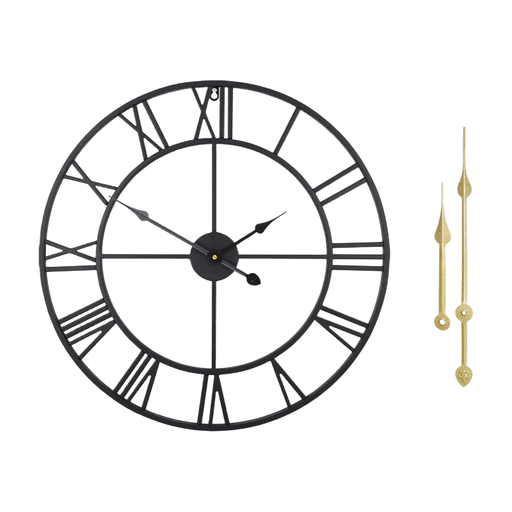
Why it's a great fit: Perfect for bedrooms, libraries, or offices where silence is a priority. The classic, minimalist design fits unobtrusively into many interior styles.
Directly addresses the pitfall of loud ticking. According to the manufacturer, a high-quality quartz movement ensures virtually silent operation.
The combination of a silent movement and a timeless design with solid iron Roman numerals makes it a durable choice.
We have compiled a comprehensive, up-to-date list of products that fully meet these strict selection criteria and safety regulations.
1. How do you hang a wall clock correctly? Ensure the hook or screw is suitable for the clock's weight and your wall type. The mounting point should hold the clock securely without it wobbling. Hang the clock at a height where the dial is comfortably at eye level, typically about 1.50m to 1.70m from the floor.
2. What does a "sweeping second hand" mean on a wall clock? A "sweeping second hand" describes a second hand that moves in a continuous, fluid motion around the dial, rather than in one-second jumps. This mechanism is virtually silent and prevents the typical tick-tock sound, making such clocks ideal for noise-sensitive environments.
3. What type of battery is suitable for a wall clock? Most analogue quartz clocks require a single AA battery. It is important to check the manufacturer's specifications. Some precision movements, especially non-ticking ones, work best with zinc-carbon batteries instead of alkaline batteries, as they provide a lower, more consistent voltage, which can be gentler on the movement. Digital clocks are often powered by an AC adapter and have a button cell battery as a backup for saving settings.