
Lieferung heute & morgen

Qualitätsgarantie

Willkommens-Angebote freischalten: KOSTENLOSE Lieferung | Bis zu 80 % RABATT | Kostenlose 30-Tage-JoyPlus-Testphase
App herunterladen
Wall and door hooks create extra storage space without requiring larger wardrobes, chests of drawers or surfaces. They are suitable for clothes, towels, keys, bags, kitchen utensils and many other everyday items. However, coat hooks, self-adhesive hooks and no-drill door hooks differ considerably in terms of installation, load capacity and intended use.
If you focus only on an attractive finish or a high piece count, you could end up buying a product that does not fit your door, comes away from the wall or develops rust spots after a short time. The following criteria will help you avoid common purchasing mistakes.
A hook set with lots of individual pieces may initially seem practical. However, what really matters is how much weight each individual hook can hold and whether this figure applies to a suitable installation method. A bag full of books puts different demands on a hook than a lightweight towel. With metal wall hooks, the stated load capacity should always be considered alongside the wall plugs, screws and condition of the wall.
Self-adhesive hooks are an appealing option for rented homes and smooth surfaces. However, their adhesive strength depends on the surface being clean, dry and as even as possible. Adhesion may be weaker on wallpaper, dusty plaster, damp tile joints or textured surfaces. Before installation, you should also check the manufacturer’s instructions regarding the waiting time and load capacity.
No-drill door hooks simply hang over the door leaf. However, the door rebate, seal and door thickness can all be relevant. If the hook is too wide, the door may not close fully. If it is too narrow, it may slip or cause pressure marks. It is therefore worth measuring the top edge of the door and the available clearance before buying.
For bathrooms, kitchens and balconies, rust-resistant materials are particularly important. Stainless steel and aluminium are generally suitable for damp environments, provided the specific finish and construction are designed for this purpose. A metal wall hook with smooth edges reduces the risk of damaging textiles.
With coated hooks, check whether the surface is described as rust-resistant. Even so, any water residue should be removed regularly. A soft, slightly damp cloth is usually sufficient for cleaning. Harsh cleaning products can damage coatings and adhesive surfaces.
For permanent installation, the wall plugs supplied will not necessarily be suitable for every wall. Concrete, brick, plasterboard and tiles all have different requirements. For heavy coats or several bags, a screwed installation is generally more predictable than an adhesive solution.
Pay attention to the length, depth, spacing between hooks and door thickness. A compact hook rail is ideal for a narrow hallway, while a deep coat hook provides more room for thick coats. Rounded edges are practical for clothes and towels. A groove or recess can help prevent straps or garments from slipping off.
For keys and small items, a flat key holder is often sufficient. In the kitchen or garden, however, an S-hook set with several pieces may offer greater flexibility.
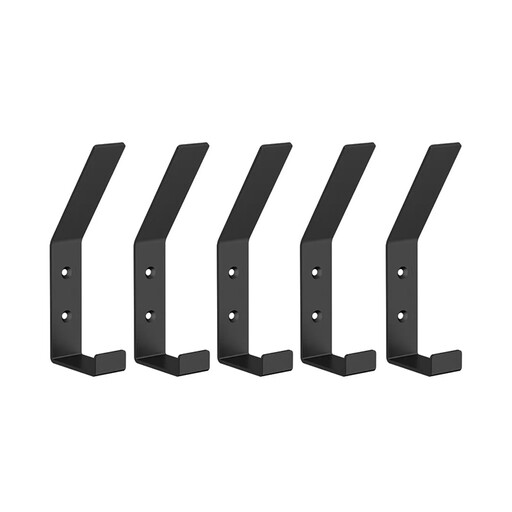
Why this product suits this profile: The five-piece set is ideal for households wanting to add extra hanging space to several doors or rooms. It is a practical choice for hanging clothes, hats or keys.
The product name specifies stainless steel and a door-hook design. Even so, check the door thickness, clearance and intended load capacity before buying.
Five individual hooks and the stated stainless-steel construction provide a simple solution for adding several storage points.
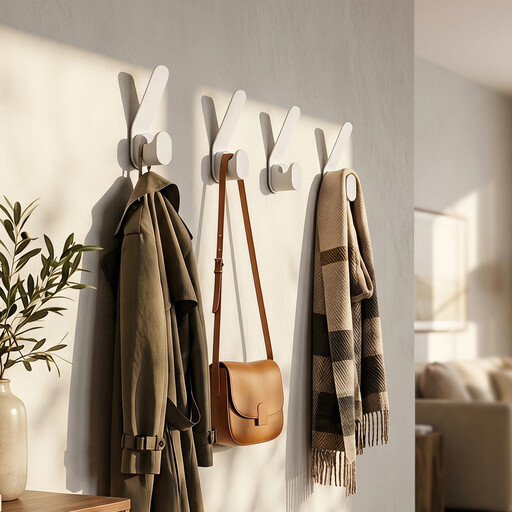
Why this product suits this profile: The double-hook aluminium design is intended for hallways, bedrooms, bathrooms or balconies. Permanent wall mounting suits users who prefer a clearly organised, long-term storage solution.
The product details specify rounded edges, a groove to prevent items slipping and installation with wall plugs and screws. The wall must be suitable for this type of installation.
Eight double wall hooks, aluminium construction, a rubber backing and a stated load capacity of up to 11 lb per hook.
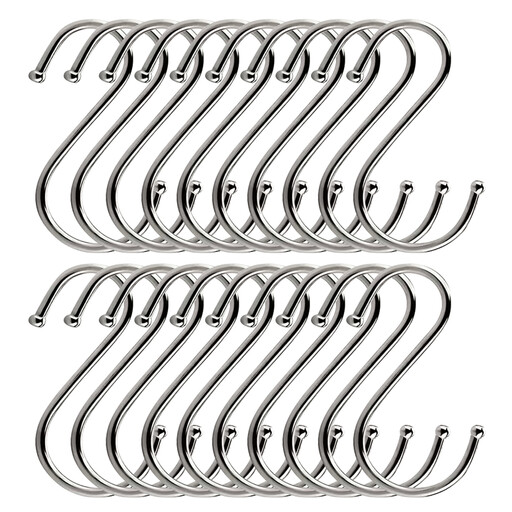
Why this product suits this profile: This S-hook set is designed for kitchens, bathrooms, offices, bedrooms and gardens. It can be hung without drilling over rails, racks, cupboard edges or other suitable edges.
The 75 mm length and intended use for light to medium-weight items are clearer indicators than general claims about load capacity.
20 metal S-hooks, 75 mm in length, with a surface described as rust-resistant for flexible storage.
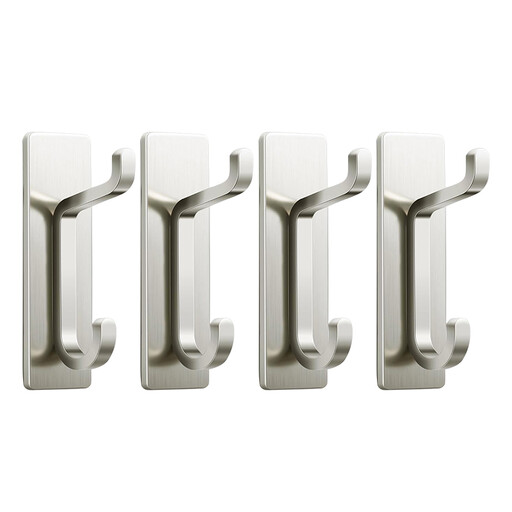
Why this product suits this profile: Four self-adhesive stainless-steel hooks are designed for users who want to create extra space without drilling, for example in the bathroom, kitchen or on a smooth door surface.
The product details specify stainless steel, an adhesive backing and installation without drilling. Check their suitability for wallpaper or uneven surfaces in advance.
Four hooks, stainless-steel material and tool-free installation with an adhesive backing.
We have put together a complete, regularly updated list of products that fully meet these strict selection criteria and the safety regulations applicable in the EU.
With screw-in hooks, mark the drill holes precisely and use suitable wall plugs. After installation, check that the hook is firmly secured and that the door or drawer can still move freely. With adhesive hooks, the surface must be free from grease and dust. After attaching them, observe the stated curing or waiting time before hanging any weight.
Stainless-steel, aluminium and coated metal hooks can usually be cleaned with a soft cloth. Check the screws, adhesive surfaces and any visible corrosion regularly. If a fastening becomes loose, first remove the load from the hook, then reinstall or replace it.
For smooth, load-bearing surfaces, self-adhesive hooks or no-drill door hooks may be suitable. Adhesion is less predictable on wallpaper, porous plaster and damp surfaces. If you need a higher load capacity and are allowed to drill, consider a screwed solution with suitable wall plugs.
This depends on the hook, material, surface and installation method. The key figure is the stated load capacity per hook, not the number of hooks in the set. With coats, bags or rucksacks, you should also allow for dynamic loads, such as when an item is taken off quickly.
They can be used on smooth, dry tiles or other suitable surfaces. Steam, splashed water and residue can affect the adhesive bond, however. You should therefore follow the product details and installation instructions, and observe the load limits.