
Lieferung heute & morgen

Qualitätsgarantie

Willkommens-Angebote freischalten: KOSTENLOSE Lieferung | Bis zu 80 % RABATT | Kostenlose 30-Tage-JoyPlus-Testphase
App herunterladen
A well-chosen wall hook creates order while adding a design accent. However, the selection is vast, and not every product delivers on its promise. Choosing the wrong material or an unsuitable mounting method often leads to frustration: hooks falling off the wall, or unsightly residue on wallpaper and tiles. This guide will help you navigate the most common pitfalls and find a functional, durable solution for your home.
As a Joybuy Product Recommendation Officer, I filter relevant product information for you to provide an objective basis for your decision—free from exaggerated marketing claims.
Before you make a decision, you should be aware of the typical problems that can lead to a bad buy.
To avoid these problems, focus on three core parameters that are crucial for sustainable and satisfactory use.
The choice of mounting is the most fundamental decision and depends on the intended use and your living situation.
The material determines not only the wall hook's design but also its durability and suitability for different rooms.
Consider what you want to hang and how much space is available.
Here are some selected products tailored to specific needs and living situations.

Why it's a great fit: Ideal for renters seeking a reliable, drill-free solution for the bathroom or kitchen. The hooks are reusable and can be easily taken with you when you move.
Addresses the problem of surface damage. The suction cup technology is designed for smooth, airtight surfaces and can be removed without a trace, according to the manufacturer. The specified load capacity of up to 5 kg provides a reliable guideline for its intended use.
Tool-free installation in seconds and a 360° rotatable hook that compensates for installation errors and makes usage more flexible.
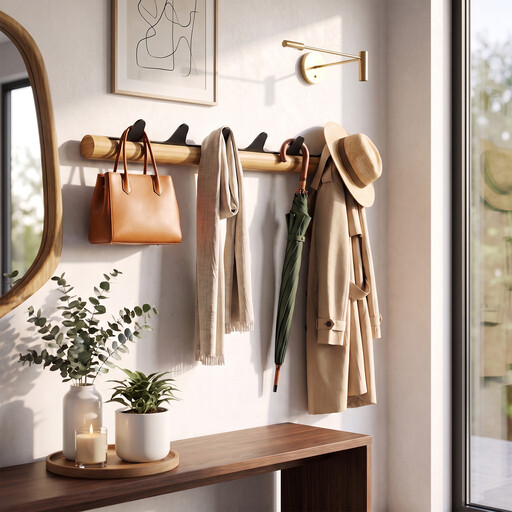
Why it's a great fit: A robust hook rack designed for the demanding daily life of a family entryway. It offers sufficient space and stability for heavy jackets, backpacks, and bags.
Solves the problem of insufficient load capacity. The secure wall mounting with screws achieves a high load capacity of up to 30 kg (according to the manufacturer). The sealed wood and rustproof aluminium hooks prevent material fatigue.
The combination of solid, FSC-certified rubberwood and high-quality aluminium hooks ensures durability and a high total load capacity.
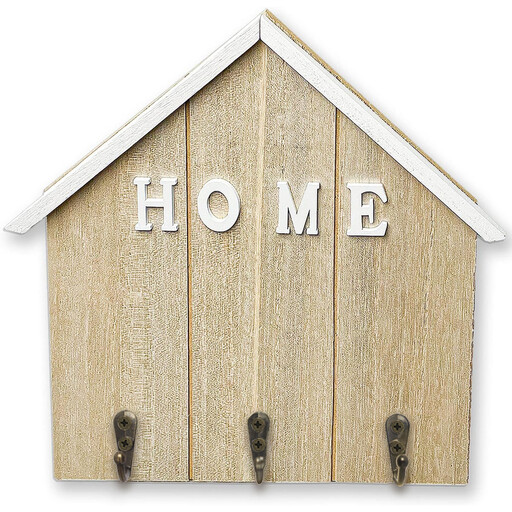
Why it's a great fit: For anyone looking for a functional yet decorative solution for their entryway. This key holder not only organises keys but also serves as a charming welcome message.
Provides a dedicated solution for a specific problem—organising keys and mail. Instead of using mismatched hooks, this product purposefully combines function with an appealing design built for longevity.
Combines three metal hooks with a practical shelf for letters or small items within a decorative, house-shaped wooden frame.
We've compiled a complete, up-to-date list of products that fully meet these strict selection criteria and applicable regulations.
1. What is the actual load capacity of no-drill wall hooks? The load capacity depends heavily on the technology (suction cup, adhesive) and the condition of the mounting surface. High-quality vacuum suction cups can hold a load of up to 5 kg on ideal surfaces (smooth, clean, airtight). For adhesive hooks, the capacity varies significantly depending on the adhesive and brand. It is essential to follow the manufacturer's instructions precisely and prepare the wall accordingly. For items over 2 kg, drilling is generally the safer choice.
2. Can I use a wooden wall hook in the bathroom? Yes, as long as the wood is suitable for damp environments. Look for models where the wood surface is protected by lacquer, oil, or another sealant. Untreated wood tends to absorb moisture, which can lead to warping or mould growth. Products explicitly rated for damp rooms are preferable here.
3. How do I remove adhesive hooks without damaging the wall? For most modern adhesive systems, it is recommended to pull the adhesive strip slowly downwards, parallel to the wall. This gently releases the adhesive bond. Gently warming the adhesive area with a hairdryer can also help. Always read the manufacturer's instructions before removal, as methods can differ. For suction cups, simply lifting the edge slightly is usually enough to release the vacuum.