
Lieferung heute & morgen

Qualitätsgarantie

Willkommens-Angebote freischalten: KOSTENLOSE Lieferung | Bis zu 80 % RABATT | Kostenlose 30-Tage-JoyPlus-Testphase
App herunterladen
Wall hooks create extra storage without taking up floor space. Whether as coat hooks in the hallway, bathroom hooks for towels or kitchen hooks for utensils: the right choice depends heavily on installation, material and load.
Many bad purchases aren’t about the price, but unclear product details. A hook can look decorative yet be unsuitable for heavy coats. And a self-adhesive option that sticks to tiles may not work on painted or textured walls. The following criteria help you separate marketing talk from features that matter in everyday use.
Terms like ‘heavy duty’ or ‘sturdy’ don’t replace a precise load limit. What matters is whether the figure refers to a single hook, the whole hook rail, or only to an ideal mounting surface. Winter coats, full bags and rucksacks weigh far more than scarves or keys.
With wall-plug installation, the wall material, plug type and screw length also affect the real load capacity. Always consider the maker’s load rating together with the intended wall and the installation instructions.
Screws and wall plugs give a solid fix but require drill holes. Self-adhesive hooks are appealing for rented homes and smooth surfaces, but have limits on wallpaper, textured plaster, damp areas and uneven paint.
Hooks that hang over doors or cupboard edges aren’t universally compatible either. Before buying, check door thickness, clearance and freedom of movement.
A compact hook rail can make sense in a small hallway, whereas a five-piece wall rack offers more hanging space for a family household. Hooks set too close together make it harder to remove coats. With single hooks, you can space them more flexibly across the wall.
Metal hooks made of steel, stainless steel or aluminium often suit the hallway, kitchen and bathroom. For damp rooms, rust-resistant finishes and proper cleaning matter. Aluminium is light; steel can have a higher own weight and different stability, depending on the design.
Wooden hooks and wood panels complement natural or classic interiors. Check whether it’s solid wood, MDF or a coated engineered wood board. A lacquer or seal doesn’t automatically protect against prolonged water contact.
Plastic hooks are light and often suitable for small items. With adhesive options, the quality of the adhesive strip and suitability for the surface are more crucial than the hook material itself.
Decide how you’ll use them before you buy:
Don’t hang anything that exceeds the stated maximum load. Wall hooks aren’t designed as climbing or holding devices.
Check length, depth, number of hooks and whether screws and wall plugs are included. For a hallway hook rail, measure the wall area. Individual decorative wall hooks allow flexible layouts, but each one needs its own fixing point.
In rented homes, a low-residue solution can be useful. Still, test the adhesive first in an inconspicuous spot and follow the manufacturer’s instructions. Clean, dry and smooth surfaces are key.
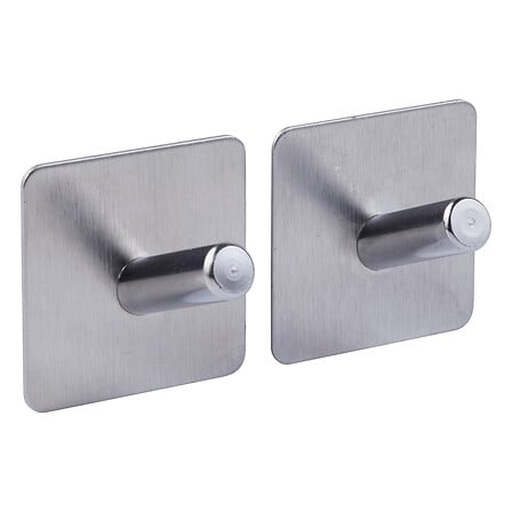
Why this product suits the profile: The two metal hooks are intended for small items such as keys, towels or accessories and can be fitted without drilling.
The stated load limit of up to 1.5 kg per hook clearly defines its intended use, so you don’t accidentally use it for heavy coats.
Steel and stainless steel, two pieces per set, plus tool-free installation with an adhesive pad.
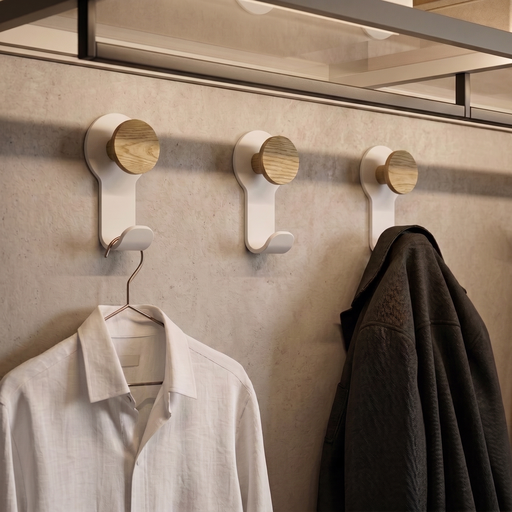
Why this product suits the profile: The mix of FSC-certified wood, aluminium alloy and double hooks combines flexible placement with a clean, decorative look.
Installation uses screws and wall plugs rather than adhesive pads alone. The stated load limit of up to 11 lb per hook should still be observed.
Eight single hooks, rounded edges, a rubber pad on the back and a rust-resistant aluminium construction, according to the product description.
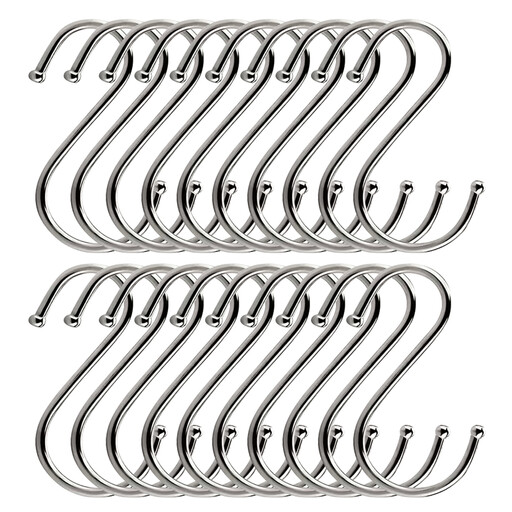
Why this product suits the profile: The S shape is ideal for kitchen rails, shelves, cupboard edges, bathroom organisers or garden areas when you need lots of hanging points.
These hooks hang in place rather than relying on adhesive on an unsuitable wall. For heavy items, only use after checking the strength of the surface they’ll hang from.
20 pieces per pack, 75 mm length and a rust-resistant metal finish, according to the product description.
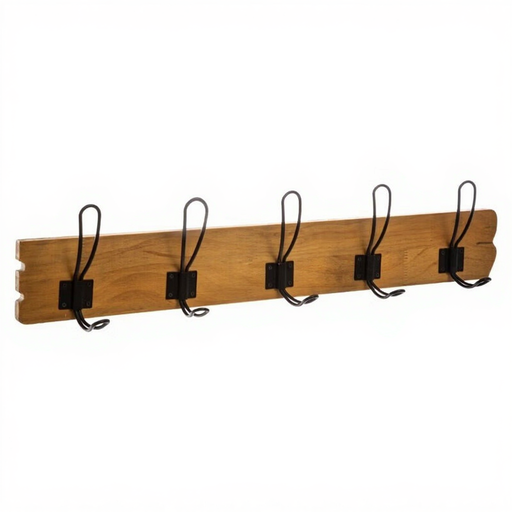
Why this product suits the profile: Five double hooks on a 63.6 cm-long pine frame provide a clear, tidy solution for coats, scarves and bags in the entrance area.
The fixed frame design avoids the common mistake of placing individual hooks too close together. Use suitable fixings for your wall when mounting.
Five double hooks, pine frame, iron hook system and a compact 14 cm width.
We’ve put together a complete, regularly updated list of products that fully meet these strict selection criteria and EU safety regulations.
For cleaning, a soft, slightly damp cloth is sufficient for many wall hooks. Harsh cleaners can damage coatings, wood surfaces or adhesive bonds.
Self-adhesive hooks or models that hang over doors usually avoid drill holes on suitable surfaces. However, they’re not right for every wall. Wallpaper, coarse plaster, damp areas and damaged paint can impair adhesion. For heavy outerwear, a screwed solution with the landlord’s approval is often more reliable.
It depends on the number of people and items. A rail with five double hooks can hold multiple coats, scarves and bags. In small hallways, individual decorative wall hooks can be spaced further apart. Measure the available wall width and factor in the bulk of winter clothing.
Not every hook is designed for constant moisture. Stainless steel, aluminium or explicitly rust-resistant coatings are better suited to bathrooms than untreated iron. Even so, avoid splashes, condensation and harsh cleaners. The decisive factors are the specific material and care instructions for each product.