
Lieferung heute & morgen

Qualitätsgarantie

Willkommens-Angebote freischalten: KOSTENLOSE Lieferung | Bis zu 80 % RABATT | Kostenlose 30-Tage-JoyPlus-Testphase
App herunterladen
Wall hooks bring order to your hallway, bedroom, bathroom, kitchen or office, take up very little space and can be used flexibly depending on the design. However, it’s not just the look that determines whether a wall hook will perform reliably in everyday use. What really matters is the wall surface, the fixing method, the weight capacity and the intended purpose.
A hook set with several individual hooks gives you plenty of hanging points, but that doesn’t automatically mean it can hold heavy coats or bags. The stated weight capacity usually applies per hook and only when installed correctly. With a hook rail, you also need to check whether the fixing points and the wall can support the total weight.
Self-adhesive hooks and no-drill hooks are handy for rented homes. However, their grip depends on a smooth, dry and clean surface. Textured wallpaper, flaky paint, wallpaper, uneven walls, brick or damp surfaces can all cause problems. Even if the product claims to be removable without leaving marks, it’s wise to test it first in an inconspicuous spot.
A decorative wall hook might look great in a narrow space, but it could be unsuitable for wide coat hangers or several bags. With a hook rail, you need to make sure the length, depth and spacing between the hooks fit the available space. In the bathroom, it’s also important to check whether the material can handle occasional moisture and how easy the surface is to clean.
For heavy coats, full rucksacks or hooks that get a lot of use, a screwed wall fixing is usually more reliable. Depending on your wall type, you’ll need the right wall plugs and screws. For plasterboard, use suitable cavity wall plugs; for solid masonry, different types of wall plugs are required.
For keys, lightweight scarves, kitchen utensils or small towels, self-adhesive hooks can be sufficient. The surface must be clean, dry and smooth. After applying, you should follow the manufacturer’s recommended waiting time and never exceed the maximum weight limit.
Metal hooks made from aluminium or stainless steel are a practical choice when you need robust surfaces that are easy to clean. A rust-resistant finish is generally better for the bathroom or kitchen, but that doesn’t replace checking the specific product details.
Wooden hooks and bamboo models add a natural touch. With wood or MDF, you should avoid direct contact with water unless the product is specifically designed for it. A combination of wood and metal can blend function with your home style, but it still needs a secure wall fixing during installation.
Start by sorting your items by weight:
For heavy items, look for specifications like “up to 11 lb per hook”. With adhesive hooks that have a capacity of, say, 2.6 lb, you should only use them for lighter things. The weight limit isn’t a recommendation for valuable or dangerous items placed above delicate areas.
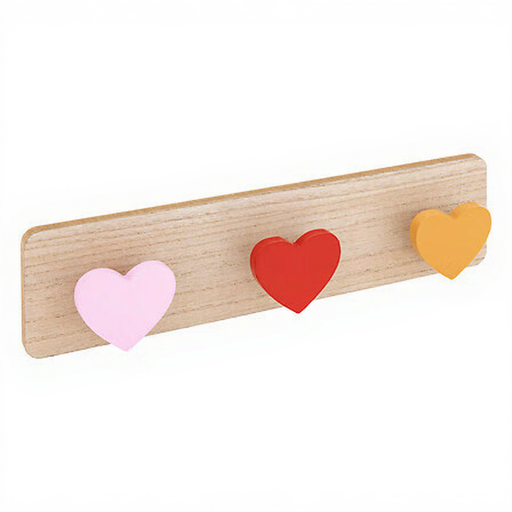
Why this product fits the profile: This set of three MDF hooks in different colours is ideal for lightweight everyday items in the hallway or bedroom. Each hook measures 9.5 × 4.5 × 36 cm.
The clearly stated set size makes it easier to plan multiple hanging points. For light items, the load remains manageable; avoid direct moisture.
Three hooks made from MDF E1 with a compact, colourful design and secure wall fixing.
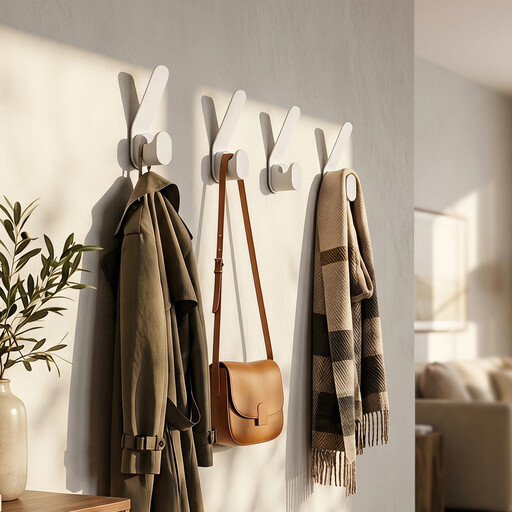
Why this product fits the profile: These aluminium hooks feature a double hanging design, rounded edges and a groove to prevent slipping. Each hook is rated up to 11 lb.
The weight rating per hook makes selection clearer. Installation with screws and wall plugs reduces reliance on adhesive surfaces.
Eight double hooks made from aluminium, water-resistant product specification and flexible arrangement on the wall.
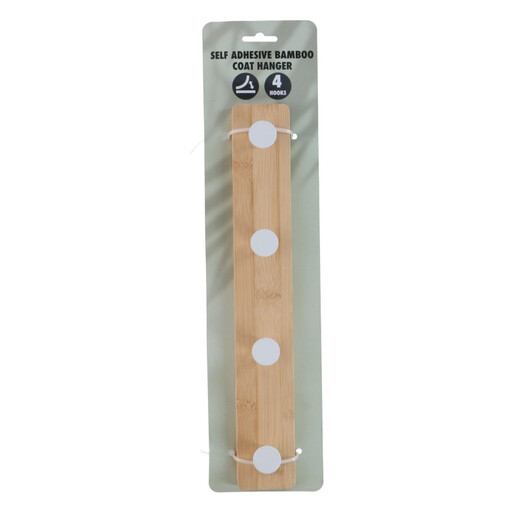
Why this product fits the profile: This 33 cm long hook rail is attached using an adhesive surface without drilling, and it works in the hallway, bathroom, kitchen or bedroom on smooth surfaces.
The suitability for smooth surfaces is explicitly taken into account. For textured walls, wallpaper and heavy loads, a different fixing method should be chosen.
Four hooks, bamboo look and tool-free installation for compact storage.
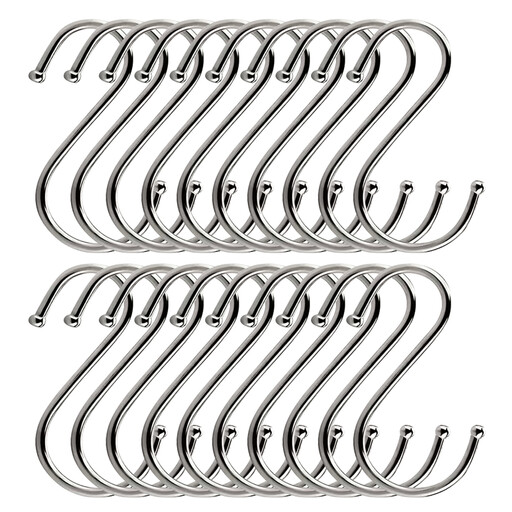
Why this product fits the profile: These S-hooks are hung over poles, rails or edges without drilling. They’re practical for the kitchen, bathroom, cupboard, office or garden.
The hooks don’t need a permanent adhesive surface and can be moved around. For heavy items, you need to check the weight capacity of the pole you’re using and the specific application.
20 metal hooks with a rust-resistant surface and versatile, non-permanent fixing.
We’ve put together a full, regularly updated list of products that fully meet these strict selection criteria and the safety regulations in force in the EU.
For light items, self-adhesive hooks or S-hooks are an option. Adhesive models should only be used on suitable, smooth surfaces. For heavy coats, a screwed solution with the landlord’s permission and the right wall plugs is more sensible.
The lifespan depends on the surface, room climate, load and installation. Dust, grease, moisture and direct heat can all affect the grip. Clean and dry the surface, press the hook firmly into place and don’t exceed the stated weight limit.
Individual coat hooks can be arranged flexibly and adapted to different items. A hook rail uses a shared base and creates a uniform look. For several heavy items of clothing, the fixing of the entire rail must be sturdy enough.