
Lieferung heute & morgen

Qualitätsgarantie

Willkommens-Angebote freischalten: KOSTENLOSE Lieferung | Bis zu 80 % RABATT | Kostenlose 30-Tage-JoyPlus-Testphase
App herunterladen
Wall hooks create extra storage space without the need to add more cupboards or drawers. Whether you need somewhere to hang jackets in the entrance hall, towels in the bathroom, kitchen utensils or bags in the bedroom, the right storage solution makes use of unused wall, door or cupboard surfaces.
However, not every wall hook is suitable for every surface or load. If you focus solely on a high load capacity or easy installation, you can easily overlook important details. The following tips will help you avoid unsuitable purchases and choose a hook that matches its intended location.
Manufacturers’ load-capacity claims usually refer to specific conditions. With adhesive hooks, factors such as the condition of the wall, room temperature, adhesive surface and curing time can all make a difference. A smooth tile may be suitable for self-adhesive hooks, while wallpaper, textured wallpaper, plaster or a porous wall can affect how securely the hook holds.
You should also assess the weight of the item realistically. A towel or bunch of keys places different demands on a hook than a filled rucksack, heavy saucepan or loaded bag.
No-drill hooks are often promoted as being easy to remove. However, the result depends on the mounting surface and the adhesive technology used. On delicate paint, loose substrates, textured walls or with unsuitable adhesive strips, residue or damage may occur.
Before installation, check whether the product description states that the hook is suitable for the specific surface. If you live in rented accommodation, it is also advisable to test it in a small, inconspicuous area first.
A small hook saves space, but may not provide enough clearance from the wall. Wide jackets, handbags or thick dressing gowns can then be difficult to hang up. With a hook rail, the distance between the individual hooks is also important. Coat hooks positioned too closely together can make items harder to access.
The mounting method should suit both the room and the surface:
With self-adhesive hooks, it is advisable not to place any load on the hook immediately after installation. For example, the JORDAN&JUDY model recommends waiting 24 hours before applying a heavier load.
Materials affect maintenance, appearance and suitability:
For kitchen and bathroom hooks, you should also consider cleaning requirements, moisture and proximity to heat sources.
Before buying, compare the following details:
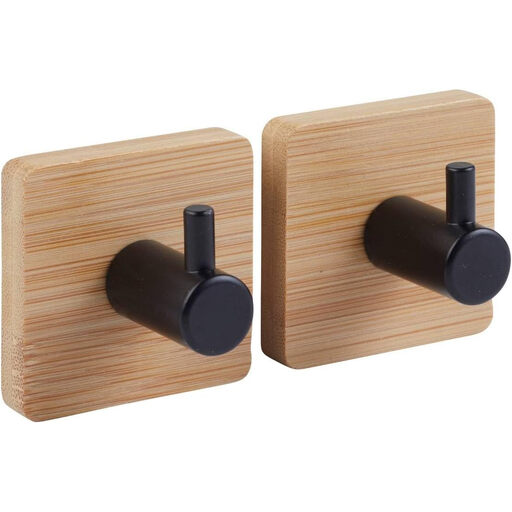
Why this product suits this profile: The set contains two adhesive hooks made from bamboo and steel, with compact dimensions of 4.5 × 4.5 × 3.6 cm. They are suitable for lightweight items on smooth indoor surfaces.
The product details specify the material, quantity, dimensions and intended adhesive installation method. This makes it easier to check before buying whether the hooks are suitable for your existing surface.
Bamboo and steel construction, two hooks per set and a compact design.
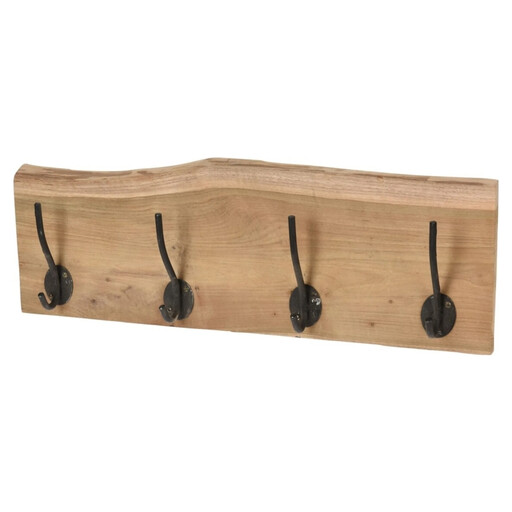
Why this product suits this profile: The 50 cm-long hook rail combines a wooden panel with four metal hooks, making it suitable for hallways, bedrooms or bathroom towels.
The dimensions and number of hooks are clearly stated. The rounded hook ends reduce the risk of textiles catching when they are hung up.
Four metal hooks, a space-saving format and a wipe-clean surface.
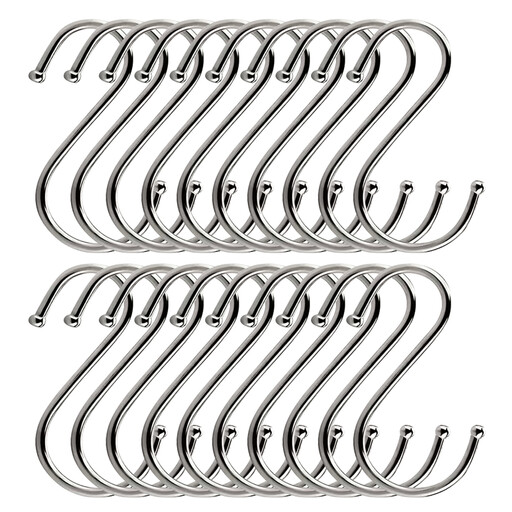
Why this product suits this profile: The 20 S-hooks, each 75 mm long, can be hung from poles, rails or edges and are designed for use in kitchens, bathrooms, offices or gardens.
The hooks are not permanently bonded and require no drilling. For safe use, the relevant pole or edge must be strong enough; heavy items are not automatically suitable.
20-piece set, S-shape for flexible use and a rust-resistant metal surface according to the product description.
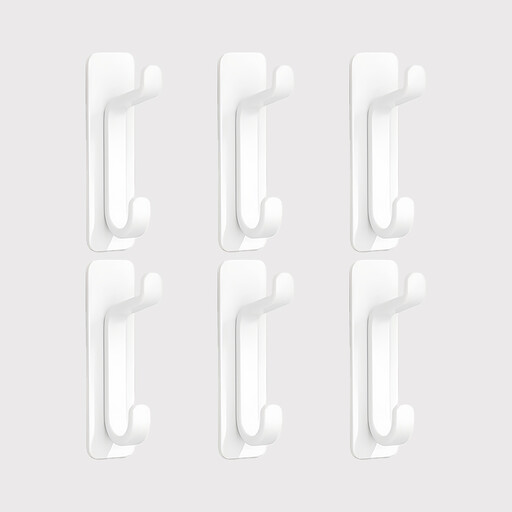
Why this product suits this profile: Six stainless-steel hooks with a white finish provide multiple hanging points for kitchens, bathrooms, bedrooms, hallways or doors.
The instructions require a clean, dry surface and warn against painted or delicate surfaces. These restrictions should be taken into account before installation.
Stainless-steel construction, six hanging points and no-drill installation according to the product details.
With adhesive and self-adhesive hooks, preparation has a major impact on how well they perform:
For kitchen cupboards, cupboard door hooks or sliding S-hooks can be a useful alternative. The “Kitchen Storage Tool Wall Hooks” product slides over the top edge of a standard cupboard door and can be used for items such as cooking utensils, oven gloves or mugs. Before hanging it, check the door thickness, closing mechanism and weight of the item.
We have put together a complete, regularly updated list of products that fully meet these strict selection criteria and the safety regulations applicable in the EU.
For rented homes, adhesive hooks, self-adhesive hooks or over-door hooks are often suitable options. The key consideration is whether the surface is listed as suitable in the product description. With delicate walls, test a small, inconspicuous area first.
Load capacity varies depending on the model and surface. The specific manufacturer’s stated limit is the decisive factor. The load should never be exceeded. For heavy or valuable items, adhesive solutions are only suitable when the mounting surface, adhesive system and load limit are explicitly designed for that purpose.
S-hooks can be used in bathrooms on sturdy poles or rails. In areas exposed to constant moisture, choose a suitable, rust-resistant finish. Position the hook so that it cannot fill with water or remain permanently soaked.