
Lieferung heute & morgen

Qualitätsgarantie

Willkommens-Angebote freischalten: KOSTENLOSE Lieferung | Bis zu 80 % RABATT | Kostenlose 30-Tage-JoyPlus-Testphase
App herunterladen
Wall hooks create storage without taking up floor space. In the hallway, they hold keys, jackets and bags; in the kitchen, they keep utensils within easy reach; and in the bathroom, they serve as towel holders. However, for tenants, families and private households, not every model is suitable for every purpose.
Three common buying mistakes frequently lead to poor decisions:
If you match the intended use, wall surface and load capacity before buying, you reduce the risk of loose fixings, damaged surfaces and unused hooks.
For a permanently loaded wall hook rail, screws and suitable wall plugs are often the more sensible solution. What matters is whether the wall is made of concrete, brick, plasterboard or tiles. The wall plugs you use must match the wall type. With plasterboard, specialist cavity wall plugs may be required.
Self-adhesive hooks are mainly suitable for lightweight items and smooth, dry surfaces such as glass, metal or certain tiles. Textured wallpaper, flaking paint, rough walls and damp areas can affect adhesion. Before fitting, the surface should be cleaned and completely dried. The stated weight limit must not be exceeded.
Keys, lightweight scarves or kitchen utensils require a lower load capacity than winter coats, rucksacks or full shopping bags. Therefore, check:
With a wall coat rack featuring several hooks, the weight should be distributed not only across the hooks but also across the fixing points. A rail with five hooks is not automatically suitable for five heavy coats.
Metal, stainless steel, aluminium, wood and plastic all have different properties. Stainless steel and aluminium are interesting for areas with high humidity, whereas wood should be protected from direct contact with water. For a balcony, bathroom or kitchen, details such as rust-resistant surface, water-resistant material and the specific care instructions are relevant.
Measure the available wall width and the depth of the hook before ordering. In the hallway, a rail should not obstruct doors, switches or walkways. In the kitchen, it is also sensible to ensure sufficient distance from hobs and sinks.
The following selection assigns different wall hooks and hook solutions to specific everyday situations. Details on material, dimensions and load capacity refer to the respective product information.
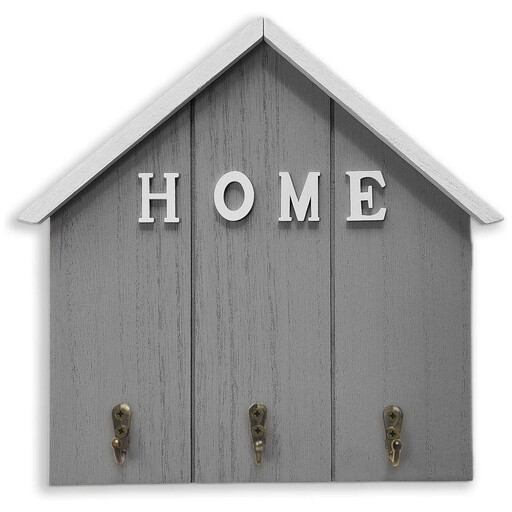
Why this product fits the profile: This compact key holder is designed for the entrance area and combines three metal hooks with a decorative house shape. It is suitable for keys and small items.
Its clearly recognisable purpose as a key rack prevents the model from being mistakenly planned as a coat rail for heavy clothing.
Three hooks, wall-mounted design and a space-saving shape for keys and post in the hallway.
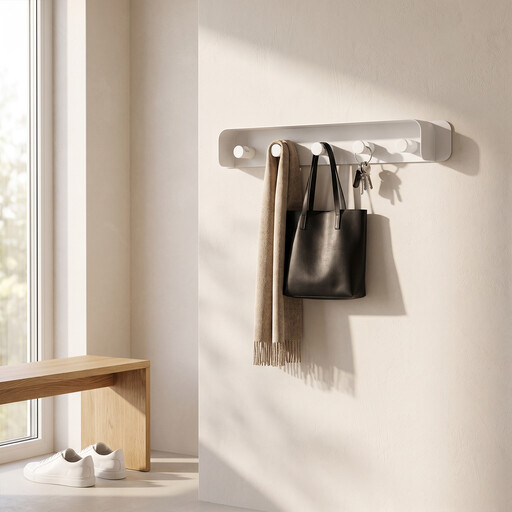
Why this product fits the profile: The combination of five hooks, a shelf surface and an aluminium construction is aimed at households that want to organise clothing, bags and small items together.
The stated maximum load of up to 25 kg and the instructions on suitable wall anchoring make the crucial mounting limits clear.
Five hooks, additional shelf, aluminium as the stated material and a rubber pad to protect the wall.
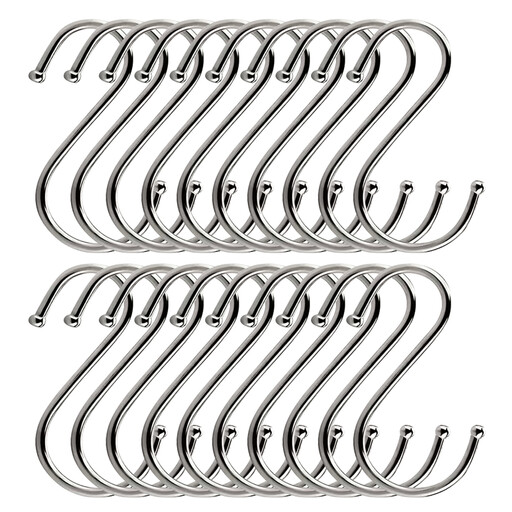
Why this product fits the profile: These S-hooks are designed for flexible hanging on poles, rails or edges. This is practical for the kitchen, bathroom, balcony, garden and utility room.
No permanent wall mounting is required. This means the position can be changed without creating additional drill holes.
20 pieces per pack, metal construction and a length of 75 mm each according to the product details.
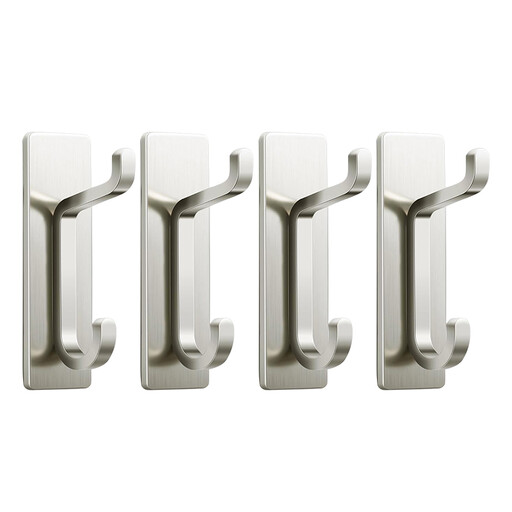
Why this product fits the profile: These stainless steel hooks are designed for no-drill mounting and can be used as hooks behind doors or on suitable smooth surfaces.
The mounting method is clearly stated. Nevertheless, buyers should check beforehand whether their surface is suitable for the adhesive and what load is intended.
Four hooks, stainless steel construction and a drill-free design according to the product description.
We have put together a complete, regularly updated list of products that fully meet these strict selection criteria and the safety regulations in force in the EU.
For lightweight items, suitable cavity wall plugs can be used. For higher loads, fixing into a load-bearing substructure is advisable. The load limit of the hook and the wall plug must be compatible.
That depends on the wallpaper type, texture and adhesive. On rough, dusty or delicate wallpapers, adhesion may be limited. Before mounting, you should check the manufacturer's instructions and assess the surface in an inconspicuous spot.
This depends on the household size and usage. For a single-person household, a short rail may suffice, whereas families usually need several coat hooks with sufficient spacing. What matters is not just the number, but also the wall width, load capacity and the size of the items of clothing to be hung.