
Lieferung heute & morgen

Qualitätsgarantie

Willkommens-Angebote freischalten: KOSTENLOSE Lieferung | Bis zu 80 % RABATT | Kostenlose 30-Tage-JoyPlus-Testphase
App herunterladen
Wall hooks provide space-saving storage when you want to keep jackets, bags, towels or kitchen utensils off chairs and surfaces. However, not every hook is suitable for every wall or load. Before buying, it is therefore worth checking the mounting method, load capacity and dimensions rather than focusing only on colour and design.
A load rating usually applies per hook and only when the hook is mounted correctly. For example, a wall hook with a stated load capacity of 11 lb, or around 5 kg, requires suitable wall plugs and a load-bearing wall. Plasterboard, tiles or fragile masonry may require different fixings.
The weight of the items is also often underestimated: a full bag, a winter coat or a rucksack puts considerably more strain on a hook than a scarf. When planning a wall-mounted coat rack, you should therefore consider not only the number of coat hooks, but also how you intend to use them.
Self-adhesive hooks are practical for rented homes and installation without drilling. However, their adhesion depends heavily on the surface. Smooth, dry and grease-free surfaces such as glass, metal or certain tiles are more suitable than woodchip wallpaper, wallpaper, textured paint or porous plaster.
If an adhesive hook is loaded immediately after installation, the bond may come loose. Always follow the manufacturer’s instructions regarding waiting time, maximum load and removal. For heavy coats or bags that will carry a permanent load, screwed metal hooks or a hook rail are often the more suitable solution.
A wall hook can look compact and still project too far into the room. Before buying, compare its width, height and projection with the intended area. Short individual hooks or a narrow hook rail are useful in a narrow hallway. Behind a door, you should also check that the door leaf and frame remain unobstructed.
In rented homes, drilled installation may need to be agreed with the landlord. Even with adhesive hooks, removal without leaving marks is not guaranteed on every surface.
Check whether the stated capacity applies per hook, per rail or to the product as a whole. A wall-mounted coat rack with six hooks distributes the weight across several points, but the wall fixings remain crucial. Small towel hooks are often sufficient for towels and lightweight accessories. Metal hooks with suitable screws are more practical for coats, rucksacks and bags.
Metal hooks made from aluminium or steel are generally resistant to the demands of everyday use. In bathrooms, look for a rust-resistant finish and a suitable area of use. Wooden hooks or wall-mounted coat racks made from FSC-certified wood add a decorative look, but require a dry or suitably treated environment.
Rounded edges can help prevent textiles from catching easily. For many products, cleaning with a soft, dry or slightly damp cloth is sufficient. Abrasive cleaning products can damage paintwork and surfaces.
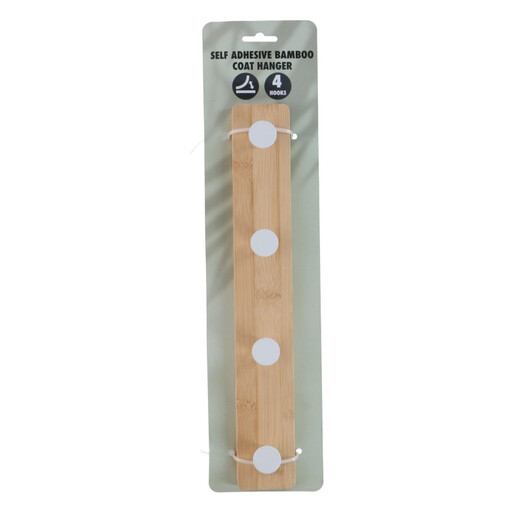
Why this product suits this profile: The 33 cm hook rail is mounted without drilling using an adhesive surface, making it suitable for smooth surfaces in hallways, bathrooms, bedrooms or kitchens.
The intended mounting method eliminates the need for drill holes. However, the adhesive surface should only be used on suitable, clean and dry surfaces.
Bamboo look, four hooks and a compact length; according to the product description, the colour is selected at random.
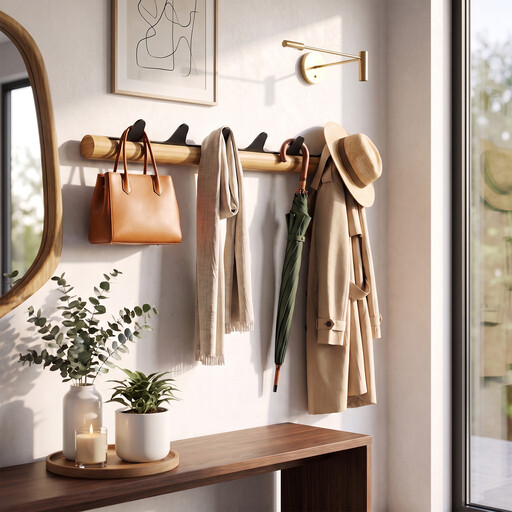
Why this product suits this profile: A combination of FSC-certified rubberwood and aluminium hooks combines a decorative wooden look with several hanging points for hallways, bedrooms or bathrooms.
The product information states that it has six hooks and a maximum total load of 30 kg. This figure assumes secure wall anchoring and suitable wall plugs.
Six rounded hooks, an aluminium alloy construction and wall fixings included; the load capacity should not be confused with that of a hanging rail.
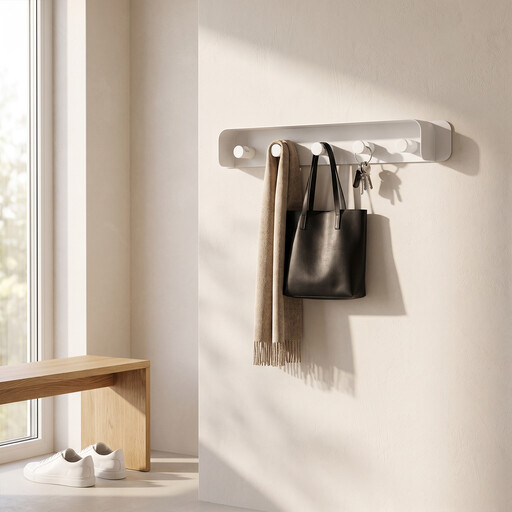
Why this product suits this profile: The combination of five coat hooks and a floating shelf makes dual use of the wall, for jackets, towels, keys or small decorative items, for example.
The product description states a load capacity of up to 25 kg and specifically refers to suitable wall plugs for different wall types. Overloading should still be avoided.
Aluminium construction, five hooks, a shelf, and screws and expansion wall plugs included according to the product description.

Why this product suits this profile: The three independently rotating iron hooks take up little space at 14.5 × 9.5 × 7 cm and are suitable for hallways, bedrooms or small entrance areas.
When not in use, the rotating hooks can be positioned closer to the wall. For heavy loads, check the specific mounting method before installation.
Black iron finish, three separately movable hooks and a product weight of 0.256 kg.
Mark the drilling points with a spirit level and, before drilling, check whether any cables or pipes could be running through the wall. For a screwed wall-mounted coat rack, the wall plugs should match the substrate. Drill tiles with a suitable drill bit and low pressure to prevent the surface from cracking.
For adhesive hooks, clean the surface first and allow it to dry completely. After attaching the hook, leave it unloaded for the period specified in the product instructions. For damp rooms, information about water resistance is helpful, but it does not replace checking the specific surface.
A wall hook set is useful when several items need to be hung at similar intervals. Individual wall-mounted coat hooks, on the other hand, give you more freedom when arranging them. For a family, a hook rail with several hanging points can provide a tidier solution; in an office or kitchen, smaller hooks are often enough for keys, headphones or utensils.
We have put together a complete, regularly updated list of products that fully meet these strict selection criteria and the safety regulations applicable in the EU.
This depends on the number of people and the items you need to hang. Three to five hooks may be enough for a one-person household. Families often benefit from a longer hook rail or several wall hooks with clearly defined spacing. Allow more room between thick jackets than between scarves or bags.
This cannot be guaranteed across the board. According to the product information, many self-adhesive hooks are designed for smooth, dry surfaces. Wallpaper, woodchip wallpaper and textured walls can impair adhesion or become damaged when the hooks are removed. Always check the surface, load limit and installation instructions.
Their service life depends on the material, load, moisture and fixing method. Screwed metal hooks and wooden hooks should be checked regularly for loose screws, cracks or corrosion. With adhesive hooks, adhesion and load capacity can be affected by heat, moisture or repeated overloading.