
Lieferung heute & morgen

Qualitätsgarantie

Willkommens-Angebote freischalten: KOSTENLOSE Lieferung | Bis zu 80 % RABATT | Kostenlose 30-Tage-JoyPlus-Testphase
App herunterladen
A new wall light can significantly transform the atmosphere of a room or enhance the security of an outdoor area. However, the selection is vast, and not every model that looks appealing online will meet expectations in practice. Many buyers only realise after installation that the light is unsuitable for its intended purpose. Before you make a decision, it's crucial to understand the most common pitfalls that lead to disappointment and unnecessary expense.
The three most common problems when buying a wall lamp are:
LED wall light with a permanently integrated bulb that fails prematurely, rendering the entire fixture useless as a replacement is not possible.This guide will help you navigate these issues and make an informed decision.
To find the right wall light, technical specifications are more important than marketing promises. Three parameters are of central importance.
The IP rating (Ingress Protection) indicates how well a light is protected against the intrusion of solid objects (first digit) and water (second digit). This is the most critical criterion for distinguishing between an indoor wall light and an outdoor wall light.
outdoor wall light should have at least this rating.The effect of the light is determined by two values: Kelvin (K) for the colour temperature and Lumen (lm) for the brightness.
Colour Temperature (Kelvin):
up and down wall lights for residential spaces use this value.Luminous Flux (Lumen): This value indicates the actual brightness a light source emits—not the power consumption in watts. A modern 10-watt LED wall light can be brighter than an old 60-watt incandescent bulb. Therefore, always compare the lumen value to achieve your desired brightness.
The material affects not only the appearance but also the durability, especially outdoors.
outdoor wall light. A powder coating, for example for a black wall light, provides additional protection.A modern wall light is often characterised by clean lines, geometric shapes, and materials like aluminium in black, white, or anthracite.
Here are some models tailored to specific needs and use cases.
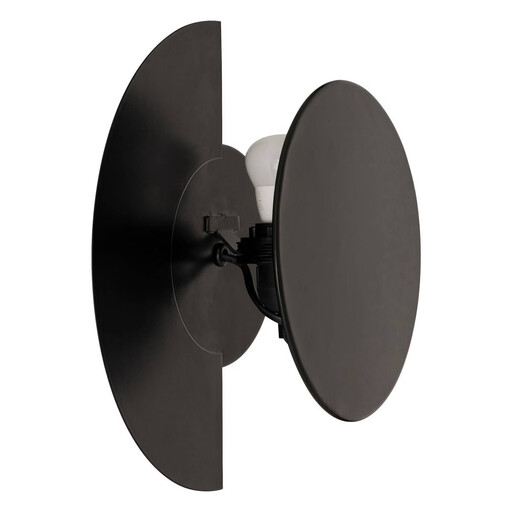
Why This Fits Their Persona: Ideal for budget-conscious buyers looking for a modern, graphic design for indoor use. Perfect for creating accent lighting in a living room or bedroom without a large budget.
The light is clearly declared as IP20 for indoor use, which prevents mistaken purchases for outdoor applications. Since the bulb (E27, max. 25 W) is not included, you have full control over brightness and colour temperature.
Flexibility through a replaceable bulb. The reversible design allows you to orient it as desired to create different lighting effects.
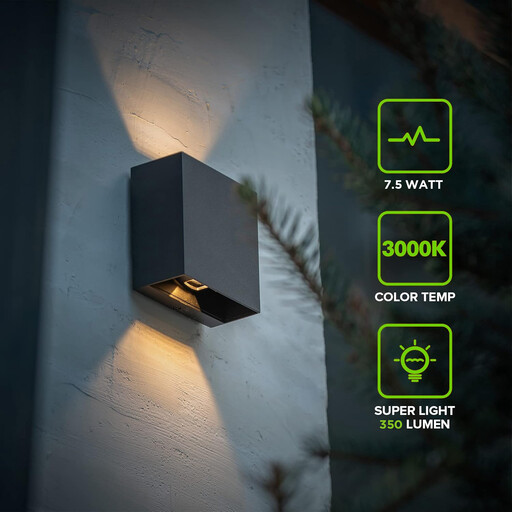
Why This Fits Their Persona: Perfect for design enthusiasts seeking a modern up-and-down wall light with customisable light effects for indoor or outdoor use. The aluminium housing underscores its high-quality standard.
The water-resistant, rustproof aluminium construction is suitable for outdoor use. According to the manufacturer, the integrated LED has a lifespan of 50,000 hours, which minimises the risk of premature failure. The colour temperature is clearly defined at 3000K Warm White.
The beam angle is individually adjustable from 0 to 106 degrees, allowing for creative and precise lighting accents on a facade or indoors.
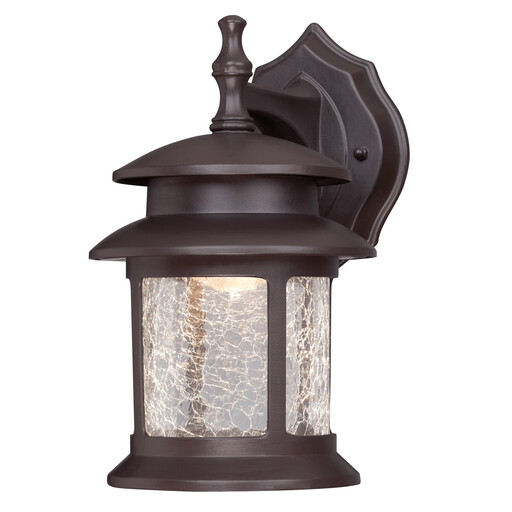
Why This Fits Their Persona: For homeowners who need robust, durable, and flexible lighting for their entrance or patio. The focus is on functionality and weather resistance.
With an IP44 rating, it is explicitly protected against splashing water for outdoor use. The integrated LED is dimmable with a compatible switch, which avoids the pitfall of unsuitable brightness. The specified lifespan of 35,000 hours indicates long-term durability.
The dimmability (`dimmable outdoor wall light`) allows for adjustment of the light intensity to suit any situation—from bright security lighting to soft ambient light.
We have compiled a complete, up-to-date list of products that fully meet these strict selection criteria and UK safety regulations.
The IP rating classifies the degree of protection an electrical device has against the intrusion of foreign objects (first digit) and water (second digit). For a wall light in a dry indoor area, IP20 is sufficient. For outdoor or bathroom use, at least IP44 (protection against splashing water) is required to ensure safety and longevity.
The choice of colour temperature depends on the desired ambiance. Warm White (approx. 2700–3000 K) creates a cosy atmosphere and is ideal for living rooms and bedrooms. Neutral White (approx. 4000 K) is more functional and works well for work areas like kitchens or home offices. Daylight White (from 5300 K) has a very stimulating effect and is often used in basements or garages.
Yes, as a general rule, all hard-wired lights that connect directly to the 230V mains supply must be installed by a qualified electrician. This not only ensures correct functionality but is also essential for safety and insurance purposes. Improper installation can lead to short circuits, fires, or electric shocks.