
Lieferung heute & morgen

Qualitätsgarantie

Willkommens-Angebote freischalten: KOSTENLOSE Lieferung | Bis zu 80 % RABATT | Kostenlose 30-Tage-JoyPlus-Testphase
App herunterladen
A wall light can divide a room into zones, illuminate walkways or serve as a decorative feature. The choice ranges from energy-efficient LED wall lights and classic E27 wall lamps to outdoor wall lights with motion sensors. However, differences in colour temperature, connections, IP rating and installation often only become apparent after purchase.
Three common buying mistakes occur particularly often:
For living rooms, bedrooms, hallways or home offices, an indoor wall light is generally sufficient, provided it is installed away from moisture. Bathrooms, balconies, garages and gardens have different requirements.
When choosing an outdoor wall light, look for:
The IP rating is shown as “IP” followed by two digits. The first digit describes protection against solid foreign objects, while the second indicates protection against water. If this information is missing, outdoor use should initially be ruled out or confirmed with the supplier.
A warm white wall light with a colour temperature of around 2,700 to 3,300 Kelvin creates a more inviting atmosphere. 3,000 Kelvin is often suitable for a wall light in a living room, bedroom or hallway. Neutral or cool white light can be more practical in work areas, garages and passageways.
The lumen rating helps you assess brightness:
A wall light with an up-and-down light directs light upwards and downwards, helping to highlight wall surfaces. For slimline lights, the projection from the wall is also important. Models with a shallow depth extend less into walkways or small rooms.
An integrated LED wall light does not require a separate bulb. This can simplify installation and allows for compact designs. Nevertheless, check the following:
With an E27 wall light, the bulb can be replaced. This means you can change the colour temperature and brightness later. According to the product information, bulbs are not supplied with Westinghouse models featuring an E27 fitting. The maximum wattage per fitting must be observed.
The design should also suit the surface where the light will be installed. A black wall light creates strong contrast, while white, brushed nickel or glass have a more understated appearance. Adjustable spotlights are useful when you want to illuminate pictures, shelves or work surfaces precisely.
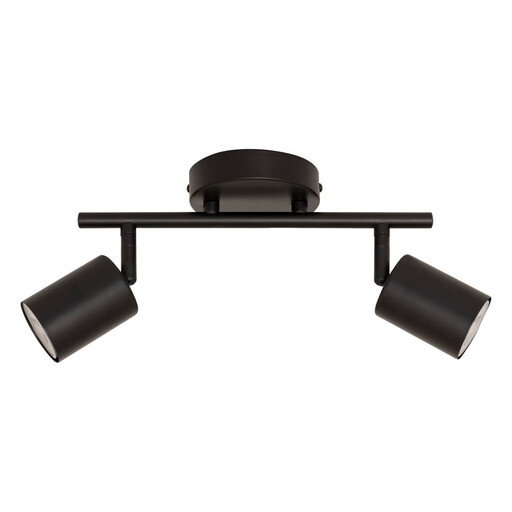
Why this product suits this profile: With adjustable spotlights, this compact black wall lamp is ideal for hallways, bedrooms, kitchens or living rooms where focused light and a simple design are required.
The product details explicitly state that there is no sensor. This means you will not mistakenly expect an automatic function that the model does not offer. The light source is replaceable.
Adjustable spotlight, black metal housing and compact dimensions of 28 × 10 × 16.5 cm; designed for indoor use.
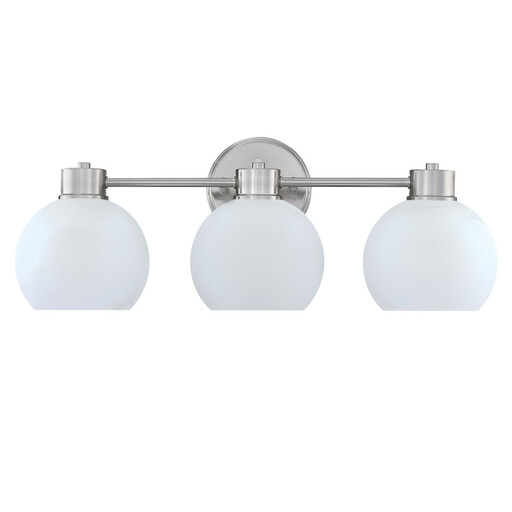
Why this product suits this profile: Three E27 fittings, opal glass and the option to install it facing upwards or downwards provide flexibility when choosing the light source and direction. This model suits larger walls in living areas, hallways or bathrooms, provided local conditions are suitable.
The fitting is clearly specified as 3 × E27, with a maximum of 60 W per bulb. This allows you to plan the light output precisely based on the bulbs you choose.
Brushed nickel, hand-blown frosted glass, 61 cm width and flexible upward or downward installation; bulbs not included.
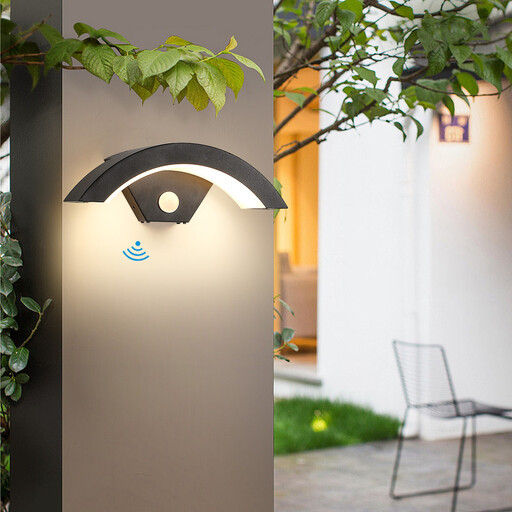
Why this product suits this profile: For a front entrance, garage, garden path, balcony or stairway, it is designed to switch on automatically using motion and light sensors. This reduces the need for manual switching in everyday use.
The sensor functions and warm white colour temperature of 3,000 K are stated in the product description. Before buying, check the required IP rating for the specific installation area.
24 W, U-shaped black construction, motion and light sensors, and intended use along paths, at entrances, in garages and in gardens.
Fixed-wired lights should be installed by a suitably qualified person. Before working on the circuit, switch off the fuse and check that the circuit is not live. For outdoor installation in particular, the wall, cable entry and connection terminals must be suitable for the environment.
For a wall light in the living room or bedroom, it is advisable to check the dimensions to scale first. A light with a depth of 5 cm can be advantageous in narrow hallways. For a bedroom light, the light source should not shine directly at eye level. An adjustable wall lamp can be directed towards a wall surface or reading area.
Also check the mains specifications. A product rated at 120 V and 60 Hz is not automatically suitable for the German mains supply of 220–240 V and 50 Hz. These specifications must be clarified unambiguously before purchase.
We have put together a complete, regularly updated list of products that fully meet these strict selection criteria and the safety regulations applicable in the EU.
There is no universally applicable height. In hallways and living areas, the light should be positioned so that it does not cause glare or project into the path of movement. For a light next to a bed or mirror, you should also take seated or eye level into account. The installation height must suit the design, light distribution and size of the room.
Consumption depends on the wattage and how long the light is used each day. A 12 W LED switched on for five hours a day uses 0.06 kWh per day in theory. To calculate the actual cost, multiply this figure by your electricity tariff. Sensors can reduce operating time outdoors, provided sensitivity and the time the light remains on are set appropriately.
For LED models, the lifespan is usually stated by the manufacturer. With an E27 wall light, the bulb’s service life depends on its quality and operating conditions. Heat dissipation, switching cycles, moisture and proper installation also affect performance. As well as checking the stated lifespan, therefore, review the warranty and spare-part information.