
Lieferung heute & morgen

Qualitätsgarantie

Willkommens-Angebote freischalten: KOSTENLOSE Lieferung | Bis zu 80 % RABATT | Kostenlose 30-Tage-JoyPlus-Testphase
App herunterladen
A wall light can create accents in the living room, serve as a reading light in the bedroom, or provide guidance in the hallway. However, it’s not just colour and shape that determine how practical it will be in daily use. Vague information about the light source, an unsuitable IP rating, or a complicated installation can all undermine your purchase later on.
This guide shows you what households in the UK should look out for before buying, and which models suit different living situations.
A black wall light, a gold wall light, or a decorative wall light might look great with your interior style. Even so, you should first establish whether the light gives off enough illumination and in which direction it’s distributed.
For an LED wall light, details such as wattage, luminous flux in lumens, and colour temperature are important. Warm white light at around 3,000 Kelvin usually feels more subdued in living and sleeping areas than neutral white light. A decorative light with low light output isn’t automatically suitable as your sole room lighting.
With lights that have an E14 or E27 fitting, the bulb is often sold separately and can be replaced. With an integrated LED, however, the light source is fixed in place. This can simplify installation, but it also means that if it fails, you may need to replace the entire light.
So, check before you buy:
A wall light for the living room, bedroom, or hallway is usually used in dry indoor spaces. However, different requirements apply for bathroom areas. IP20, for example, means no special protection against water is specified. Such a light should not be installed in areas where it could be directly splashed.
For hardwired models or where existing electrical cables are present, installation by a qualified electrician may be necessary. Before fitting, you must also check the circuit, wall type, and fixing materials.
Measure the available wall space, as well as the distance to doors, furniture, and walkways. A compact wall light around 10 to 15 cm in height is suitable for narrow hallways or areas next to a bed. Larger models with a shade or glass globe need more clearance from the wall.
The projection is also important: a light that sticks far out into the room can be obstructive in a tight passageway. For staircases and narrow hallways, flat models or wall spots are often more practical.
An adjustable wall spot directs light precisely onto pictures, shelves, work surfaces, or an armchair. Shades that are closed at the top or bottom, on the other hand, create more of an indirect lighting effect. For a wall light in the bedroom, an individually adjustable head can be handy; in the living room, several lights work well for an even combination of ambient and accent lighting.
Steel, aluminium, glass, paper, bamboo, and textile all affect the look and how easy the light is to clean. Metal surfaces can usually be cared for with a soft, dry cloth. With glass, you should avoid abrasive cleaning products. Paper and bamboo shades can be more sensitive to moisture and are therefore intended for dry indoor spaces.
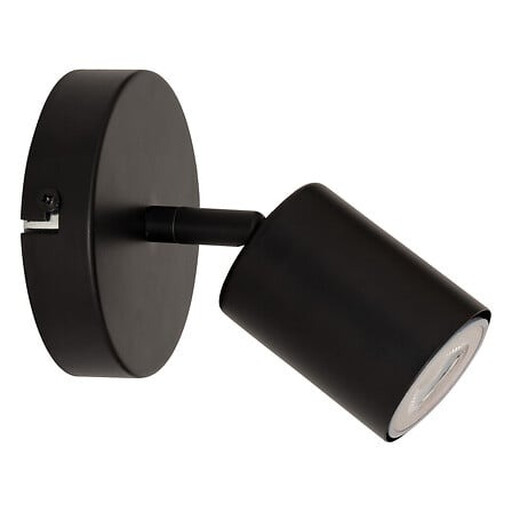
Why this product fits the profile: This compact black metal light measures 10.5 cm in diameter and 15 cm in height. The adjustable spot is ideal for smaller areas in the hallway, bedroom, or living room.
The product details list the material, dimensions, and adjustable light direction. This makes it easier to assess the space needed before installation.
Steel housing, 0.247 kg weight, and adjustable spot. The light is supplied for self-assembly.
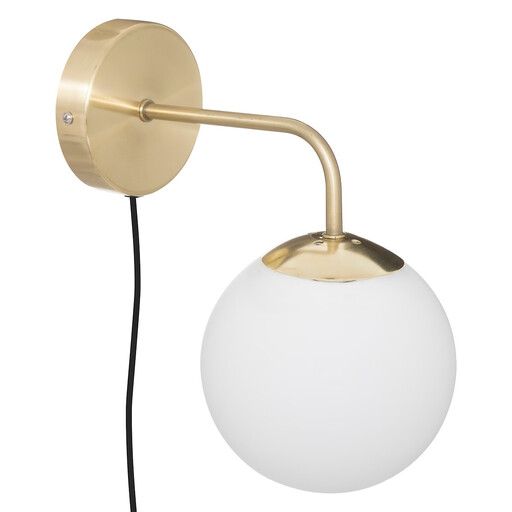
Why this product fits the profile: The brass finish and sandblasted glass globe combine decorative design with a clear material description. This light suits elegant living and sleeping areas.
The details explicitly state IP20, indoor use only, and that a bulb is not included. This makes important usage limits clear before purchase.
E14 fitting, maximum 25 W, 26.5 × 25 × 15 cm, and a stated two-year guarantee.
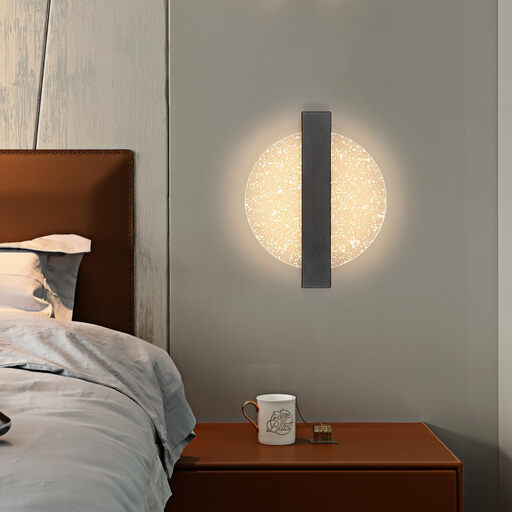
Why this product fits the profile: This round, black LED wall light is described as suitable for bedrooms, living rooms, hallways, and staircases. Warm white light at 3,000 K supports a subdued room atmosphere.
The details state 12 W, 3,000 K, and a luminous flux of 1,500 lumens. These values make it easier to judge whether the light is sufficiently powerful for a hallway or staircase.
Integrated LED technology, round shape, and flexible use as wall lighting next to the bed, in the hallway, or on an accent wall.
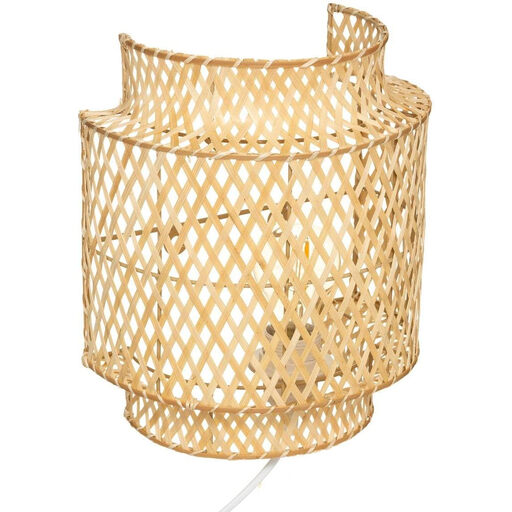
Why this product fits the profile: The bamboo shade complements natural, Scandinavian, or cosy interior concepts. The light is diffused more softly through the woven structure.
The light is explicitly intended for indoor use, has an E27 fitting, and is supplied without a bulb. This means you can choose the colour temperature to suit your needs.
Bamboo shade, E27 fitting, maximum 40 W, and dimensions of 23 × 15 × 28 cm. The stated installation time is five minutes.
We’ve put together a full, regularly updated list of products that fully meet these strict selection criteria and the safety regulations in force in the EU.
Before fitting a wall light, you should check its position in both daylight and artificial light. Next to the bed, the light cone should not shine directly into your eyes or onto an annoying wall object. In the hallway, an even arrangement is more important than a particularly strong light source.
For hardwired lights, the following applies:
Lights with IP20 should not be used in the bathroom or other damp areas unless a suitable IP rating is specified.
For the bedroom, warm white lights at around 2,700 to 3,000 Kelvin are often a good choice. An adjustable wall spot works well as a reading light. Also look for an easily reachable switch and a mounting height that directs the light cone onto your book rather than directly into your face.
The consumption depends on the wattage and how many hours a day it’s used. A 12 W light running for five hours a day uses roughly 0.06 kWh daily. With integrated LEDs, you should also check whether the light source is replaceable and what information the manufacturer gives about its lifespan.
That depends on the installation location and the specified IP rating. A light with IP20 is not intended for direct contact with water. For bathrooms and wet rooms, you must consider the applicable installation zones, distances, and technical requirements. For a hardwired connection, professional installation is advisable.