
Lieferung heute & morgen

Qualitätsgarantie

Willkommens-Angebote freischalten: KOSTENLOSE Lieferung | Bis zu 80 % RABATT | Kostenlose 30-Tage-JoyPlus-Testphase
App herunterladen
The right wall light needs to do more than look good. It should suit the size of the room, your existing electrical installation and where you plan to use it. However, unclear product information, unsuitable IP ratings and non-replaceable LED modules can often lead to the wrong choice.
A modern wall light may not be suitable for a bathroom or outdoor area if it lacks the necessary IP rating. An indoor wall light rated IP20 is generally intended for dry rooms. It should not be installed where it may be exposed to splashes or high humidity.
For a patio, entrance or garden, you’ll need an outdoor wall light with a suitable IP rating. IP44 means protection against solid objects larger than 1 mm and splashing water from different directions. It does not provide complete protection against heavy rain, standing water or pressure washing.
With a dimmable wall light, the bulb, LED module and dimmer switch need to be compatible. Integrated LEDs often require a suitable LED dimmer. If this information isn’t provided, the light may flicker, offer limited dimming or become damaged.
With lights that have an E14 or E27 fitting, you can usually choose the bulb separately. This gives you more flexibility, but you’ll also need to check that the bulb and dimmer are compatible.
Some LED wall lights have a permanently fitted LED module. This makes installation easier, but limits your options for repair or replacement later on. Before buying, check whether you’d prefer a replaceable bulb or an integrated LED module.
For a living room, bedroom, hallway or staircase in a dry environment, an indoor wall light rated IP20 is often sufficient. For bathrooms, covered outdoor areas or entrances, the exact installation zone matters. A light intended for a wet area must be specifically rated for that purpose.
For outdoor lighting rated IP44, it’s important to install the light correctly. The seal against the wall, cable routing and position beneath a canopy all affect the level of protection in practice.
Light output is measured in lumens (lm). A light with 950 lumens gives off considerably more light than a small reading light with a lower output. For decorative lighting in a living room, a lower brightness may be enough. In a hallway, staircase or entrance, even illumination and the right installation height are more important.
Warm white light at around 2,700 to 3,000 kelvin usually creates a soft feel in living rooms and bedrooms. For example, a wall light with warm white light at 3,000 kelvin can work well as cosy ambient or accent lighting. Cooler light can be useful in practical areas, but should complement the rest of the room’s lighting.
Before ordering, compare the width, height and distance the light projects from the wall with the space available. A wall light that sticks out too far can be an obstacle in a narrow hallway. An up-and-down wall light casts light upwards and downwards, creating a clearly defined effect on the wall.
You should also check the following:
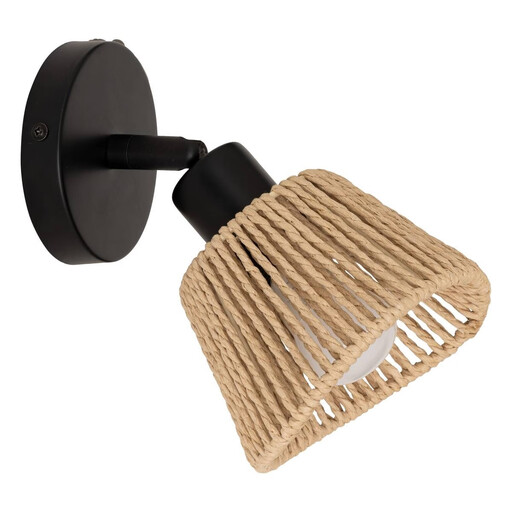
Why it suits this profile: This compact indoor wall light has an E14 fitting and an adjustable spotlight. According to the product description, it can be installed on a wall or ceiling.
The IP20 rating makes it clear that this light is intended for dry indoor spaces, not outdoor use.
E14 fitting, adjustable spotlight and compact dimensions of around 10 × 10 × 19.5 cm; bulb required separately.
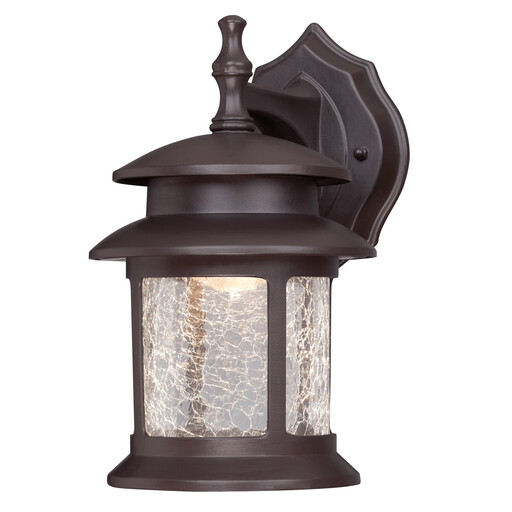
Why it suits this profile: This outdoor wall light combines an integrated 9 W LED, a colour temperature of 3,000 kelvin and a light output of 1,000 lumens with an IP44 rating.
The IP rating and technical specifications are clearly stated. However, the dimming function still requires a compatible LED dimmer.
Warm white light, 1,000 lumens, an integrated 9 W LED and a dimming function when used with a suitable switch.
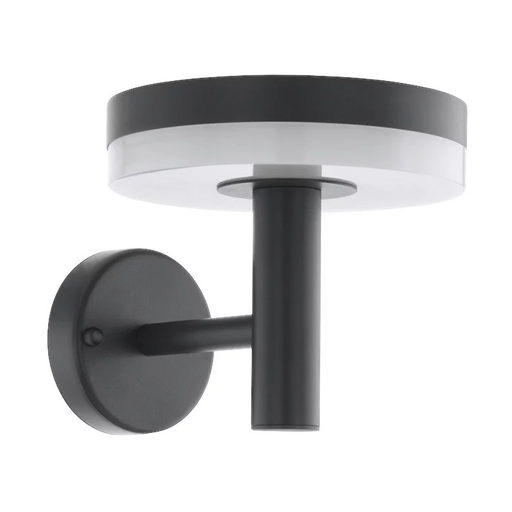
Why it suits this profile: This light is designed for gardens, patios, paths and entrances, and provides warm white light at 3,000 kelvin.
The integrated LED and stated wattage make it clear which light source is required. The module is not replaceable.
11 W, 950 lumens, an anthracite-coloured housing and compact dimensions of around 24.5 × 18 × 24.5 cm.
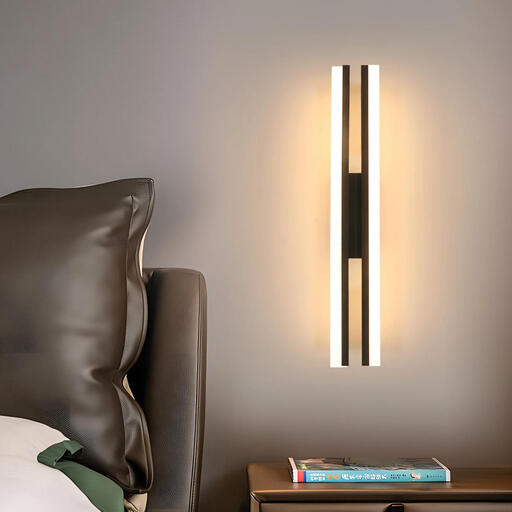
Why it suits this profile: This LED wall light is described as suitable for living rooms, bedrooms and staircases, and can be installed vertically or horizontally.
The option to install the light horizontally or vertically is clearly stated, helping you plan for different wall spaces.
Integrated 16 W LED, rectangular design, black finish and flexible positioning during installation.
We’ve put together a complete, regularly updated list of products that meet these strict selection criteria and fully comply with the safety regulations in force in the EU.
That depends on the installation zone. A light in an area exposed to direct splashes needs a suitable IP rating. The product description should explicitly confirm that it is intended for this use. A standard IP20 indoor wall light is designed for dry rooms and shouldn’t simply be used in a bathroom.
Its lifespan depends on the LED module, how long it is used, heat dissipation and the surrounding conditions. With integrated LEDs, the light source can’t be easily replaced. Treat claims such as ‘average lifespan’ as manufacturer information and check them against the technical specifications for the model in question.
Energy use depends on the electrical power in watts and how long the light is used each day. A 9 W LED uses less electricity than a traditional 60 W bulb when both are used for the same amount of time. Running costs also depend on how often the light is switched on, its brightness and how many lights are installed.