
Lieferung heute & morgen

Qualitätsgarantie

Willkommens-Angebote freischalten: KOSTENLOSE Lieferung | Bis zu 80 % RABATT | Kostenlose 30-Tage-JoyPlus-Testphase
App herunterladen
Wall lights combine decorative wall lighting with a targeted light source. They are suitable for living rooms, bedrooms, hallways, kitchens and home offices when a ceiling light alone is not enough or when you want to highlight specific areas. However, it is worth taking a close look at the technical specifications and installation requirements before buying. An attractive design says little about whether a wall light is compatible with your existing electrical installation, your room and the type of light you want.
A black wall light with a delicate metal shade or a gold wall light with a glass cover may complement your interior beautifully. However, whether it actually provides enough light depends on the type of bulb, wattage, beam angle and light colour. A small decorative light is not automatically suitable as the room’s only source of illumination.
LED wall lights with a permanently installed light source are often compact and ready to use straight away. However, depending on the design, the LED module may not be replaceable separately if it develops a fault. A wall light with an E27 or E14 lamp holder, on the other hand, allows you to choose and replace the bulb later. So check whether a bulb is included and which lamp holder is actually used.
Many indoor wall lights are intended exclusively for dry indoor areas. A rating such as IP20 does not mean that the light is protected against splashing water. For bathrooms, covered outdoor areas or other damp zones, the required IP rating must be stated explicitly in the product description. You should also clarify whether the light is connected directly to the mains, requires a wall switch or comes with a cable.
For traditional wall lights with replaceable bulbs, three details are particularly important:
For wall lights with integrated LEDs, pay attention to the wattage, colour temperature in Kelvin and whether the light source can be replaced. Warm white light of around 3,000 Kelvin is often chosen for living rooms and bedrooms. For focused work, a more neutral light may be preferable.
Before ordering, measure the available wall space and the distance to furniture, doors and passageways. A living-room wall light can project further from the wall than one in a narrow hallway. Adjustable spotlights are ideal when you want to illuminate pictures, shelves or reading areas precisely.
Look for details such as height, width, depth and distance from the wall. If you are installing two wall lights on either side of a bed or sideboard, plan the mounting height symmetrically. A light that shines upwards and downwards creates a different distribution of light from a spotlight aimed directly at a specific area.
Metal is resistant to regular dusting and suits modern or industrial interiors. Bamboo, paper and rattan create a softer lighting effect, but require more careful cleaning. Unless the manufacturer states otherwise, a wall light made from metal and bamboo should only be cleaned with a dry or slightly soft cloth.
You should also read the installation instructions. Terms such as ‘self-assembly’ or an estimated installation time do not replace checking the condition of the wall and the electrical connection. Where the light is connected directly to the mains, installation should be carried out by a suitably qualified electrician.
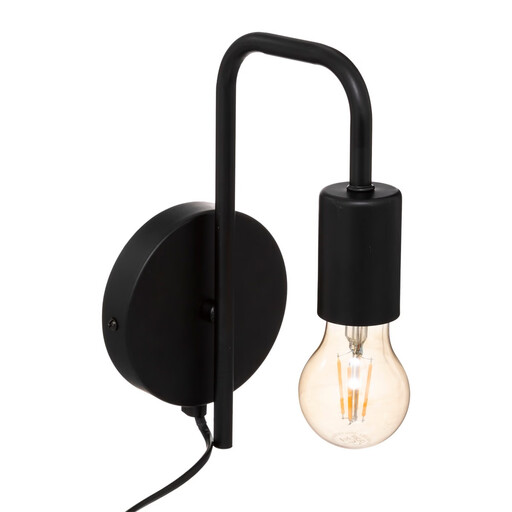
Why this product suits this profile: This compact black wall light with an E27 lamp holder is ideal for shoppers looking for a simple model for the bedroom, kitchen or living room, while retaining the freedom to choose their own bulb.
The description explicitly states that it has an E27 lamp holder, a replaceable bulb and a maximum output of 40 W. It is listed as non-dimmable, making its capabilities clear.
Black metal, a single light source, downlight orientation and a height of 25 cm.
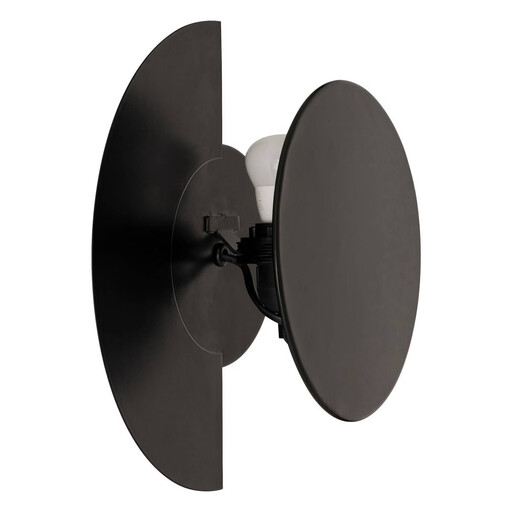
Why this product suits this profile: The cylindrical metal shade and the vertical side element create a clearly defined shape for modern living rooms or bedrooms.
The specifications state IP20, indoor use, mains operation and a maximum output of 25 W. This makes it easier to plan its use realistically in dry rooms.
Reversible design for your preferred orientation, a single light source and compact dimensions of 25 × 12 × 30.5 cm.
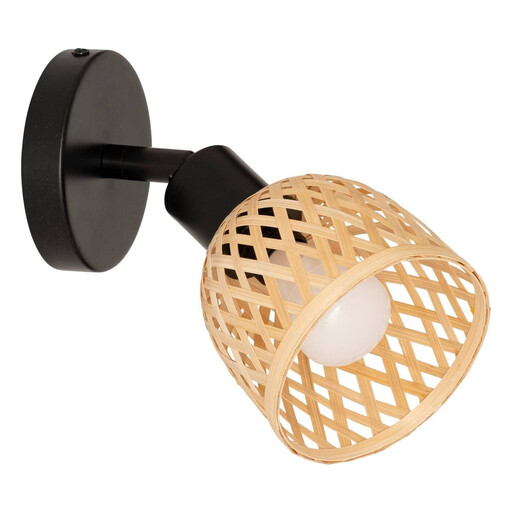
Why this product suits this profile: The combination of a metal base, adjustable spotlight and FSC-certified bamboo shade complements natural interiors and is ideal for targeted lighting of pictures, consoles or desks.
The E14 lamp holder, maximum output of 25 W and suitability for indoor use are all clearly stated. The bulb is not included and must be selected separately to ensure compatibility.
Adjustable spotlight, bamboo shade and compact dimensions of 10 × 10 × 17.5 cm.
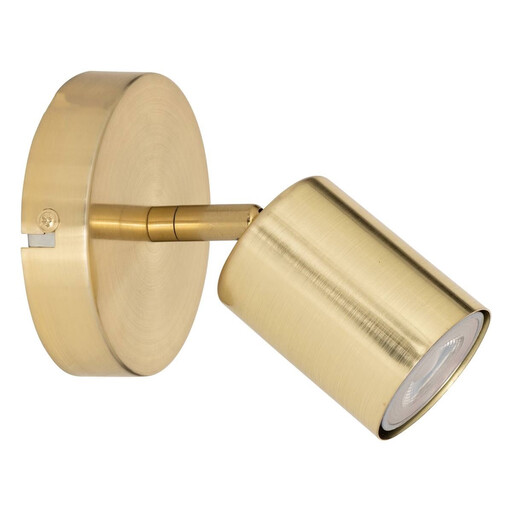
Why this product suits this profile: The adjustable head allows you to direct the light precisely, whether in the hallway, beside the bed, in the home office or as accent lighting.
This model has a removable light source and is intended for indoor use. Installation requires a wall switch, so this should be taken into account before buying.
Steel construction, a single light source and a diameter of 10 cm with a height of 14 cm.
We have put together a complete, regularly updated list of products that fully meet these strict selection criteria and the safety regulations applicable in the EU.
For a bedroom, you could choose a wall light with an E27 or E14 lamp holder, an adjustable reading lamp or a warm white LED wall light. Check whether the light can be switched separately and whether its direction allows you to read without glare. If you are installing two lights beside the bed, symmetrical positioning is advisable.
Their lifespan depends, among other things, on the quality of the LED module, how often the light is used and how effectively heat is dissipated. With integrated LEDs, the light source is often not replaceable. Before buying, therefore, check whether the product includes technical information about lifespan and replaceability. With lamp holders such as E27 or E14, the bulb can be replaced independently of the light fitting.
Energy consumption is mainly determined by the wattage of the bulb or LED module and the number of hours the light is used each day. A 6-W LED uses less electricity than a 40-W bulb over the same operating time. To calculate running costs, multiply the power in kilowatts by the operating hours and your electricity price. It also makes a difference whether the light is used for general illumination or only for brief accents.