
Lieferung heute & morgen

Qualitätsgarantie

Willkommens-Angebote freischalten: KOSTENLOSE Lieferung | Bis zu 80 % RABATT | Kostenlose 30-Tage-JoyPlus-Testphase
App herunterladen
A wall light can brighten a specific area, create a reading nook or add decorative accents. However, choosing the right one does not always deliver the desired result. Product images often make the light look larger than it really is, technical details may be incomplete and installation requirements are sometimes underestimated. This buying guide explains what private customers in Germany should look for when choosing a wall lamp, a modern wall light or an LED wall light.
Decorative wall lighting can look attractive, but it does not automatically replace bright room lighting. Important factors include bulb type, wattage, luminous flux and light distribution. For example, a light directed downwards is suitable for a limited area, while a transparent glass shade distributes light more widely around the room.
With many indoor wall lights, the bulb is not included. Before buying, check whether an E27 or E14 fitting is required, whether the maximum wattage is observed and whether an LED bulb can be used. With an integrated LED, on the other hand, the bulb is often not designed to be replaced.
A wall light for the living room may get in the way in a narrow passage if it has a wide shade. In hallways, compact models or a flat flush-mounted design are often more practical. You should also establish whether the light operates via a plug, an external cable or a fixed mains connection. A qualified electrician should be consulted for any work on the electrical installation.
First check the fitting and the permitted maximum wattage. According to the product details, an Atmosphera Keli wall light with an E27 fitting is designed for a bulb of up to 40 W. The bulb is not included. An E14 light such as the Atmosphera Dris, by contrast, has a maximum wattage of 25 W.
An LED wall light with an integrated light source can make choosing easier, but offers less flexibility when it comes to replacement later on. Pay attention to the colour temperature: 3,000 K is usually described as warm white and is often suitable for living rooms and bedrooms. Actual brightness should also be assessed using the luminous flux in lumens, where this information is provided.
For a wall light for the living room or dining room, indirect light, glass covers or fabric shades are worth considering. A wall light for the bedroom should create as little glare as possible and can be used as a reading light beside the bed. In hallways or on staircases, directional spotlights are useful when you want to illuminate specific areas.
The level of protection is given as an IP code. IP20 is intended for dry indoor spaces, but does not provide any particular protection against water. A light without a specified IP rating should therefore not be installed in damp areas or places at risk of splashing. Bathrooms, kitchens with high humidity and outdoor areas are subject to additional requirements.
A metal wall light is often compact and complements industrial or minimalist interiors. A bamboo wall light creates a more textured lighting effect through its woven design. Before ordering, compare the height, width and projection with the intended wall area.
The following details are also relevant:
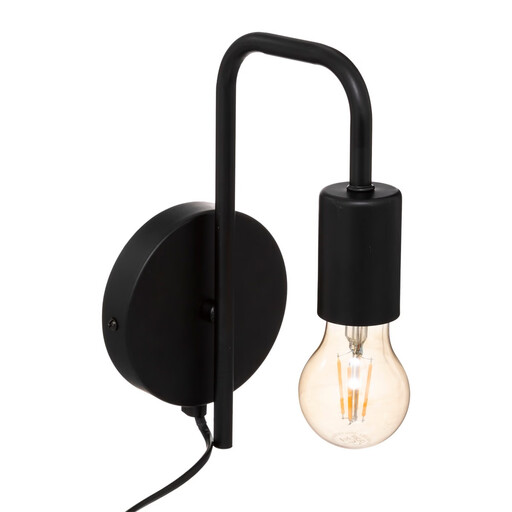
Why this product suits this profile: This compact wall lamp has an E27 fitting and a 1.80 m cable, and is designed for a range of dry indoor spaces, including bedrooms, living rooms, kitchens and dining rooms.
The product details specify the fitting, maximum wattage, cable length and installation method. This makes it easy to check before buying whether your existing connections and preferred bulb are compatible.
E27 fitting, one light point, maximum power of 40 W and straightforward wall installation with screws, according to the product details.
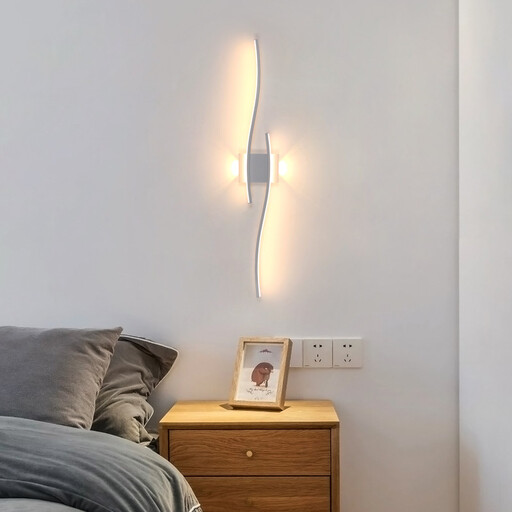
Why this product suits this profile: An aluminium alloy, brushed and powder-coated finish, and a translucent acrylic PVC shade define this modern wall light.
The material and shade specifications make it easier to assess the finish and light diffusion, rather than relying solely on a style promise.
27 W power and warm white light at 3,000 K according to the product description; construction from aluminium and acrylic PVC.
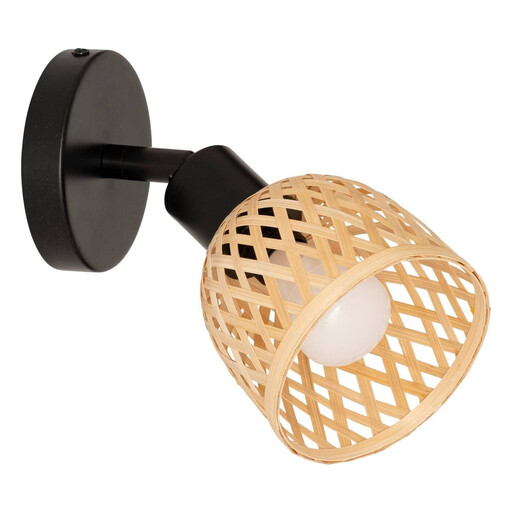
Why this product suits this profile: This adjustable wall spotlight combines a steel base with a shade made from FSC-certified bamboo, making it suitable for focused accent lighting.
The adjustable design helps you direct the light precisely at a console table, desk or piece of wall decor.
E14 fitting, one adjustable spotlight, indoor use and a maximum of 25 W according to the product details.
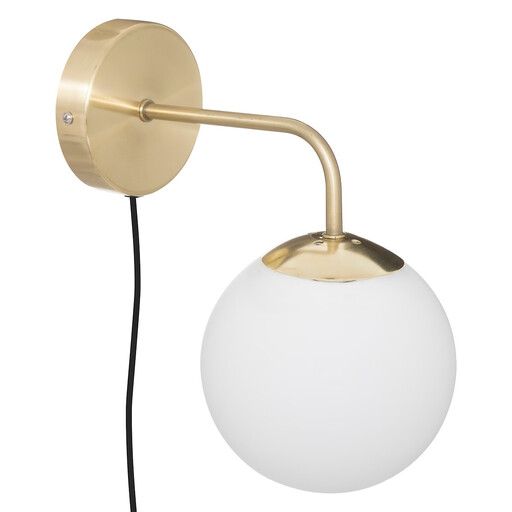
Why this product suits this profile: The combination of a metal base with a brass finish and a sandblasted glass shade complements a gold wall light in the living room, bedroom or hallway.
The information on IP20, the E14 fitting, the 25 W maximum wattage and indoor use clearly defines where the light can be used.
Glass shade, one light point, mains operation and an installation time of around 10 minutes according to the supplier.
We have put together a complete, regularly updated list of products that fully meet these strict selection criteria and the safety regulations applicable in the EU.
As a general guide, the light is often positioned so that the light source does not cause glare at eye level. The exact height depends on the ceiling height, furniture, switch position and light distribution. A light beside the bed should be within reach when sitting or lying down.
Electricity consumption depends on the wattage and how long the light is used each day. During the same operating period, a 6 W LED uses less electricity in theory than a bulb with a higher wattage. For a realistic estimate, consider the wattage, usage time and your electricity tariff together.
The lifespan of a light depends on its materials, workmanship, electrical components and usage. With replaceable E27 or E14 bulbs, the light source can be changed separately. With integrated LEDs, check whether the manufacturer provides for replacement. Clean indoor wall lights in line with the care instructions, and switch off the power supply before installation or maintenance.