
Lieferung heute & morgen

Qualitätsgarantie

Willkommens-Angebote freischalten: KOSTENLOSE Lieferung | Bis zu 80 % RABATT | Kostenlose 30-Tage-JoyPlus-Testphase
App herunterladen
A suitable wall light should not only complement your décor. It also needs to deliver enough light for its intended location, be safe to install, and suit the surrounding conditions. Whether you are looking for an indoor wall light for the living room or bedroom, a hallway wall light for narrow spaces, or an outdoor wall light for the patio and entrance area, many poor purchases happen because product images and design are given more attention than technical specifications.
The specification 3000 K describes the light colour, not the amount of light. A wall light with warm white light or a wall light 3000K produces a yellowish-warm colour impression, whereas brightness is given in lumens. For a decorative wall lamp, a moderate amount of light may be sufficient. In hallways, stairwells or entrance areas, however, what matters is whether the light output adequately reaches the entire space.
A light without an IP rating is not automatically suitable for damp conditions. For protected indoor spaces, IP20 is commonly specified. Outdoors or near splashing water, an appropriate IP rating should be present. The Westinghouse Winslett, for example, is rated IP44 as splash-proof. However, this does not mean it can be submerged in water or exposed to high-pressure water jets.
Integrated LED modules do not require a separate bulb purchase, but on some models they are not replaceable. With classic lights featuring an E27 fitting, the bulb can be chosen separately and replaced. Buyers should also check whether a power connection is available, whether a qualified electrician is required, and whether the light has sufficient clearance from the wall or flammable materials.
For living areas, warm white light around 3000 Kelvin is often preferred. Compared to neutral white light colours, it feels less clinical and is well suited to living and sleeping spaces. Brightness should be judged by the lumen rating:
The power consumption in watts shows how much electrical power the light uses. However, it does not replace the lumen rating. A 12 W LED wall light can appear differently bright depending on its construction and light distribution.
An aluminium wall light can enable a slim, modern design. For indoor lights, acrylic, glass, steel or bamboo are also common. However, the material alone says nothing about suitability for outdoor use. More important are the IP rating, installation instructions and the manufacturer's specifications.
A flat light is suitable for narrow hallways and areas next to doors. Round or curved models often distribute light more broadly. Adjustable spots allow targeted direction, for example onto pictures, shelves or an armchair.
A dimmable wall light only works as intended if the light and dimmer are compatible. With integrated LEDs, you must specifically check for dimmability and the correct LED dimmer.
A wall light with motion sensor can be practical for pathways, garages, entrance areas and stairs. For battery-powered models, you should also consider the charging method, battery life and mounting surface. The Brilliant Iseo, for example, combines a battery, USB charging, magnetic mounting, motion sensor and IP44. However, for permanent main lighting, the available brightness of 300 lm should be matched against your individual needs.
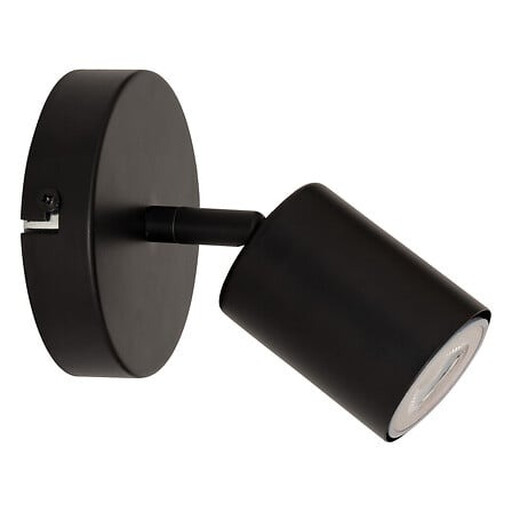
Why this product fits the profile: The compact black wall light made from steel is suitable for small wall areas, hallways, bedrooms or a targeted illuminated zone.
The dimensions of 10.5 cm diameter and 15 cm height make the space requirement clear. The adjustable spot allows controlled light direction.
Black steel housing, lightweight at 0.247 kg and adjustable light spot. The light is intended for indoor use.
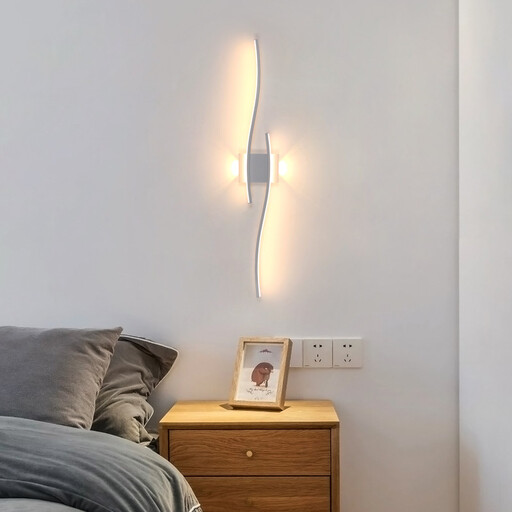
Why this product fits the profile: The combination of aluminium alloy, brushed powder-coated surface and light-diffusing acrylic cover suits modern living and sleeping spaces.
The details on material, surface and cover make pre-purchase checking easier. The light is described as an indoor model with 3000 K warm white light.
27 W power consumption, warm white light colour at 3000 K and even light diffusion via an acrylic cover.
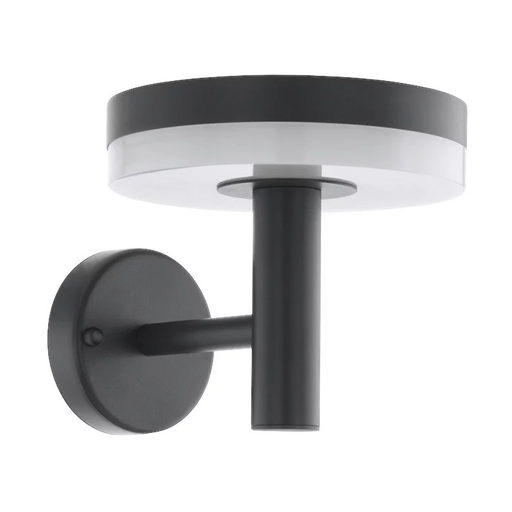
Why this product fits the profile: The light is intended for gardens, patios, entrances and pathways, combining fixed installation with integrated LED technology.
The stated outdoor use and construction from metal and plastic provide more guidance than a purely design-based description. Connection should be carried out by a professional.
11 W, 950 lm, 3000 K and anthracite finish. The product description mentions a weather-resistant construction for outdoor areas.
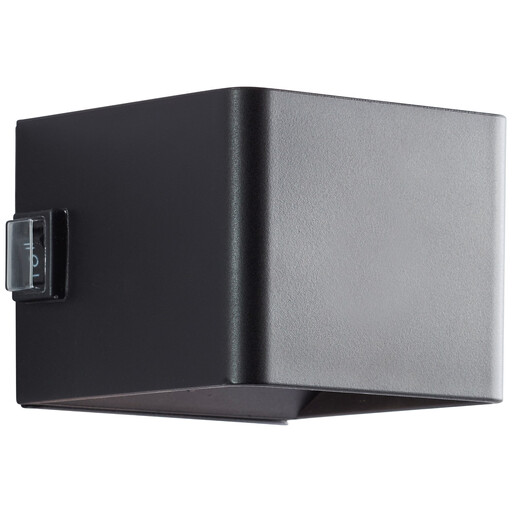
Why this product fits the profile: For balconies, patios, gardens or entrance areas without an existing power connection, this battery-powered model offers a mobile solution.
Battery, USB charging, magnetic mounting and IP44 are all clearly specified. The light output of 300 lm should be compared with your intended use before purchase.
4 W, 300 lm, 3000 K, integrated motion sensor and rechargeable battery. The light also features a switch and magnetic mounting.
We have compiled a complete, regularly updated list of products that fully meet these strict selection criteria and the safety regulations in force in the EU.
A wall light 3000K produces warm white light and is commonly used for bedrooms, living rooms and hallways. For concentrated work, a more neutral light colour may be more practical. What matters most is your personal need and the existing room lighting.
For a short hallway or as orientation lighting, around 300 to 600 lm may be sufficient. For longer hallways, stairwells or dark entrance areas, consider models around 900 lm or more. Multiple lights can provide more even illumination than a single bright point of light.
The actual service life depends on the LED module, operating time, heat dissipation, mains quality and environment. With integrated LEDs, it is also important to note that the module is not replaceable on every model. Therefore, lifespan information should be checked directly in the technical product data.