
Lieferung heute & morgen

Qualitätsgarantie

Willkommens-Angebote freischalten: KOSTENLOSE Lieferung | Bis zu 80 % RABATT | Kostenlose 30-Tage-JoyPlus-Testphase
App herunterladen
A well-chosen wall mirror is more than just a reflective surface. It can make a room feel larger and brighter, add a stylish accent, and is an indispensable part of daily life. However, the selection is vast, and not every mirror lives up to its product description. Before you make a decision, it's helpful to know the common pitfalls that often only become apparent after the purchase.
This guide will show you what to look for to avoid a bad buy and find a mirror that is both functional and durable.
Many buyers focus on design but overlook crucial quality features. This often leads to disappointment when the mirror shows defects after a short time.
To avoid these problems, you should check three technical aspects before buying. These define the quality and longevity of your new mirror.
The quality of the mirror glass is crucial for a clear, undistorted image. Look for a glass thickness of at least 4 mm. This ensures stability and a flat surface. Another important but often overlooked feature is an anti-shatter film on the back. In the event of a break, this film holds the glass shards together, significantly minimising the risk of injury—a critical safety factor, especially in households with children.
The frame not only serves as a decorative mirror element but also protects the edges of the glass. The choice of material should depend on where it will be used:
A good rectangular mirror should offer flexibility in mounting. Check if the mirror can be hung both horizontally and vertically. This allows it to be adapted to different wall spaces and interior styles, whether as a wide mirror over a dresser or as a tall hallway mirror. The necessary mounting hardware (screws and wall plugs) should ideally be included to ensure a secure and straightforward installation.
Here are some recommendations tailored to different needs and interior styles that meet the quality criteria mentioned above.
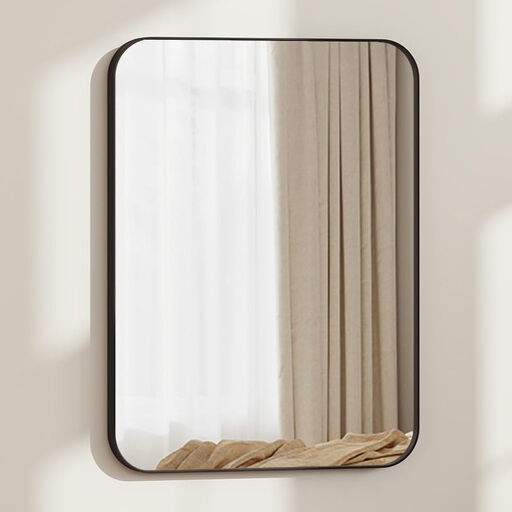
Why This Fits Their Persona: Ideal for those who seek a clean, minimalist design with no frills. It fits perfectly into modern bathrooms, hallways, or bedrooms and blends seamlessly with existing decor.
The 4 mm thick glass ensures a distortion-free reflection. The robust metal frame is moisture-resistant, preventing the swelling that occurs with low-quality MDF frames in bathrooms. The anti-shatter film provides additional safety.
Flexible mounting (horizontal or vertical); durable and low-maintenance metal frame; includes mounting hardware.
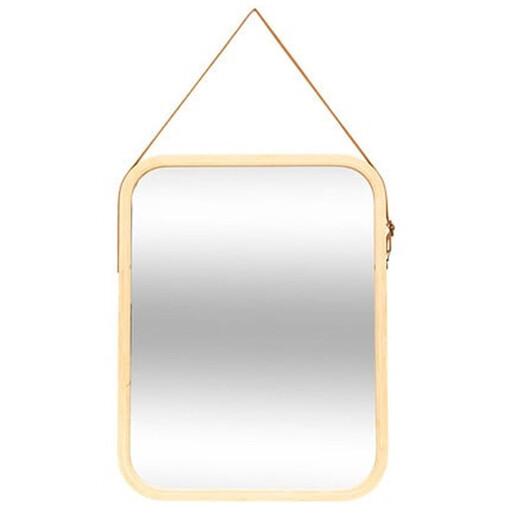
Why This Fits Their Persona: Perfect for interior styles like Scandi, Boho, or Japandi. This mirror is not just functional but also a decorative statement piece that radiates warmth and natural charm.
The bamboo frame is a high-quality alternative to swelling MDF. Bamboo is naturally more resistant to moisture, making it a great choice for the bathroom or hallway.
Sustainable and robust material (FSC-certified bamboo); unique design with a practical hanging loop.
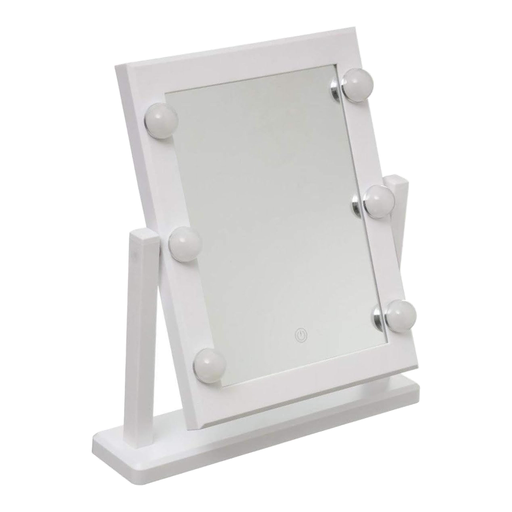
Why This Fits Their Persona: For anyone who needs professional lighting conditions for their daily grooming or makeup application. This mirror is designed as a tabletop mirror, ideal for a vanity or dressing table.
This mirror solves the problem of unsuitable lighting. The integrated LEDs provide even, shadow-free illumination. Thanks to the adjustable brightness via touch control, the light can be adapted to individual needs.
Professional, dimmable LED lighting; compact size for vanity tables; stable base.
We have compiled a complete, up-to-date list of products that fully meet these strict selection criteria and German safety regulations.
As a general rule, the centre of the mirror should be at eye level, which for most people is about 1.50 m to 1.65 m from the floor. A hallway mirror should be positioned to show at least the entire upper body and head. When placed above a piece of furniture like a dresser, the distance between the top of the furniture and the bottom of the mirror should be about 15-20 cm.
For a bathroom mirror, materials that are resistant to moisture are crucial. Frames made of aluminium, stainless steel, or plastic are a safe choice. For wooden frames, it should be solid wood specially treated for humid environments, or bamboo, which has a naturally higher resistance. Avoid unsealed MDF frames.
Yes, it is possible, but it requires the correct mounting technique. Do not use standard screws and plugs. For drywall (plasterboard), you need special hollow-wall anchors (e.g., toggle bolts or metal expansion anchors) that anchor themselves behind the board. Always check the weight of the mirror and the load capacity of the chosen anchors, which is indicated on the packaging. For very heavy mirrors, it may be advisable to locate the underlying metal or wooden studs in the wall for mounting.