
Lieferung heute & morgen

Qualitätsgarantie

Willkommens-Angebote freischalten: KOSTENLOSE Lieferung | Bis zu 80 % RABATT | Kostenlose 30-Tage-JoyPlus-Testphase
App herunterladen
A wall mirror can help define a room, reflect light and serve as a practical furnishing. But unclear product details, unsuitable fixings or purely decorative shapes can easily lead to a disappointing purchase. When choosing a modern wall mirror, it’s worth looking beyond colour and price to consider its dimensions, weight, material and fitting options.
Mirror dimensions are usually given in centimetres as width, depth and height. For example, a size of 50 × 70 cm doesn’t necessarily describe the visible mirror surface, as the frame, fittings or an irregular shape can affect the usable area.
Before buying, check:
A smaller, frameless mirror can work well on a narrow wall. For a hallway or bedroom, however, you may need a full-length mirror.
Being able to hang a mirror vertically or horizontally is useful, but it doesn’t remove the need to check the wall itself. Plasterboard, concrete, brick and wood all require different wall plugs and screws.
It’s important to consider:
If screws and wall plugs aren’t included, you’ll need to choose ones that are suitable for your wall. Larger models are best fitted by two people.
An irregular mirror or a trapezoid-shaped model can make an eye-catching focal point. However, an asymmetrical surface won’t be equally practical in every room. If you regularly check your outfit, you’ll need a sufficiently large mirror, usually one in a portrait format.
A living room mirror can be chosen more for its shape and material. A hallway mirror, on the other hand, should be positioned so it doesn’t jut into the doorway. In a bedroom, the field of view, fitting height and a position that minimises glare are all worth considering.
Compact sizes work well for decorative wall displays, while a full-length mirror needs considerably more height. A freestanding mirror can be positioned flexibly or leaned against a wall, but it takes up floor space and needs to be secured against slipping.
When choosing, compare the product’s stated width, height and depth with the space available. Orientation matters too: a mirror with hangers for both vertical and horizontal fitting gives you more flexibility.
A classic silver mirror usually pairs easily with a range of colours. Gold mirrors and metal frames, by contrast, make more of a statement. A metal mirror may feel sturdier thanks to its frame, but it will also add more weight to the wall.
Check the following:
A soft cloth and a mild glass cleaner are suitable for cleaning, unless the manufacturer advises otherwise. Abrasive products can damage the glass, coating or frame.
A wall mirror should be securely fixed and kept away from places where it’s likely to be knocked. Direct heat, high humidity and unstable surfaces can affect how well it performs. Don’t continue using a mirror if its glass is damaged.
Check the product description and manufacturer’s information, particularly details about weight, hanging, fitting and what’s included. General claims such as ‘easy to fit’ are no substitute for specific information about the fixings.
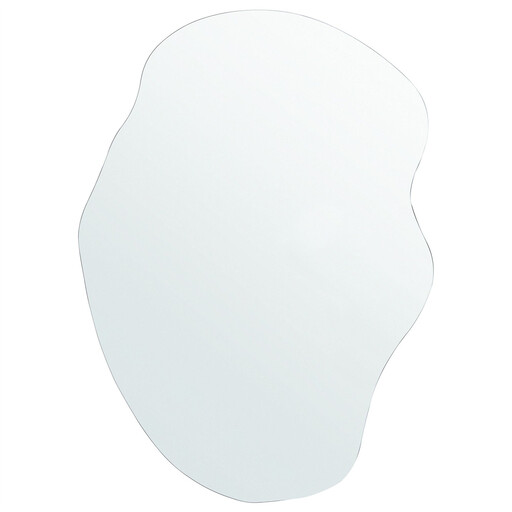
Why this product suits this profile: At 50 × 70 cm, it’s a good fit for compact wall spaces in a hallway, bedroom or living room. Its silver, frameless design works well with minimalist and Scandinavian-inspired interiors.
The product details give specific dimensions, a weight of 2 kg and the option to hang it vertically or horizontally. This makes it easier to work out how much space you’ll need before fitting it.
An irregular, trapezoid-shaped design, a frameless look, two hanging options and, according to the product information, no assembly required for the mirror itself.
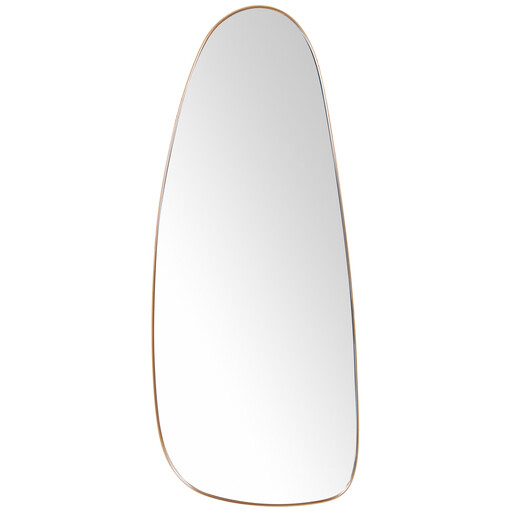
Why this product suits this profile: Its slim, tall 39 × 95 cm design and gold finish make a striking accent in a hallway, bedroom or entrance.
The stated dimensions make it easier to work out how much wall space you’ll need before buying. Before fitting, check the weight, hanging points and suitable fixings against the latest product details.
Slim dimensions, a gold finish and a metal wall mirror design make it a good choice for rooms where you want a vertical accent.
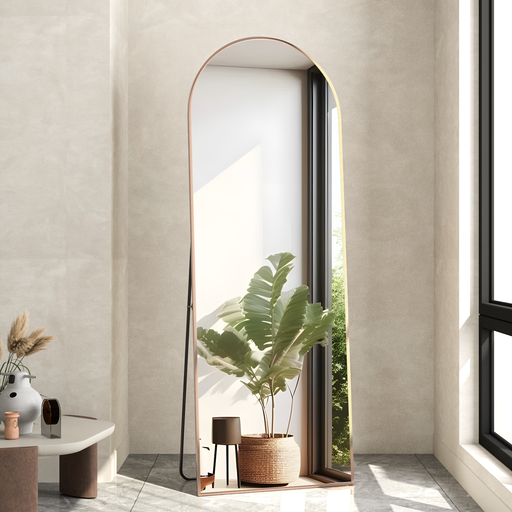
Why this product suits this profile: At 150 × 60 cm, its arched design lets you see your full height. It can be used in a bedroom, hallway or entrance.
The product name specifically describes it as a floor or freestanding mirror that can also lean against a wall. Before setting it up, check that it’s stable and can be secured against tipping in your chosen spot.
Generous full-length dimensions, a curved arch and flexible options to stand, hang or lean it, as stated in the product name.
We’ve put together a complete, regularly updated list of products that meet these strict selection criteria and fully comply with the safety regulations in force in the EU.
The fitting height depends on your height, the size of the mirror and how you plan to use it. A compact mirror at eye level is enough for a quick check of your face and upper body. A full-length mirror should be fitted or positioned so you can see your head and shoes at the same time. Keep doorways and walkways clear.
That depends on the manufacturer’s guidance and the specific design. High humidity, splashes and direct heat can put strain on materials and coatings. Before using a mirror in the bathroom, check the care instructions, backing, edges and recommended fitting location.
There’s no single answer. Its lifespan depends on factors including glass quality, frame material, fitting, humidity and cleaning. Secure fixing, dry edges and mild cleaning products can help prevent visible damage. For safety reasons, don’t continue using a mirror with damaged glass.