
Lieferung heute & morgen

Qualitätsgarantie

Willkommens-Angebote freischalten: KOSTENLOSE Lieferung | Bis zu 80 % RABATT | Kostenlose 30-Tage-JoyPlus-Testphase
App herunterladen
A wall mirror can make a hallway more practical, serve as a dressing mirror in the bedroom or add a decorative touch to your living room. Before you buy, though, it’s worth checking the dimensions, fixing method and product details carefully. An eye-catching shape alone doesn’t tell you whether the mirror will suit the space you have in mind.
Mirrors often look bigger or smaller in photos than they do in a room. So check the width, height and depth. A 50 x 70 cm mirror, for example, works well on a smaller wall, but won’t replace a full-length mirror. A taller, portrait-style design may be more practical in an entrance hall, while a landscape-style mirror can look more balanced above a chest of drawers.
Not every wall mirror can be safely fitted to every type of wall. Concrete, brick, plasterboard and stud walls require different wall plugs and screws. You should also check claims such as ‘can be hung or leaned against the wall’ carefully: a leaning full-length mirror needs a stable, tip-resistant position and enough floor space.
Words such as ‘modern’, ‘decorative’ or ‘high quality’ describe the design, but little else. More useful are verifiable details about the materials, weight, dimensions, orientation and mounting hardware. For unusual shapes, also check that all the edges are protected and that hanging points are provided for the orientation you want.
For a hallway or entrance mirror, height and viewing distance are key. If you want to see your whole body, choose a mirror that’s long enough. Depending on your height and how it’s mounted, a 150 cm full-length mirror can cover a larger area than a decorative wall mirror.
In the bedroom, take the available wall space, wardrobe and door swing into account. A bedroom mirror shouldn’t block wardrobe doors or walkways. In the living room, a decorative mirror can work as a standalone feature.
A frameless mirror has a subtle look against a clean, uncluttered wall. Irregular, asymmetrical or trapezoid-shaped outlines, by contrast, make a bolder statement. A silver wall mirror usually pairs easily with white, grey or wood-tone furniture. A gold wall mirror is better suited to warm colours, dark furniture or decorative metal accents.
Simple frames and frameless designs often work well with minimalist and Scandinavian-inspired interiors. Above all, choose a shape that suits your existing furniture and doesn’t compete with too many other bold decorative features.
Before hanging your mirror, check the following:
For cleaning, use a soft cloth and mild cleaning products. Abrasive cleaners can damage the glass or surface. Wipe any damp areas dry afterwards.
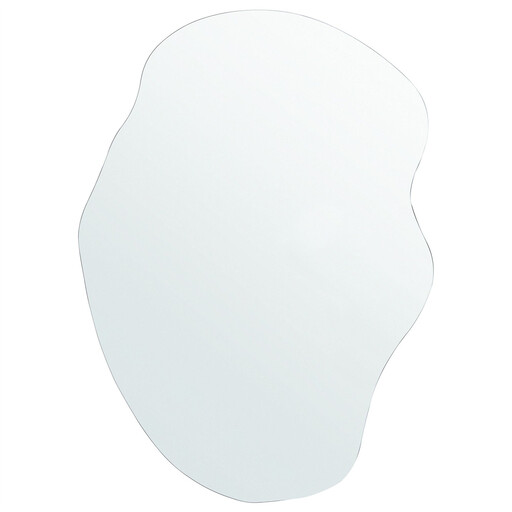
Why this product suits this shopper: Its compact dimensions make it a good fit for smaller walls in the hallway, bedroom or living room. The silver, frameless design works with a range of interior styles.
The product details include its dimensions, weight, materials and hanging options. This makes it easier to judge before buying whether it will suit your wall space and preferred orientation.
50 x 70 cm; weighs 2 kg; can be hung vertically or horizontally; frameless design with an irregular shape.
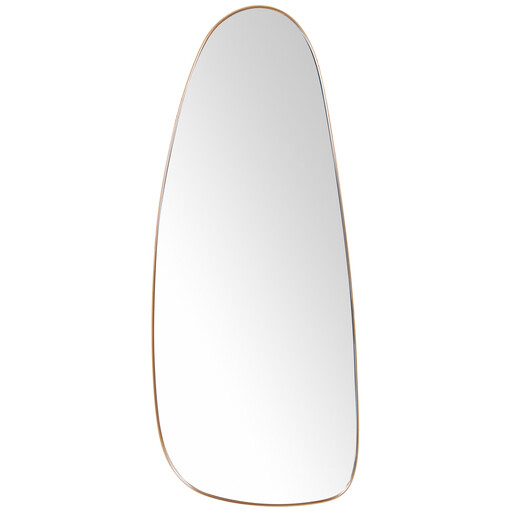
Why this product suits this shopper: Its slim, portrait-style design and gold finish will appeal if you’re looking for a striking feature for your hallway, bedroom or living space. Check the dimensions against your available wall width before buying.
The stated width of 39 cm helps you plan where to put it. Before buying, check the full product details for information about its construction, weight and fixing method.
39 x 95 cm according to the product name; gold finish; portrait orientation for narrow wall spaces.
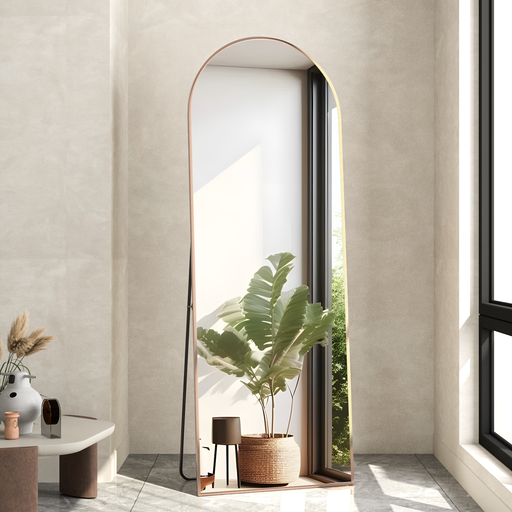
Why this product suits this shopper: This large mirror is designed to show your full-length reflection. According to the product name, it can be used with its stand, hung up or leaned against a wall. It’s a good option for a bedroom, dressing area or entrance hall with enough floor space.
The listed dimensions of 150 x 60 cm make it easy to see how much space you’ll need. If using the stand or leaning it against a wall, check its stability, the distance from the wall and that the floor is level before use.
150 x 60 cm; arched outline; according to the product name, designed to stand, hang or lean against a wall.
We’ve put together a comprehensive, regularly updated list of products that meet these strict selection criteria and fully comply with the safety regulations in force in the EU.
When fitting your mirror, first position it where you want it to go. Mark the hanging points, check for pipes and cables in the wall, and use fixings that are suitable for the wall material and the mirror’s weight. For larger mirrors, it’s best to have two people fit them.
A mirror designed to hang or lean against a wall shouldn’t be left unsecured in a walkway. A tip-resistant position is especially important in homes with children or pets. Keep mirrors away from direct heat, excessive moisture and areas where they could easily be knocked.
It depends on your height, how you’ll use the mirror and the type of mirror. A decorative mirror above a chest of drawers can be centred over the width of the furniture. For a full-length mirror, choose a mounting height that lets you see the part of your body you want to. Marking the position temporarily with masking tape can help before you drill.
Its lifespan depends on factors such as the quality of the glass, how the edges are finished, exposure to moisture, cleaning and how securely it’s fitted. Avoid abrasive cleaners and check the fixings on hanging mirrors from time to time. Don’t continue using mirrors with damaged or cracked glass.
The price depends on factors such as size, frame material, shape, weight, fixing system and finish. A small frameless mirror may be enough for a limited space, while a large gold full-length mirror needs more floor or wall space. So compare not only the price, but also the components included and the technical product details.