
Lieferung heute & morgen

Qualitätsgarantie

Willkommens-Angebote freischalten: KOSTENLOSE Lieferung | Bis zu 80 % RABATT | Kostenlose 30-Tage-JoyPlus-Testphase
App herunterladen
A wall mirror can define a room, reflect light and act as a decorative feature. But unclear product details, unsuitable dimensions or the wrong type of installation can quickly lead to a disappointing purchase. Three things are often overlooked: the actual reflective area, the wall’s load-bearing capacity and the difference between decorative and functional lighting.
1. The dimensions aren’t checked against how you’ll use it
A decorative wall mirror measuring 50 × 70 cm can work well on an empty stretch of wall, but it won’t necessarily show you your full outfit. If you’re looking for a mirror to get dressed in front of, search specifically for a full-length mirror, a leaner mirror or a large portrait-format model.
2. The fixings aren’t suitable for your wall
Depending on its size, glass thickness and frame material, a mirror can weigh several kilograms. Plugs and screws designed for concrete won’t necessarily be suitable for plasterboard, older walls or tiles. When choosing a wall mirror, consider not only the product’s weight but also the type and condition of the wall.
3. The lighting is mistaken for room lighting
A wall mirror with LED lighting can make it easier to use a mirror in the bathroom, hallway or bedroom. But check the brightness, controls and connection before you buy. Integrated lighting won’t necessarily replace your main room lighting.
A hallway mirror is often best in a compact size, giving you enough room for a last-minute check of your outfit or hair. In the living room, a decorative wall mirror can take centre stage as a design feature. A large wall mirror makes a statement on an empty wall, but needs enough clearance from furniture and doors.
Check the following:
A round wall mirror can soften rooms with lots of straight lines. Rectangular or irregular shapes often suit minimalist interiors. For a bedroom mirror, it’s also worth considering whether you want to hang it on the wall, lean it against the wall or use it freestanding.
A frameless mirror has a subtle look that lets the wall décor stand out. A mirror with a bamboo frame, on the other hand, adds a natural accent that works well with Scandinavian or cosy interior styles. A gold metal mirror creates a stronger decorative contrast and should complement the colour of your lights, handles or other metal details.
Also check:
For wall-mounted models, the hanging system needs to suit the type of wall. According to the product details, the Beliani FALAISE can be hung horizontally or vertically. However, suitable plugs and screws for your wall type aren’t necessarily included.
For an LED model, consider the cable route, socket and transformer. According to the product details, the 5five mirror has a wall connection with an IP44 transformer, touch controls, adjustable light intensity and a three-metre cable. IP44 indicates protection against solid objects above a certain size and splashing water. It doesn’t mean the mirror is suitable for every wet-area setting. Always follow the manufacturer’s installation and safety instructions.
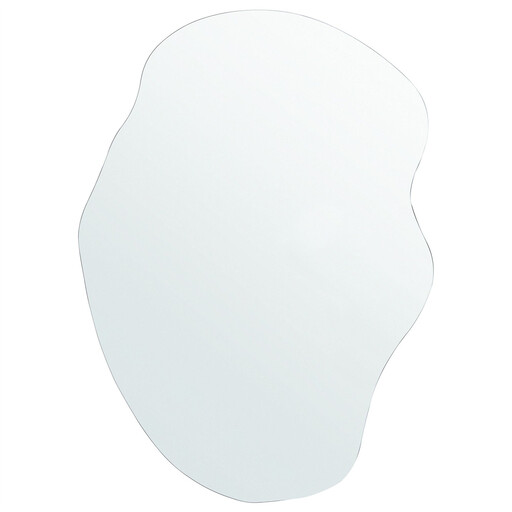
Why it suits this profile: At 50 × 70 cm, it fits smaller areas of clear wall in the hallway, bedroom or living room. Its irregular shape adds a decorative touch without requiring a large area of wall.
The product details specify its dimensions, 2 kg weight and hanging points for both orientations. This makes it easier to work out how much space you’ll need before installation.
Frameless design; can be hung horizontally or vertically; no assembly of the mirror itself required.
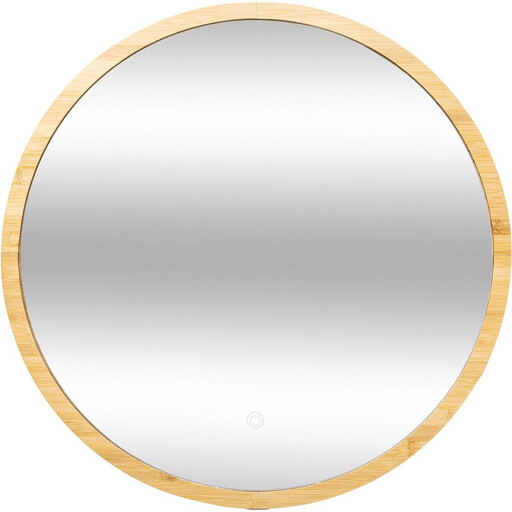
Why it suits this profile: This round mirror combines a clearly defined shape with integrated lighting and a bamboo frame. It complements natural, Scandinavian and pared-back interior styles.
The specified diameter, cable length, touch controls and IP44 transformer make it easy to check key features before you buy.
57 cm diameter; bamboo frame; adjustable light intensity; wall hooks included, according to the product details.
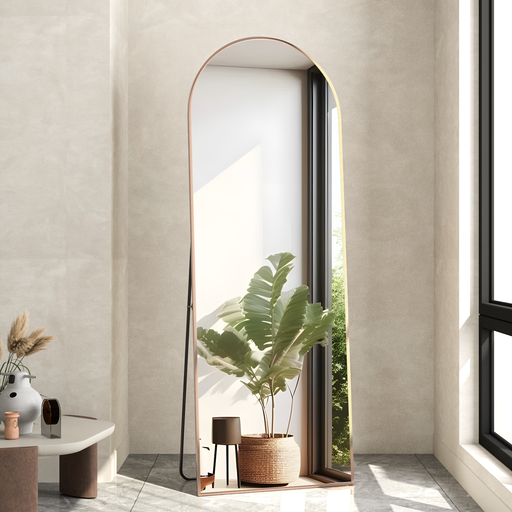
Why it suits this profile: At 150 × 60 cm, this model is designed to show you your full outfit. According to the product name, it can be used as a freestanding, leaning or wall-mounted mirror.
Its extra height makes it less likely that you’ll choose a small decorative mirror for getting dressed. Before using it as a leaning mirror, check that it’s stable and won’t tip over.
Full-length size; arched top; gold-coloured design; flexible ways to use it, according to the product name.
We’ve put together a complete, regularly updated range of products that meet these strict selection criteria and fully comply with the safety regulations in force in the EU.
First, check the wall material, the mirror’s weight and the position of its hanging points. Use plugs and screws that are suitable for the wall. For large or heavy models, it’s best to have someone help with installation. Avoid hanging a mirror above areas where it could easily be knocked.
For a full-length view, taller mirrors of around 150 cm or more are often more practical than compact wall mirrors. The viewing distance and mounting height also matter. A mirror measuring 150 × 60 cm can be used as a freestanding, leaning or wall-mounted model, depending on how you position it.
Power consumption depends on the LED’s wattage, how long you use it each day and how it’s operated. Before buying, check the power rating and whether the mirror has an on/off switch or touch controls. For models with a transformer, make sure the cable, socket and IP rating are suitable for the intended setting.