
Lieferung heute & morgen

Qualitätsgarantie

Willkommens-Angebote freischalten: KOSTENLOSE Lieferung | Bis zu 80 % RABATT | Kostenlose 30-Tage-JoyPlus-Testphase
App herunterladen
A wall-mounted clothes rail can create extra storage in small flats, narrow hallways or cluttered bedrooms. It makes use of wall space and keeps coats, shirts, trousers and towels within easy reach. However, not every model is suitable for every wall or purpose.
Before buying, it’s worth taking a close look at the fitting type, dimensions and load capacity. An attractive wall-mounted clothes rail may prove impractical if there isn’t enough clearance from the wall or it’s fitted with unsuitable wall plugs.
Claims such as ‘up to 50 kg’ don’t automatically apply to every wall. Concrete, brick, plasterboard and chipboard walls differ considerably in strength and in the fixings they require. The capacity of the wall plugs supplied also depends on the surface they’re fitted into.
Check the following:
The manufacturer’s information should be used as a guide. If your wall is different or the load will be particularly heavy, you’ll need a suitable fixing solution.
A 64 cm clothes rail, 100 cm clothes rail or 114 cm clothes rail needs enough room on the wall, but you’ll also need to account for doors, windows, radiators and walkways.
A short metal clothes rail may work better in a small alcove. A longer version offers more hanging space for several jackets or an open wardrobe in the bedroom. Measure the available wall width before buying, and leave a little clearance at either side for nearby furniture.
An industrial-style metal clothes rail can look at home in minimalist or urban interiors. However, the clearance between the clothes and the wall is just as important. If coats or trousers touch the wall, they can get dirty or creased more easily.
A depth of around 26 to 30 cm should provide enough clearance for most hangers. Less depth may be sufficient for towels, kitchen utensils or accessories. Also check that the finish is smooth and easy to clean.
A metal clothes rail is generally suitable for regular use and, depending on its construction, may also support heavier garments. For white models, look for an even, easy-care finish. A white clothes rail can make a small room feel brighter, while dark pipework creates a stronger industrial look.
Look for:
Good ventilation is important in damp rooms. Don’t expose a wall-mounted coat rack to direct splashes of water unless the manufacturer specifically says it’s suitable.
The width determines how many hangers will fit. The depth affects whether clothes can hang freely. A space-saving clothes rail should provide as much useful hanging space as possible without narrowing the walkway.
As a general guide:
The actual capacity depends on the width of your hangers and the type of clothing. Thick winter coats need more room than lightweight blouses.
A secure fit matters more than a quick installation. Mark the drill holes, check for pipes and cables in the wall, and use wall plugs suited to the surface. Special cavity wall fixings may be needed for plasterboard.
Always read the product information in full. The models below, for example, have different stated load capacities for certain wall types. These figures only apply when the rail is fitted correctly and must not be exceeded.
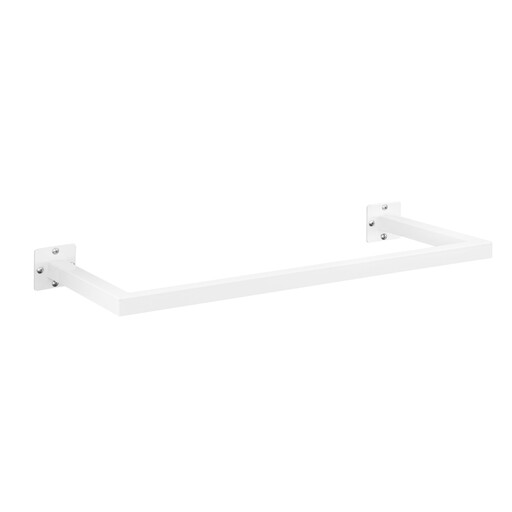
Why this product suits this need: Its compact width makes it a good fit for small hallways, alcoves or a dedicated space for a few garments. The open design makes it easy to see what you have.
The product information gives a maximum load of 50 kg on a cement wall and 75–100 kg on a panel wall. Check your wall type before fitting the rail.
64 cm wide, metal pipes, 30 cm deep, with a fitting kit and illustrated instructions, according to the product description.
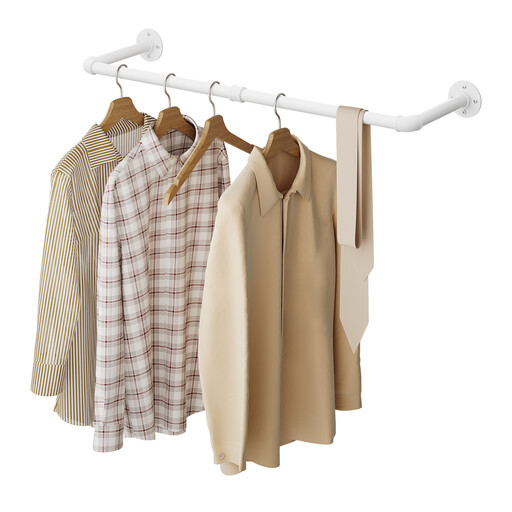
Why this product suits this need: The 100 cm version combines a moderate wall width with a clean industrial look. It’s well suited to a bedroom, hallway or kitchen.
Its stated maximum load of 50 kg makes it easier to assess whether it’s right for you. The weight still needs to be distributed evenly, and the rail must be secured to a suitable wall.
100 cm wide, metal construction, scratch-resistant finish according to the product description, plus a fitting kit and instructions.
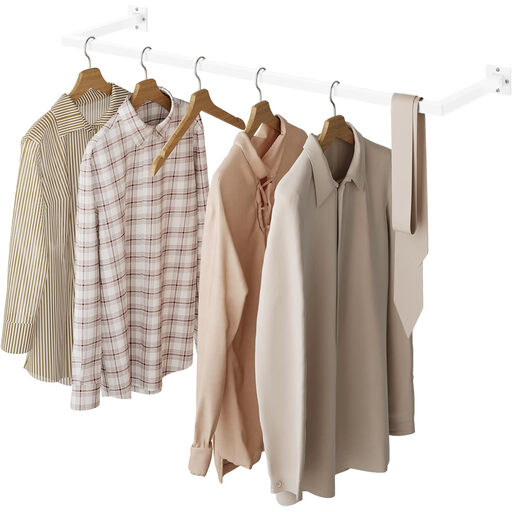
Why this product suits this need: The longer version has room for several garments and can also be used to hang kitchen utensils, shoes or plants.
The product details give different load capacities for cement walls, up to 50 kg, and panel walls, 75–100 kg. These figures only apply when the rail is securely fitted to a suitable surface.
114 cm wide, 30 cm deep, with an open design and versatile uses, according to the product description.
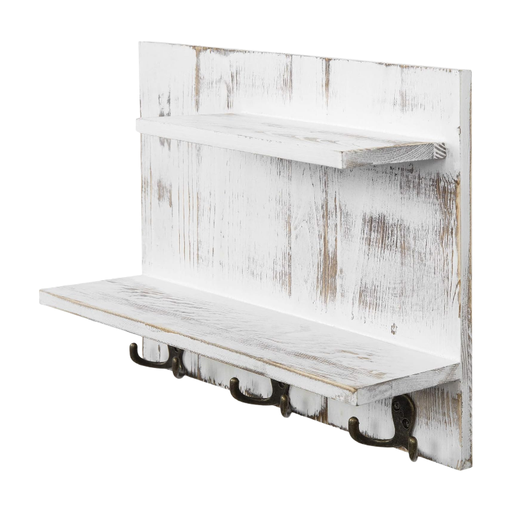
Why this product suits this need: This wall shelf with hooks combines storage shelves with hanging space for towels, keys, cloths or small accessories.
This design isn’t just for hangers. Two shelves and six hooks make it useful for storing a variety of items.
Two shelves, six metal hooks and a whitewashed wood finish, according to the product description.
We’ve put together a complete, regularly updated list of products that meet these strict selection criteria and fully comply with the safety regulations in force in the EU.
The height depends on your own height, the type of clothing and how you’ll use the room. In a hallway, the rail should be easy to reach. In a bedroom, make sure long coats or dresses won’t trail on the floor. Measure your longest garment and allow for clearance from the floor and nearby furniture.
Solid concrete and brick walls are often suitable, provided you use the right wall plugs. For plasterboard, wood or panel walls, use specialist fixings and observe the stated load limits. Avoid fitting the rail to a weak or unstable surface.
Depending on its design, you can hang towels, scarves, bags, kitchen utensils or plants as well as clothes. A clothes rail combined with a wall shelf and hooks is handy for smaller items. Always consider the permitted load, the humidity in the room and how evenly the weight is distributed.