
Lieferung heute & morgen

Qualitätsgarantie

Willkommens-Angebote freischalten: KOSTENLOSE Lieferung | Bis zu 80 % RABATT | Kostenlose 30-Tage-JoyPlus-Testphase
App herunterladen
A cluttered entryway, with jackets, bags, and scarves draped over chair backs, is a common frustration. A well-chosen wall-mounted coat rack can quickly and stylishly restore order. However, the selection is vast, and not every product lives up to its promises. Many buyers invest in solutions that soon prove to be impractical or unstable. This guide will help you navigate the common pitfalls and find a functional, long-lasting coat rack solution for your home.
Before you make a decision, you should be aware of the three most common issues that can lead to a purchase you'll regret:
To make an informed decision, focus on three core aspects that determine the longevity and functionality of your new wall-mounted coat rack.
The material is the foundation of stability. Sturdy coat hooks are typically made from high-quality aluminum alloys or solid wood. These materials are not only resilient but also often rust-resistant and durable.
Proper wall mounting for your coat hooks is crucial for safety and stability. Before you buy, identify your wall type.
Some manufacturers include rubber buffers on the back. These not only protect the wall from scratches but can also compensate for minor surface imperfections.
Design is more than just a matter of aesthetics. The shape of the hooks directly impacts daily use.
Here are some product recommendations tailored to different needs and living situations.
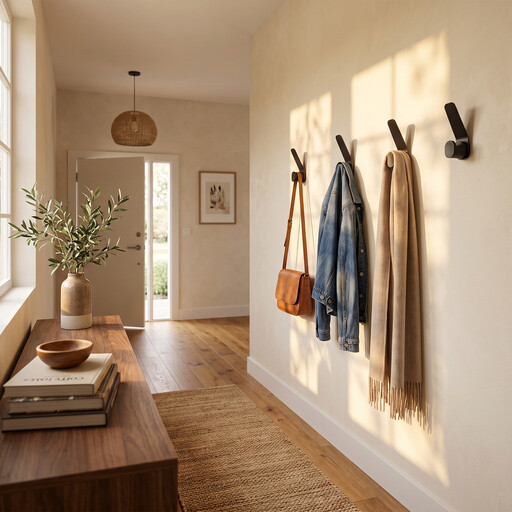
Why it's a match: Ideal for anyone seeking a flexible and visually appealing solution. The individual hooks can be arranged freely on the wall to create a custom layout that fits perfectly into a modern living space.
The sturdy aluminum is rust-resistant and won't bend. The rounded edges and groove design protect clothing and prevent slipping. The rubber buffer on the back protects the wall.
Winner of the German Design Award 2022. Each double hook holds up to 5 kg (11 lbs). The set allows for a flexible arrangement depending on space and needs.
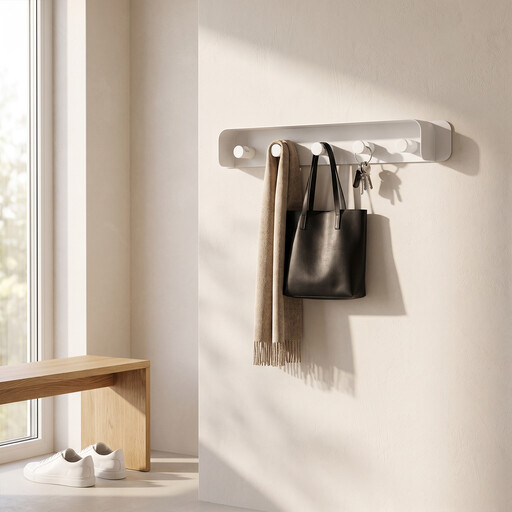
Why it's a match: Perfect for families or anyone with a high need for organization in the hallway. The combination of a hook rail and a shelf consolidates storage for jackets, keys, and decorative items in one place.
The stated total load capacity of up to 25 kg (55 lbs) is designed for everyday use and offers ample reserves. The robust aluminum material is engineered for a long service life.
Combines 5 hooks with a practical shelf. Also a winner of the German Design Award 2022. Installation is straightforward thanks to clear instructions.
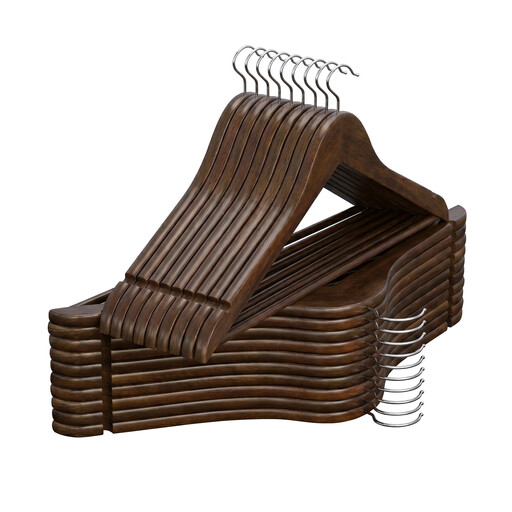
Why it's a match: For those whose organization starts in the closet. These hangers are designed to preserve the shape of heavy clothing like suits, coats, and jackets, creating a uniform, high-end look in your wardrobe.
Crafted from solid maple wood, these hangers are extremely sturdy and won't break under the weight of winter coats. The smooth finish and ergonomic shape prevent imprints and damage to the fabric.
Each hanger supports up to 5 kg (11 lbs). The 360° swivel hook ensures easy handling. Shoulder notches and a rubberized bar provide non-slip grip for various garments.
We have compiled a complete, up-to-date list of products that fully meet these strict selection criteria and safety regulations.
A standard mounting height for the hooks on a wall-mounted coat rack is between 1.70 m and 1.75 m (approx. 5'7" to 5'9") from the floor. This allows most adults to access it comfortably while ensuring longer coats don't touch the ground. For households with children, a second, lower-mounted hook rail at a height of about 1.10 m to 1.20 m (approx. 3'7" to 3'11") can be a practical addition.
For maximum durability and load-bearing capacity, solid metals like stainless steel or high-quality, thick aluminum alloys are an excellent choice. They are rust-resistant, do not deform, and can withstand heavy weight. Solid wood is also very durable, as long as it is well-finished and sealed to protect it from moisture.
Yes, it is possible, but it requires the correct approach. Whenever possible, fasten the rail directly into the wood or metal studs behind the drywall. If that's not an option, you must use special hollow-wall anchors. These distribute the weight over a larger area and provide a secure hold that far exceeds that of standard plastic anchors. Always check the load capacity specifications provided by the anchor manufacturer.