
Lieferung heute & morgen

Qualitätsgarantie

Willkommens-Angebote freischalten: KOSTENLOSE Lieferung | Bis zu 80 % RABATT | Kostenlose 30-Tage-JoyPlus-Testphase
App herunterladen
A cluttered entryway, where jackets, bags, and scarves lack a designated spot, can complicate your daily routine. A well-chosen wall-mounted coat rack not only creates order but can also be a stylish element in your home. However, the selection is vast: from a simple hook rail to a multifunctional coat rack panel with a shelf and hanging rod.
This article serves as a practical guide. We'll explain what to look for when making your selection and introduce several models with different features to help you make an informed decision.
Before you decide on a model, several functional aspects should be considered. These three points will help you find a hallway coat rack that suits your needs.
The material determines not only the durability and load capacity but also the visual impact it has in the room.
Consider what you need to store on a daily basis. A modern wall-mounted coat rack can combine several functions:
A space-saving wall-mounted coat rack must be securely fastened. Check two things before you buy:
Here is a selection of models that stand out for their unique concepts and functionalities.

Why it stands out: This model from SoBuy is a well-designed all-in-one solution for the entryway. It combines a hanging rod, five sturdy metal hooks, and a top shelf with three foldable mesh boxes. This combination creates versatile and organised storage in a compact footprint.
Advantages:
Who is it for? Ideal for families or shared living spaces looking for an all-in-one solution for their hallway coat rack. The baskets are practical for accessories like hats and scarves, while the rod and hooks provide ample space for numerous jackets.
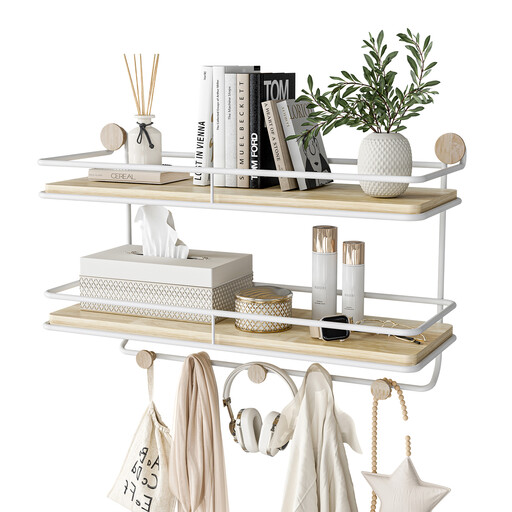
Why it stands out: The KAPANOU shelf is distinguished by its award-winning design (New York Design Award 2023) and high-quality combination of materials. It pairs clear-lacquered rubberwood with powder-coated metal. Its standout feature is the two shelf tiers, each equipped with a protective rail to prevent items from falling off.
Advantages:
Who is it for? Perfect for design-conscious users seeking a coat rack with a shelf that is both aesthetic and functional. It's excellent for stylishly displaying not only clothing but also photos, plants, or books.

Why it stands out: This wall-mounted coat rack from WOLTU embodies the raw charm of the industrial style. The combination of a wood-look shelf and a matte black metal frame is a visual highlight. With a wide shelf, a full-length hanging rod, and five movable hooks, it is extremely functional and makes efficient use of vertical space.
Advantages:
Who is it for? An excellent choice for fans of the industrial look and for anyone needing a very robust, heavy-duty solution for their hallway coat rack. Its high load capacity makes it ideal for households with many heavy jackets and coats.
Haven't found the right model for you yet, or do you need a different type of storage solution? Discover a wider variety of organisational aids in our hanging storage shelves category.
1. How high should a wall-mounted coat rack be hung? A common mounting height for the hooks or hanging rod is between 1.60 m and 1.70 m from the floor. This allows most adults to hang jackets comfortably while ensuring coats don't touch the ground. Adjust the height as needed to suit the height of the users.
2. What is the difference between a coat rack panel and a hook rail? A hook rail is a narrow strip with only hooks attached. A coat rack panel is a larger board mounted on the wall. It protects the wall from dirt and scuffs from wet jackets and often integrates additional elements like a hat shelf, a mirror, or a hanging rod.
3. Can I mount a wall-mounted coat rack on a drywall? Yes, this is possible, but it requires special care. Never use the standard wall plugs included with the product, as they will not hold in hollow walls. Instead, purchase special hollow-wall anchors (e.g., toggle bolts or metal expansion anchors) from a hardware store that are designed for heavy loads. Always observe the maximum load capacity of both the anchors and the coat rack to prevent it from dangerously tearing out of the wall.