
Lieferung heute & morgen

Qualitätsgarantie
App herunterladen
Kategorien
Choosing a wall-mounted coat rack is a decision driven by functional requirements and material properties. The efficiency of such a storage solution depends on three core factors: material composition, maximum load capacity relative to the wall structure, and the specific design that best serves its intended purpose. This article analyses these parameters to provide an informed basis for your decision.
The correct evaluation of a wall-mounted coat rack requires an analysis of its technical specifications. Material, load-bearing capacity, and design determine its longevity and practical utility in daily use.
The choice of material influences not only the aesthetics but also the resilience and the intended location of use.
The maximum load capacity specified by the manufacturer (e.g., 25 kg or 30 kg) is a theoretical value that can only be achieved under optimal conditions. The actual load-bearing capacity depends significantly on two factors:
It is therefore essential to check the wall structure before installation and to select the mounting hardware accordingly.
Functionality is defined by the design. Common variants include:
The following products have been selected based on their technical specifications, material craftsmanship, and functional design.
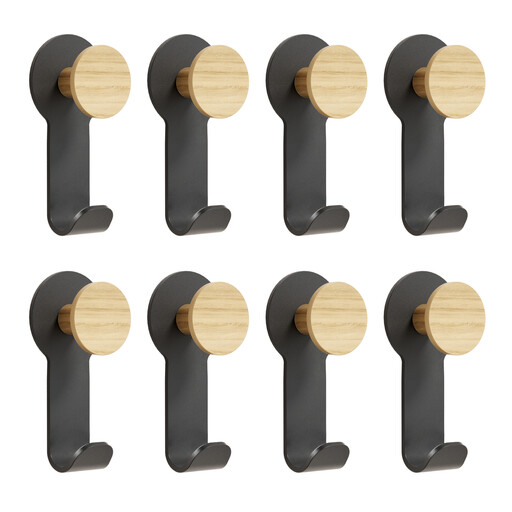
Why we recommend this product: This set offers maximum design freedom with its eight separate units. The dual-hook design, a combination of a wooden hook and a metal hook, doubles the hanging options per unit. The material combination and minimalist design, which the manufacturer states has won the Muse Design Award and the French Design Award, allow for a functional yet decorative wall arrangement.
Advantages:
Who it's for: For individuals seeking a flexible and customisable storage solution who appreciate the ability to determine the hook arrangement themselves. Ideal for bedrooms, bathrooms, or to supplement existing coat racks.
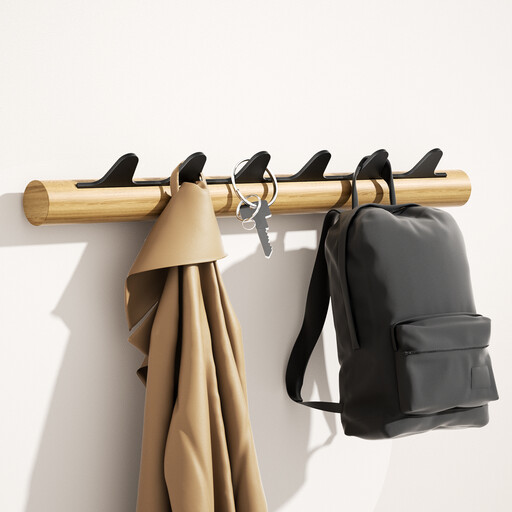
Why we recommend this product: This coat rail combines a backing plate made of solid, FSC-certified rubberwood with six robust aluminium alloy hooks. With a specified maximum load capacity of 30 kg, it is designed to hold heavy garments such as winter coats. The rounded edges of the hooks are designed to be gentle on fabrics.
Advantages:
Who it's for: For households and entrance areas with a high demand for centralised hanging space. Its robust construction makes it the ideal coat rack for the hallway.
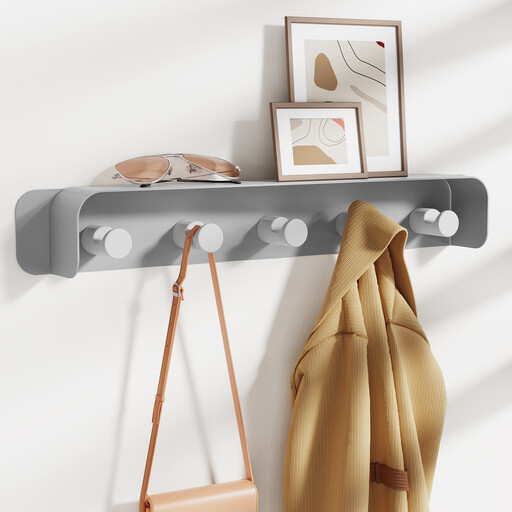
Why we recommend this product: This aluminium alloy model integrates a coat rail with a shelf, offering a 2-in-1 solution. The construction is made entirely of metal, making it waterproof and rust-resistant. The integrated shelf creates additional storage space. According to the manufacturer, the design was honoured with the German Design Award 2022.
Advantages:
Who it's for: For users seeking a space-saving and multifunctional solution. Especially practical in small hallways, bedrooms, or bathrooms where the additional shelf can be used for accessories or decorative items.
For special requirements, such as in damp rooms, the targeted selection of individual hooks can be advantageous. You can find a selection of specialised models in our Bathroom Towel Hooks category.
1. How high should a wall-mounted coat rack be installed? The installation height depends on the average height of the users. A common reference height for the hooks is between 1.60 m and 1.75 m from the floor. This ensures that even long coats do not touch the ground and that the hooks are easily accessible for most adults. In households with children, a second, lower-mounted hook rail can be a practical addition.
2. What is the functional difference between a coat rail and individual coat hooks? A coat rail bundles multiple hooks on a single backing unit, which allows for quick and straight installation. It is suitable for areas where a concentrated storage solution is needed. In contrast, individual coat hooks offer maximum flexibility in arrangement and can be creatively distributed on the wall to utilise unused niches or create a custom design.
3. What material is suitable for a coat rack in the hallway? For a high-traffic hallway, robust and low-maintenance materials are advantageous. A coat rail made from a combination of metal coat hooks and a solid wood backer is a great choice. The metal offers resistance to wear and tear from hangers or keys, while the wood provides a stable base. A pure metal coat rack is particularly easy to clean and resistant to moisture brought in by wet jackets.