
Lieferung heute & morgen

Qualitätsgarantie

Willkommens-Angebote freischalten: KOSTENLOSE Lieferung | Bis zu 80 % RABATT | Kostenlose 30-Tage-JoyPlus-Testphase
App herunterladen
A wall-mounted coat rack with hooks keeps your hallway tidy without taking up floor space. It is suitable for jackets, coats, bags, rucksacks, hats and towels. At the same time, wall hooks can vary considerably in terms of material, fixing method, hook spacing and load capacity.
If you decide based solely on colour or price, you can easily overlook important details. Three common purchasing problems are:
A wooden coat rack rail creates a warm look and suits rustic, vintage or Scandinavian interiors. Solid wood can provide a sturdy base. Check the specific material details, as a ‘wood effect’ finish is not the same as solid wood.
With a wood and metal wall-mounted coat rack, the hook material should also be specified. Aluminium alloys are lightweight and can be given a coating to protect against corrosion. A water-repellent surface is useful in the bathroom or kitchen. However, it does not replace regular care and cannot protect against every type of prolonged exposure to moisture.
Rounded edges and smooth hook ends reduce the risk of clothing catching. This detail is particularly important for towels, scarves and delicate fabrics.
A 6-hook coat rack rail is a practical middle ground for many households. It provides space for several people while generally remaining more compact than a large coat stand. For hats or bags, a rail with 10 hooks may also be a sensible choice.
Before buying, check the following:
A model with a stated total load capacity of 66 lb is approximately equivalent to 30 kg. With individual double hooks rated at 11 lb, you should allow for around 5 kg per hook. These figures only apply when the product is mounted correctly using suitable fixings.
A space-saving coat rack only works reliably when it is securely attached to the wall. Before drilling, check the wall material, the position of cables and pipes, and the installation height. Special cavity wall plugs are required for plasterboard, while different types of wall plug are used for concrete or solid brick.
When working with tiles, choose drilling points carefully and use suitable drill bits. A wall-mounted coat rack is not designed to be used as a grab handle. Children should be kept away from screws and small parts during installation.
For everyday use, we recommend:
The following selection assigns different designs to specific usage scenarios. The details are based on the respective product descriptions.
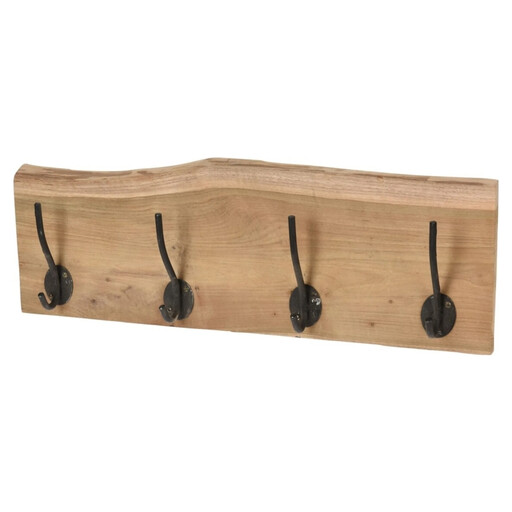
Why this product suits this profile: The 50 cm wooden rail with four metal hooks is suitable for smaller hallways, bathrooms or individual entrance areas with modest storage needs.
The dimensions are clearly stated. This allows you to check in advance whether the rail will fit the intended wall, rather than relying solely on the product photo.
According to the product details: sustainable wood, four metal hooks and a compact design suited to a range of interior styles.
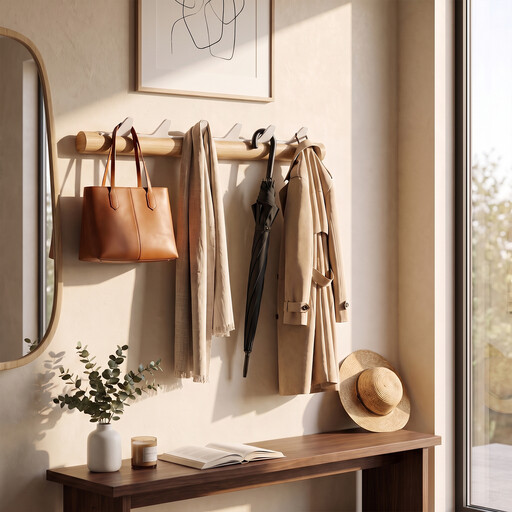
Why this product suits this profile: The combination of FSC-certified rubberwood, coated aluminium hooks and six hanging points appeals to households that want to compare material details and load capacity.
The product description specifies six hooks, the material combination, surface features and a maximum total load of 66 lb. This makes it easier to assess the product objectively before buying.
Six rounded aluminium hooks, painted solid wood, and stated water-repellent and rust-resistant properties.
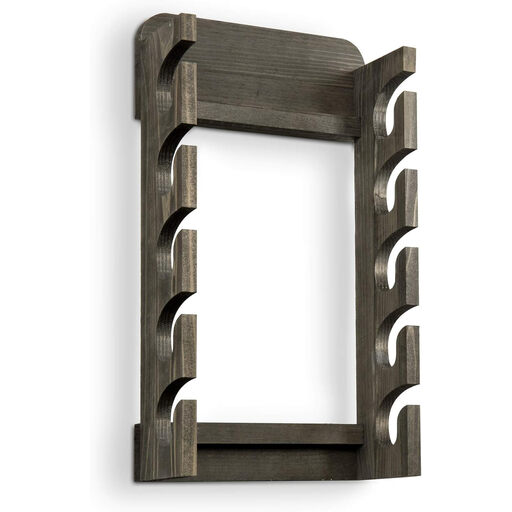
Why this product suits this profile: Ten hooks and the vertical design are suitable for families, multiple hats, bags or a busy hallway.
The product details specify a maximum load of 15.9 kg, as well as the included screws and plasterboard wall plugs. The wall type must still be checked before installation.
Ten hook-shaped hanging points, a vertical design and a rustic grey wood-effect finish for hallways, dressing rooms or commercial display areas.
We have put together a complete, regularly updated list of products that fully meet these strict selection criteria and the safety regulations applicable in the EU.
In the hallway, a wall-mounted coat rack should be installed so that coats do not knock against doors or furniture. For children, a lower installation height is recommended, provided that the wall and fixings are suitable for this.
Wall hooks for jackets and coats need sufficient spacing and a sturdy design. In the bedroom, individual wall-mounted clothes hooks may be enough for a dressing gown, bag or belt. In the bathroom, coat hooks for towels are practical if the surface is suitable for the humidity in the room. Decorative wall hooks made from wood and metal can also be used in the kitchen, office or utility room.
Burnt wood, vintage finishes and black or brass-coloured metal accents complement rustic interiors. For modern rooms, clean shapes and pared-back colour combinations are generally easier to incorporate.
Choose wall plugs and screws that are suitable for the substrate. Cavity wall plugs are commonly used for plasterboard, while suitable expansion or universal plugs are used for concrete or brick. After installation, check that the rail is firmly secured and do not exceed the stated load capacity.
Four to six hooks may be sufficient for two people. Families with children or households with lots of bags and hats often benefit from eight to ten hanging points. The width of the wall, hook spacing and intended use are also important factors.
That depends on the surface treatment and ventilation. Coated metal hooks and sealed wood may be suitable for towels. Nevertheless, prolonged exposure to moisture, standing water and aggressive cleaning products should be avoided.