
Lieferung heute & morgen

Qualitätsgarantie

Willkommens-Angebote freischalten: KOSTENLOSE Lieferung | Bis zu 80 % RABATT | Kostenlose 30-Tage-JoyPlus-Testphase
App herunterladen
A wall-mounted coat rack makes use of your wall space instead of cluttering the floor with a cupboard or a freestanding coat stand. It’s ideal for jackets in the hallway, towels in the bathroom, clothes in the bedroom, or bags and kitchen utensils in the living area. Before you buy, though, it’s not just about colour and style. The wall type, load capacity, dimensions and how you plan to use it are all crucial.
A claim like “high load capacity” doesn’t tell you much if the wall surface isn’t taken into account. A concrete wall, a plastered brick wall, a plasterboard wall or a thin wooden panel all need different wall plugs and screws. What’s more, the weight is distributed differently on a wall-mounted coat rack with hooks compared with a continuous wall-mounted clothes rail.
So, check the following:
With a wall-mounted clothes rail, it’s not just the width that matters. The depth is also important, so that clothes don’t press against the wall or stick out into walkways. For coat hangers, a depth of around 25 to 30 cm is typical, depending on the model. In a narrow hallway, a shallow coat rail with hooks can be more practical than a bulky clothes rail.
A hook rail with just a few hooks is enough for the daily needs of one or two people. For several jackets, bags or frequently used accessories, a wall shelf with hooks can be more practical. A shelf provides extra storage space, while hooks keep smaller items tidy. However, check whether you actually need the top shelf and how much weight can be placed on it.
The installation method should suit the building material. For concrete and masonry, expansion or universal wall plugs are usually suitable. For plasterboard, you’ll need special cavity wall plugs; for a wooden panel, appropriate wood screws can be used. The hardware supplied isn’t automatically suitable for every wall.
Mark your drilling points carefully, check for pipes and cables, and fix the wall-mounted coat rack level. After installation, test the structure with a light load first. Check the screws and wall plugs regularly to make sure they’re still tight.
A short coat rail with four to six hooks is ideal for small entrance areas or the bathroom. A longer wall-mounted clothes rail offers space for hangers and can be used as an open wardrobe. Make sure that doors, drawers and walkways remain clear.
A simple guide to help you plan:
Metal tubes suit an industrial-style coat rack and can usually be cleaned with a dry or slightly damp cloth. Wooden surfaces need gentle care without abrasive products. In damp rooms, varnished, powder-coated or explicitly rust-resistant surfaces are best. However, the material specification alone is no substitute for proper installation and regular checks.
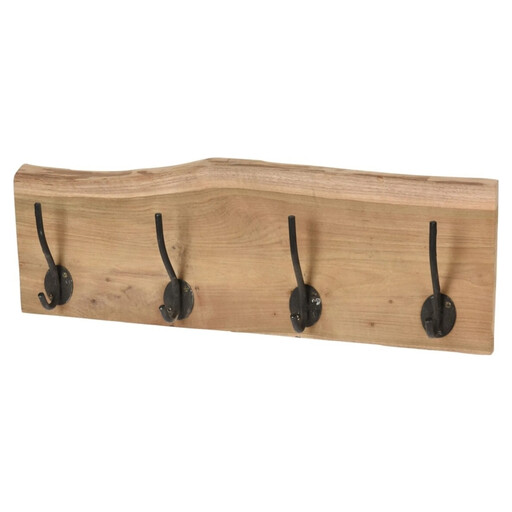
Why this product suits the profile: The 50 cm wooden rail needs very little wall space and is ideal for jackets, coats or towels in smaller rooms.
The fixed length and clearly stated number of hooks make planning easier, rather than buying an oversized model you don’t need.
50 cm length, four metal hooks and an easy-care wooden surface.
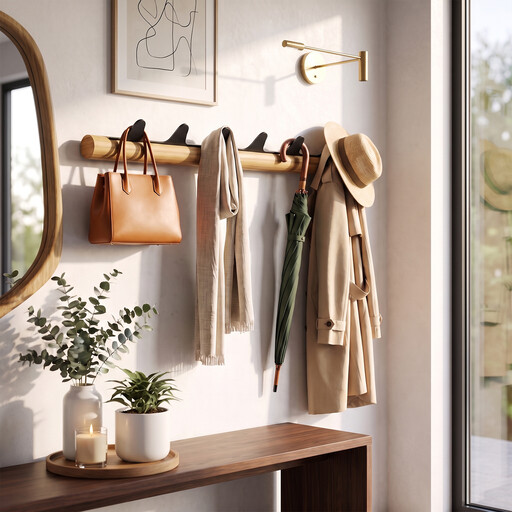
Why this product suits the profile: The combination of FSC-certified rubberwood and six metal hooks offers a decorative finish with practical hanging space for the hallway, bedroom or bathroom.
The six hooks are clearly specified. The stated maximum load of up to 30 kg only applies with suitable wall anchoring and must not be exceeded.
Six hooks, rounded edges, plus varnished wood and aluminium hooks.
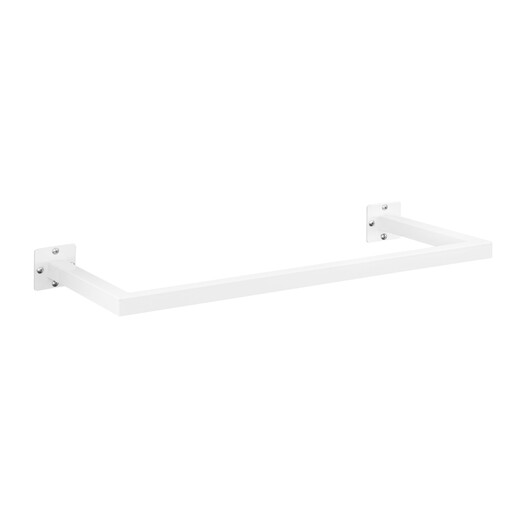
Why this product suits the profile: The open metal construction works as an industrial-style coat rack for jackets, clothes, shoes or selected household items.
The 30 cm depth and intended wall mounting are clearly stated. The load ratings of up to 50 kg on cement walls and 75–100 kg on panel walls must match your specific wall surface.
64 cm width, metal tubes, open access, plus a mounting kit and illustrated instructions.
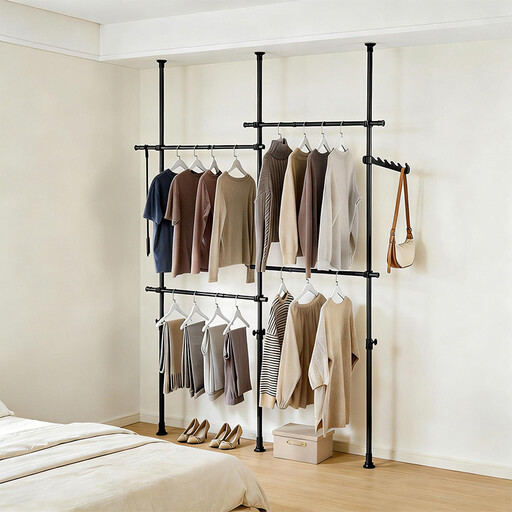
Why this product suits the profile: As a freestanding wall-style clothes rail that doesn’t need wall fixing, the system works well in rented flats, dressing rooms or changing room layouts.
It doesn’t assume a specific wall’s load capacity. The structure still needs to be assembled correctly and loaded with a maximum of 65 kg.
Adjustable width from 124 to 226 cm, height from 200 to 295 cm, three rails and ten additional coat hangers.
We’ve put together a full, regularly updated list of products that fully meet these strict selection criteria and the safety regulations in force in the EU.
Choose wall plugs and screws that suit concrete, masonry, wood or plasterboard. Fix the product to load-bearing points wherever possible and distribute the weight evenly. The maximum load only applies when the product is correctly installed on the intended surface.
For narrow hallways, short coat rails with several hooks or shallow wall-mounted clothes rails are suitable. Measure the available wall width beforehand and pay attention to the depth. A design with an additional shelf needs more space, but offers storage for keys, hats or bags.
A fixed wall-mounted clothes rail uses the wall permanently and, with suitable fixing, can create a clear, open storage system. An extendable clothes rail or a telescopic, freestanding system offers more flexibility and is a good option for rented flats. The choice mainly depends on your room layout, wall type and the load capacity you need.