
Lieferung heute & morgen

Qualitätsgarantie

Willkommens-Angebote freischalten: KOSTENLOSE Lieferung | Bis zu 80 % RABATT | Kostenlose 30-Tage-JoyPlus-Testphase
App herunterladen
A wall-mounted coat rack with hooks keeps your hallway tidy without taking up floor space. It is suitable for jackets, bags and keys, can hold accessories in the bedroom or serve as a towel rail with hooks in the bathroom. However, wall hooks, hook rails and coat racks with hooks differ considerably when it comes to installation, load capacity and the space they require.
If you choose based solely on colour and design, you can easily overlook important details. Three common buying pitfalls are particularly relevant:
Before buying, you should establish whether the stated capacity applies per hook, per rail or to the product as a whole. Small wall hooks are sufficient for keys and lightweight accessories. For winter coats, rucksacks or several full bags, however, load ratings per hook and secure installation are essential.
The actual load capacity also depends on the substrate. Special cavity wall plugs may be required for plasterboard, while different types of plugs are used in concrete or brick. When drilling into tiles, care must be taken to avoid damaging the surface. The plugs supplied are therefore not universally suitable for every wall.
A coat rack is also not a grab rail or climbing aid. Children should not have access to screws or small parts during installation.
A wooden wall-mounted coat rack brings a warm, decorative look to the entrance hall. However, solid wood, rubberwood, pine and MDF differ in terms of their grain, finish and care requirements. Painted or sealed wooden surfaces should generally only be cleaned with a soft, slightly damp cloth. Abrasive cleaners can alter the finish.
Metal hooks made from steel or aluminium are suitable for hallways, offices and bedrooms. In the bathroom, a moisture-resistant and rust-resistant design is a sensible choice. Even so, standing water should be avoided. For a rustic wall-mounted coat rack, wood can be combined with black or brass-coloured metal elements.
Measure the available wall space before buying. In addition to length and height, depth is also important: A deep hallway coat rack can be obstructive in a narrow passageway. For smaller entrance areas, vertical models or a space-saving coat rack with several compactly arranged hooks are worth considering.
A coat rack with shelf provides additional space for keys, a wallet, smartphone or decorative items. For hats, the hooks should be spaced far enough apart to prevent the headwear from becoming misshapen. In the bathroom, a slim hook rail can hold towels, while several coat hooks in the bedroom create wall-mounted storage for bags or accessories.
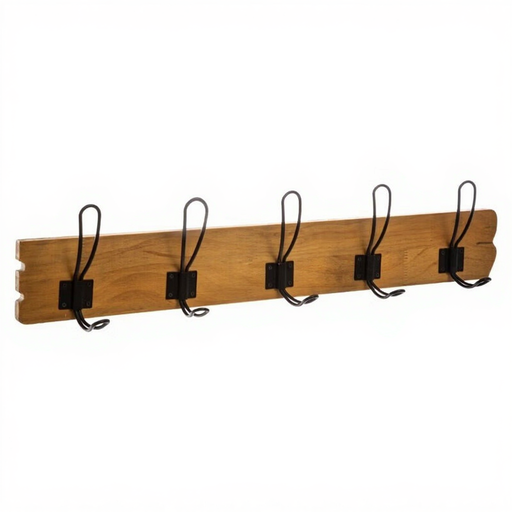
Why this product suits the profile: Measuring 63.6 cm wide and featuring five double hooks, this coat rail is ideal for households looking to keep jackets, scarves and bags organised in one clearly defined area of the hallway.
The product details clearly specify the dimensions, material and number of hooks. Buyers should nevertheless check the individual load limit before mounting it.
A pine wood frame, iron hooks and double hooks provide a practical combination for everyday use in the hallway.
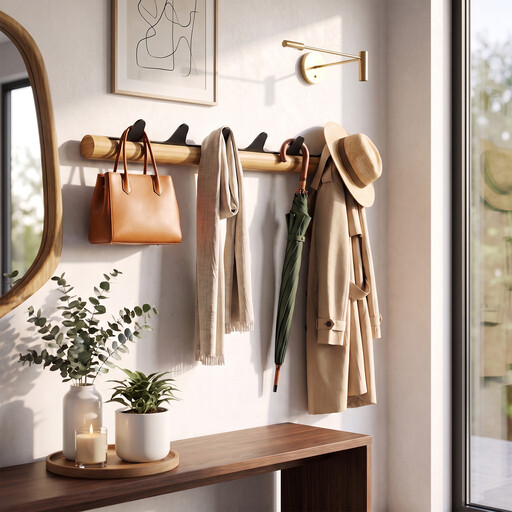
Why this product suits the profile: The combination of FSC-certified rubberwood and aluminium hooks is designed for users who pay close attention to material specifications, surface protection and clearly stated load capacity.
According to the product details, it features six hooks, a lacquered finish and a maximum total load of up to 30 kg. The wall anchors must be suitable for the substrate.
Six rounded hooks, FSC-certified rubberwood and a water-repellent lacquered finish, according to the product description.
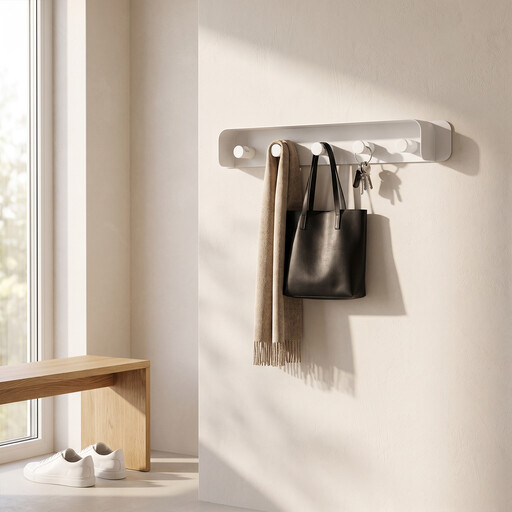
Why this product suits the profile: The combination of five hooks and a floating shelf is ideal for family hallways where jackets, bags and small everyday items need to be organised together.
The product details specify a maximum load of 25 kg and a groove on the hooks. The fixing should be loaded evenly before use.
Aluminium construction, five hooks, rubber wall contact points and additional shelf space, according to the product description.
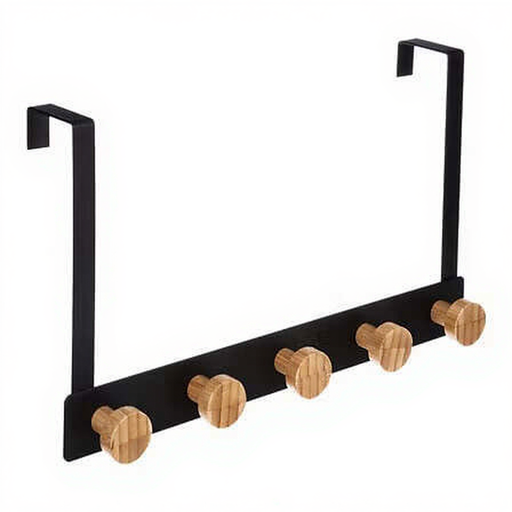
Why this product suits the profile: This over-door rack with five hooks fits over a suitable standard door without drilling and can easily be taken with you when you move.
The design is specified for doors up to 4 cm thick. Before buying, check the door rebate, clearance from the frame and whether the weight will be distributed evenly.
Five steel or iron hooks, tool-free installation and space-saving use on suitable internal doors.
We have put together a complete, regularly updated list of products that fully meet these strict selection criteria and the safety regulations applicable in the EU.
Before drilling, it helps to mark the position with masking tape. Position the coat rack so that doors can open fully and coats do not hit furniture or walls. If you are mounting several individual wall hooks, the spacing should suit the width of the items being hung.
After installation, it is advisable to check the screws again after a few days. If you have a hook rail in the bathroom, keep the surface dry. Care for wood with a soft cloth; metal and painted surfaces should not be treated with harsh cleaning products.
For one person, three to five hooks may be sufficient. Families often benefit from five to eight hooks or several separately mounted wall hooks. The key factors are the number of people in the household, how bags are used and the available wall width.
An over-door rack is one no-drilling option. Adhesive solutions should only be considered for smooth, clean and sufficiently strong surfaces. For heavy coats and consistently high loads, screw-mounted installation with suitable wall anchors is generally the more reliable choice.
Its lifespan depends on the material, installation, moisture and load. A correctly secured coat rack that is not used beyond its maximum load capacity can provide many years of everyday use. Screws and hooks should be checked regularly for loosening, rust or damage.