
Lieferung heute & morgen

Qualitätsgarantie

Willkommens-Angebote freischalten: KOSTENLOSE Lieferung | Bis zu 80 % RABATT | Kostenlose 30-Tage-JoyPlus-Testphase
App herunterladen
A garden hose is rarely where you need it: on the lawn, in the way of the garden furniture or unevenly coiled next to the tap. A suitable wall-mounted garden hose holder can save space and help prevent the hose from kinking, twisting or being damaged by garden tools.
But price isn’t the only thing to consider. Some models look sturdy in product photos but offer little support for the hose. Others are described as rust-resistant when they only have a thin coating. The stated hose length can also be misleading if extension hoses or connectors are included in the calculation.
Depending on its length, diameter and how much water is left inside, a garden hose can be heavier than you might expect. A basic wall-mounted hose holder therefore needs to support not only the hose’s own weight, but also the pulling force involved when you take it on and off. If there’s no clear information about the construction or recommended use, assess the holder with care.
The description rust-resistant garden hose holder doesn’t automatically mean lasting protection in all outdoor conditions. The base material, surface treatment and installation all matter. Coated steel or iron can reduce exposure to moisture, but the coating shouldn’t be damaged or left in contact with standing water.
A compact garden hose holder is designed for hanging up a hose you already own. A garden hose reel also winds the hose up neatly. If you regularly pull a long hose across a large area, you may need a hand crank, a detachable reel or a hose trolley. Before buying, measure the reach you actually need and the space available on the wall.
Plastic, coated iron and steel are all options for outdoor installation. With a suitable design, metal models provide firm support and can handle heavier loads when installed correctly. Look for details such as coated steel, treated iron or a clearly described protective coating.
A coating will only last if it isn’t badly scratched during installation. Check the holder from time to time for chips and clean it with a suitable cloth. If you’re mounting it on a damp side of the house, leave enough space between the holder and any surface that stays wet.
A good wall-mounted hose holder shouldn’t support the hose on just one narrow edge. A wider, rounded guide spreads the pressure and reduces sharp kinks. For long or thicker hoses, make sure the holder has enough capacity for the amount of hose you need to store.
It’s also useful to choose a design that lets you place and remove the hose without having to thread it all the way through. Rubber strips can help protect contact points, but they’re no substitute for secure fixings.
Before installation, check:
The included screws and wall plugs are convenient, but they may not suit every wall. Solid brick, concrete, timber and cavity walls may all need different fixings.
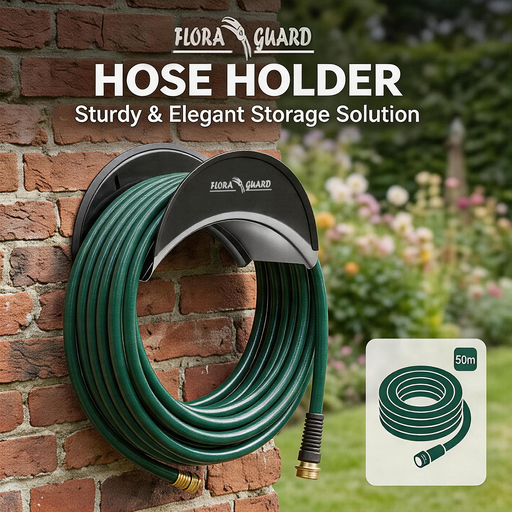
Why it suits this need: This compact holder is ideal if you want to store an existing hose neatly on a wall and don’t need an automatic winding mechanism.
Wall mounting keeps the hose off the ground. The coated iron construction and rubber strips help protect contact points and guard against scratches.
29-cm holder made from coated iron; compact design for hanging a hose by hand.
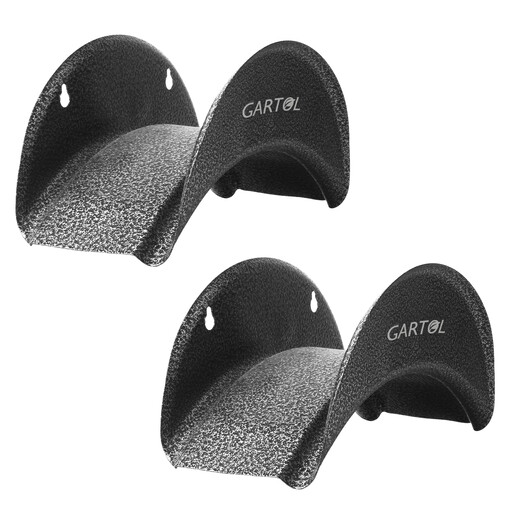
Why it suits this need: With two holders in the set, it’s a good choice for homes, yards or gardens where you need more than one storage point.
The product details specify that it’s suitable for standard garden hoses up to 38 metres long. Each holder is mounted using two purpose-made slots.
Two wall holders made from treated steel; screws and wall plugs are included.
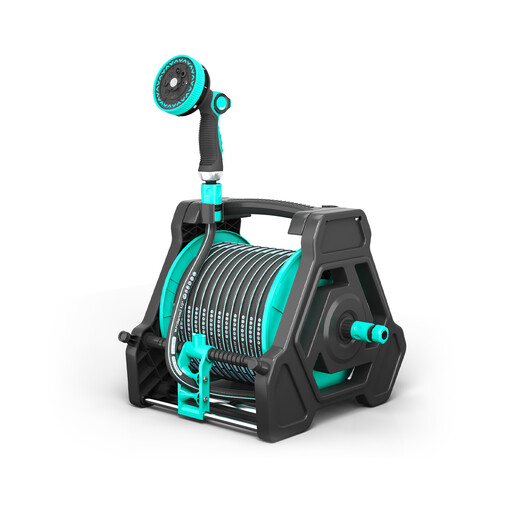
Why it suits this need: This set is designed for regular watering and cleaning, with controlled hose handling and extra connectors for added convenience.
The built-in winding function and design, described as helping to prevent kinks and tangles, mean you’re less likely to leave the hose lying loose after use.
30-metre hose reel, 2-metre connector hose and spray gun with eight spray patterns; detachable wall mounting.
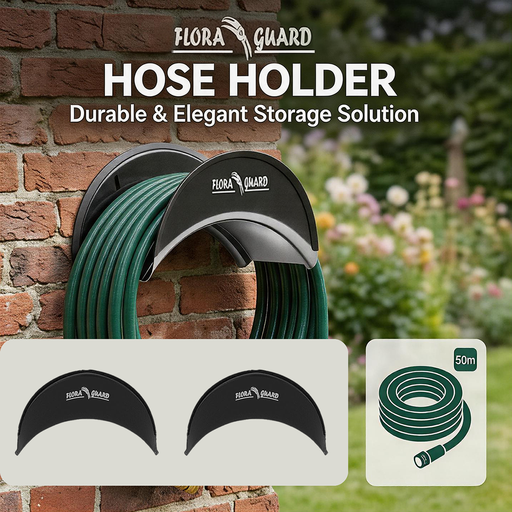
Why it suits this need: This two-pack is a handy option if you want to equip, for example, both the front and back garden or two separate outdoor areas.
The included screws and wall plugs make it easier to plan the installation. The rubber strips reduce direct contact between the hose and holder.
Two 29-cm holders made from coated iron; protective strips and fixings are included.
We’ve put together a complete, regularly updated list of products that meet these strict selection criteria and fully comply with the safety regulations in force in the EU.
Even the right metal garden hose holder will only protect your hose if you use it correctly. After watering, let as much water as possible drain out before hanging the hose up. This reduces the load on the holder. Avoid tight loops, and don’t pull the hose sideways out of the holder with excessive force.
If you’re using a reel, guide the hose evenly as you wind it up. With an open hose hanger, it’s best to coil the hose loosely in wide loops. Before a frost, store it somewhere dry and frost-free unless the manufacturer recommends otherwise.
First, choose a sturdy spot and mark the drilling points. Use wall plugs and screws suited to the wall material. The holder should sit firmly against the wall and shouldn’t move under load. If you’re unsure about the wall, seek advice from a suitably qualified professional.
It depends on how you’ll use it. A basic holder saves space and doesn’t need a crank or winding mechanism. A reel can be more practical if you use your hose often, have a long hose or move between different areas. However, it’s usually larger and needs more space for installation.
There’s no reliable one-size-fits-all answer. Its lifespan depends on the material, coating, wall fixings, UV exposure, moisture and load. Regular visual checks, suitable installation and storing the hose somewhere dry when it’s not in use can all help extend its working life.