
Lieferung heute & morgen

Qualitätsgarantie

Willkommens-Angebote freischalten: KOSTENLOSE Lieferung | Bis zu 80 % RABATT | Kostenlose 30-Tage-JoyPlus-Testphase
App herunterladen
A new TV stand is meant to enhance your living room, but the sheer number of options can quickly become overwhelming. Small yet crucial mistakes often lead to a purchase that proves impractical or visually disappointing in the long run. Before you decide on a model, it's wise to understand the typical pitfalls that often only become apparent after assembly.
Many buyers focus on design and overlook three critical weaknesses:
To avoid a bad purchase, you should base your choice on objective criteria. These three aspects are the foundation for a sound decision.
The material determines not only the look but also the stability and lifespan of your furniture. While solid wood is a high-quality but maintenance-intensive option, engineered woods like MDF (Medium-Density Fibreboard) offer a good compromise between stability and price. They are generally more resistant to warping and can bear more weight than simple particleboard.
Always pay attention to the maximum load capacity specified by the manufacturer. This figure, given in kilograms (kg), indicates how much weight the unit can safely support. Remember to account for not just your TV's weight, but also that of all additional devices. Whether you prefer a TV stand in white, black, or a natural wood finish—stability is the priority.
The right size is crucial for both function and aesthetics. A basic rule of thumb is that the TV stand should be at least 10–15 cm wider than the television on both sides. This ensures visual balance and provides a stable base.
Before buying, carefully measure both your television and the designated space in the room. Also, consider what height is comfortable for you. A low modern lowboard often positions the screen at eye level when you're sitting on the sofa, while a taller TV console can offer additional storage space.
Think about everything you need to store. Open compartments are ideal for devices controlled by a remote, such as receivers or gaming consoles. Closed drawers and doors help to keep accessories, cables, and other items out of sight, ensuring a tidy appearance.
For specific needs, specialised models are available. A TV board with LED lighting can create an atmospheric ambiance and is popular with gamers. A TV stand with an electric fireplace becomes a cosy focal point in the room, providing extra warmth on cold days.
Based on the criteria mentioned, we have selected a few models for different requirements and living styles.

Why it's a great fit: Ideal for those who want to create an especially cosy and inviting atmosphere in their living room. The integrated fireplace becomes a visual centrepiece and provides comfort on cool evenings.
The MDF construction provides the necessary stability (avoiding pitfall #1). At the same time, its functionality goes far beyond being a mere surface, creating real added value.
Combines storage, a TV unit, and a heating element in one. The corner design is also space-saving for smaller living rooms.
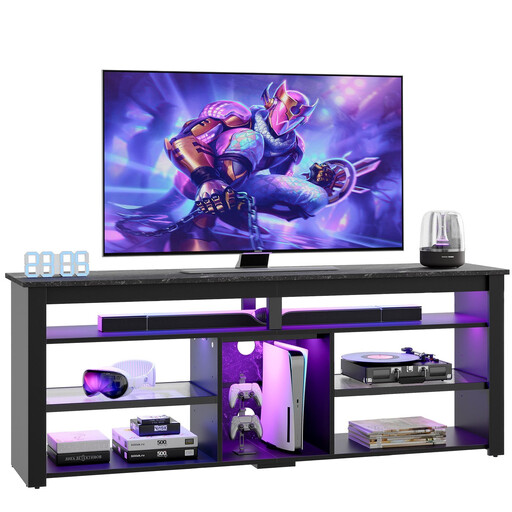
Why it's a great fit: Designed for users with extensive tech gear. The open compartments and adjustable shelves offer space for consoles and soundbars, while the LED lighting creates an immersive atmosphere.
The open structure and raised upper tier simplify cable management (avoiding pitfall #2). With a load capacity of 80 kg, it is also well-equipped for large TVs and heavy devices (avoiding pitfall #1).
According to the manufacturer, the dynamic RGB LED lighting offers 366 modes and can be controlled via remote. The adjustable acrylic shelves are a modern touch.
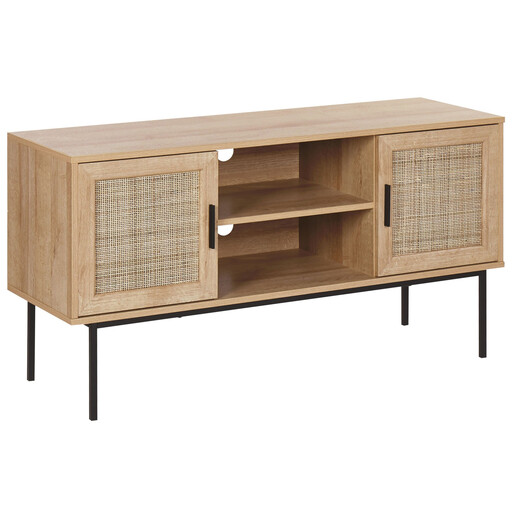
Why it's a great fit: Perfect for fans of boho style or a natural, uncluttered look. The combination of a light wood finish and rattan weave brings warmth and style to the living room without being overpowering.
The closed doors conceal clutter, while the open compartments provide space for select devices or decor. Its proportions (120 cm width) are ideal for medium-sized rooms and TVs (avoiding pitfall #3).
The design featuring a rattan weave is a stylistic element that adds character to the room. The mix of open and closed compartments offers organisational flexibility.
We have compiled a complete, up-to-date list of products that fully meet these strict selection criteria and rigorous safety standards.
The ideal height depends on your seating position. As a guideline, the centre of the TV screen should be at eye level when you are sitting on your sofa. For most living rooms, this means the top surface of a lowboard should be between 50 and 70 cm high.
MDF (Medium-Density Fibreboard) is a very common and excellent choice. It is denser and more stable than simple particleboard and is less prone to sagging. Solid wood is durable and high-quality but requires more maintenance and is heavier. The choice ultimately depends on your budget and desired style.
Measure the total width of your TV (not just the screen diagonal). The TV stand should be at least 10 cm wider than the television on each side. Additionally, always check the manufacturer's specified maximum TV size (e.g., "for TVs up to 65 inches") and the maximum load capacity in kilograms.