
Lieferung heute & morgen

Qualitätsgarantie

Willkommens-Angebote freischalten: KOSTENLOSE Lieferung | Bis zu 80 % RABATT | Kostenlose 30-Tage-JoyPlus-Testphase
App herunterladen
The right wall cladding can completely transform a room. However, the market for wall panels is filled with products whose marketing promises often don't hold up in practice. Before you invest in a quick and seemingly simple solution, it's crucial to understand the common pitfalls that can lead to disappointment and unexpected costs. This guide will help you make informed decisions and find a solution that is both aesthetically pleasing and durable.
Many DIY enthusiasts and homeowners are drawn in by visually appealing product images and simple installation promises. However, quality defects are often hidden behind the marketing.
To avoid these mistakes, focus on three core technical aspects. These determine the longevity, installation effort, and suitability of your new wall cladding.
The choice of material is the foundation for your project's success. Two materials offer particular advantages here:
Carefully review the installation requirements to estimate the actual effort involved.
Ensure that the panel's properties match the conditions in the room.
Based on these objective criteria, we have identified some products that are particularly well-suited for specific user profiles and projects.
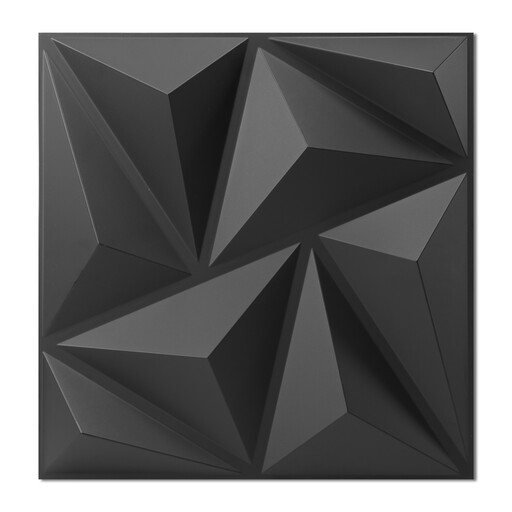
Why this product is a good fit: Ideal for quickly creating a modern accent wall in a living room or gaming room. The geometric 3D design instantly adds visual depth and a contemporary look.
Made from durable rigid PVC, not fragile foam (avoids the Material Fallacy). The self-adhesive backing simplifies installation on prepared surfaces (avoids hidden installation costs).
The material is waterproof and wipeable, allowing for use in various rooms, including kitchens, and simplifying maintenance.
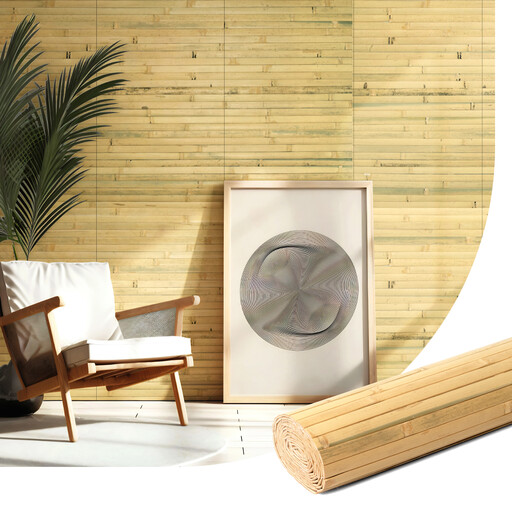
Why this product is a good fit: Perfect for anyone seeking a high-quality, natural look with a focus on sustainability. The bamboo wall cladding gives rooms a warm and organic atmosphere.
The carbonisation process increases its resistance to warping (avoids lack of durability). As a flexible roll, it also adapts to slightly uneven walls and is more versatile than rigid panels.
Made from 100% renewable bamboo. Each roll has a unique grain, resulting in a custom and high-end finish.
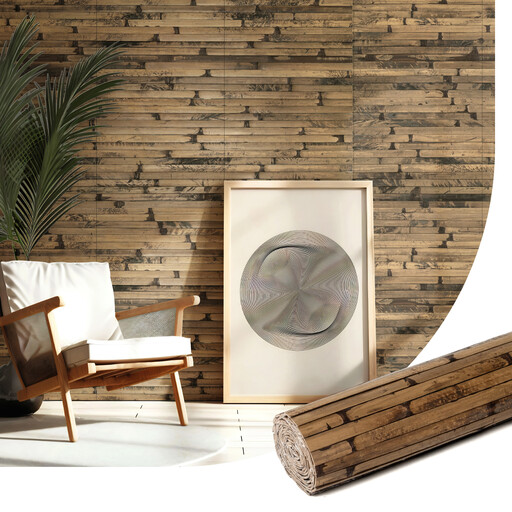
Why this product is a good fit: Supplied as a large roll (244 x 30 cm), it allows for efficient coverage of large areas. The material's flexibility permits application not only on walls but also on ceilings or for upgrading furniture.
The robust, carbonised material is designed for a long lifespan (avoids the Material Fallacy). Installation with construction adhesive ensures a permanent bond on various substrates, even for larger projects.
Extremely versatile for a unified design concept throughout the room. Ideal for walls, ceilings, and even for refining cabinets or counters.
Many wall cladding products are also excellent as ceiling panels. We have compiled a comprehensive, up-to-date list of products that meet strict selection criteria.
Yes, but the choice of material is critical. PVC panels are a safe choice for bathrooms due to their waterproof properties, even near showers or bathtubs, provided the seams are correctly sealed. Wood or bamboo panels should only be used in well-ventilated bathrooms and outside of direct splash zones, unless they are explicitly declared as waterproof.
For self-adhesive wall panels, a smooth, clean, and primed surface is essential for optimal adhesion. With flexible panels or those installed with construction adhesive, minor imperfections (up to 1-2 mm) can often be compensated for. For larger cracks or holes, the wall should be filled and smoothed before installation.
Durability heavily depends on the quality of the adhesive and the preparation of the substrate. High-quality self-adhesive panels can last for many years on an ideally prepared wall. However, in areas with high humidity or significant temperature fluctuations, the adhesion may weaken over time. Securing them with a suitable construction adhesive can significantly extend their lifespan.