
Lieferung heute & morgen

Qualitätsgarantie

Willkommens-Angebote freischalten: KOSTENLOSE Lieferung | Bis zu 80 % RABATT | Kostenlose 30-Tage-JoyPlus-Testphase
App herunterladen
A wall shelf seems like a straightforward purchase. It's meant to create storage space, bring order, and look good while doing it. In practice, however, many models prove to be a regrettable purchase. A shelf that sags after just a few months, has a surface that swells in the bathroom, or whose assembly becomes an ordeal is an unnecessary expense.
As a Joybuy Product Recommendation Officer, I analyse product information daily to help you distinguish functional, long-lasting solutions from exaggerated marketing promises. Before you make a decision, you should know the three most common pitfalls that lead to disappointment.
Regal Holz (wood shelf) may have a rustic appeal in the living room, but it's unsuitable as a Badezimmerregal (bathroom shelf) because it absorbs moisture and can warp. The surface treatment is crucial for its longevity.To avoid these problems, you should check three core parameters before buying. These determine whether a shelf will reliably perform its function for years to come.
The material is the foundation of stability and durability. Your choice should depend on the location and the desired aesthetic.
Küchenregal [kitchen shelf] near steam), it requires a protective varnish or oil to resist stains and warping. A rustikales Regal (rustic shelf) made of solid wood is often a visual highlight.Regal Industrial (industrial shelf) style, metal is very robust and easy to care for. Powder-coated surfaces offer protection against rust and scratches, making them suitable for kitchens or bathrooms as well.The stated maximum load capacity is only half the story. The interplay between the shelf's construction, its brackets, and the wall's condition is what truly matters.
Bücherregal (bookshelf).Schweberegal (floating shelf) has an elegant and minimalist look. Here, stability heavily depends on the length and thickness of the mounting rods, as well as precise installation. These models are primarily suitable for lighter decorative items or paperbacks.Standregal (freestanding shelf) doesn't require wall mounting, but for added safety, especially in households with children, it should be anchored to the wall with an anti-tip kit.Always check if the included mounting hardware is suitable for your wall. For drywall, you'll need special hollow-wall anchors; for porous older walls, you might need longer screws and universal anchors.
Instead of making a blanket recommendation, we have identified products that meet specific needs and avoid common weaknesses.
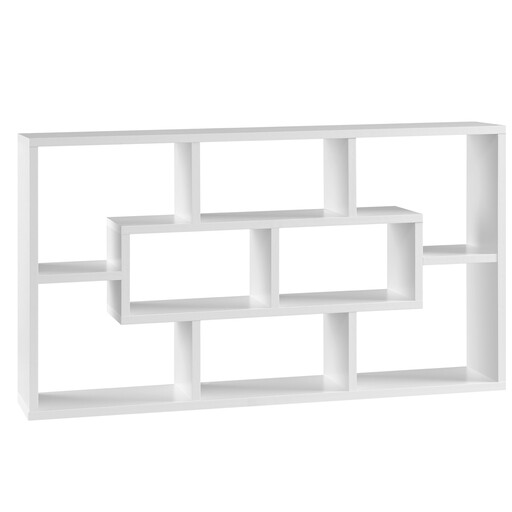
Why it's a great fit: Ideal for anyone seeking maximum storage on a minimal budget. The design is simple and functional, perfect for a first apartment, home office, or child's room. It focuses purely on the function of organisation.
The melamine coating makes the engineered wood surface water-repellent and abrasion-resistant, which addresses the typical weakness of budget shelves—a delicate surface.
Eight compartments provide structured storage with a small footprint. The stated load capacity of 5 kg per compartment is a realistic figure for everyday use.
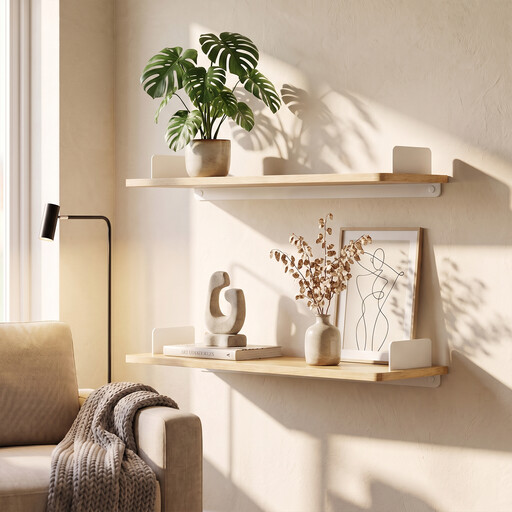
Why it's a great fit: For users who see a shelf not just as storage, but as a deliberate design element. The combination of solid wood and metal creates a high-quality, modern look.
This shelf uses FSC-certified solid rubberwood and an aluminium alloy. It bypasses the pitfall of low-quality materials, offering a demonstrably robust and durable construction.
The lacquer coating makes the wood waterproof and rust-resistant. The brackets are designed to prevent items from falling and support a stated load capacity of up to 44 lbs (approx. 20 kg).
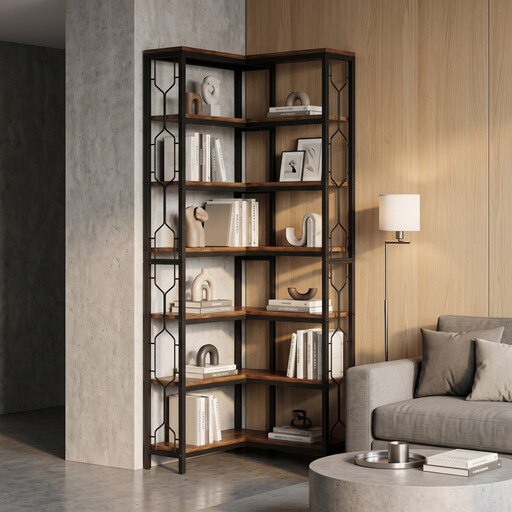
Why it's a great fit: Perfect for utilising "dead" corners in living rooms, offices, or kitchens. This freestanding shelf transforms unused areas into valuable vertical storage space.
Instead of trying to force a standard shelf into a corner, this model is specifically designed for it with its L-shaped design. It avoids the mistake of buying ill-fitting furniture and makes optimal use of the space.
Adjustable feet ensure stability on uneven floors. The included anti-tip kit for wall anchoring increases safety, addressing the pitfall of unstable shelves.
Kitchens, in particular, have special requirements for material and functionality. We've compiled a selection of shelves that meet these criteria.
1. How do I securely mount a wall shelf on drywall? Standard anchors are unsuitable for drywall (plasterboard). Instead, use special hollow-wall anchors made of metal or plastic. These expand behind the board, providing significantly higher load-bearing capacity. Be sure not to exceed the maximum weight specified by the anchor manufacturer.
2. What materials are suitable for a bathroom shelf? In the bathroom, you need materials that are resistant to moisture and temperature fluctuations. Powder-coated stainless steel, aluminium, glass, or plastic are recommended. If you prefer a Regal Holz (wood shelf), ensure it is a water-resistant wood like bamboo or that the wood is sealed with a special marine or yacht varnish.
3. What is the difference between a wall shelf and a floating shelf? A classic wall shelf is attached to the wall with visible brackets or supports that hold the shelf board from below. A Schweberegal (floating shelf), on the other hand, has concealed mounting. Metal rods are anchored into the wall, and the shelf board is slid onto them. This creates the impression that the shelf is "floating" on the wall. Floating shelves have a lighter visual appearance but often have a lower load capacity than shelves with visible brackets.