
Lieferung heute & morgen

Qualitätsgarantie

Willkommens-Angebote freischalten: KOSTENLOSE Lieferung | Bis zu 80 % RABATT | Kostenlose 30-Tage-JoyPlus-Testphase
App herunterladen
A wall shelf might seem like a straightforward purchase. However, navigating between flimsy designs and materials that show wear after a short time makes the choice more complex than you might think. Many shelves that look appealing online turn out to be impractical or unstable. This guide will show you what to look for to find a functional and durable solution for your home, whether it's a wood wall shelf for the living room or a practical shelf with hooks for the entryway.
Before we dive into the key features, let's look at three common problems that can lead to disappointment. Understanding these weaknesses will help you scrutinise marketing claims.
Floating shelves with invisible mountings are particularly susceptible to this. An inadequate wall bracket or insufficient material thickness can cause the shelf to bend downwards over time, even under a light load. This not only looks unsightly but also poses a safety hazard.solid wood wall shelf offers far greater stability and durability.decorative wall shelf isn't automatically suited for everyday use. Often, the shelf surfaces are too narrow for books, the spacing between tiers is too small for taller items, or the overall construction isn't designed to function as a wall-mounted bookshelf. The result is wasted, yet costly, wall space.To avoid these problems, you should check three core parameters. These will help you find a wall shelf that meets your needs both stylistically and functionally.
The material is the foundation for stability and longevity.
rustic wall shelf or classic interiors. Pay attention to the type of wood (e.g., pine, oak, paulownia) and the surface treatment. A lacquer or oil finish protects the wood from moisture and wear.modern wall shelf or an industrial-style look. A black metal wall shelf is a timeless classic.wall-mounted bookshelf or for use in the bathroom.The installation method determines the shelf's stability and appearance.
wall board is slid onto metal rods anchored in the wall. This method creates a minimalist look. The length and strength of the rods, as well as the wall's condition, are crucial. They are often not the first choice for heavy loads.wall-mounted bookshelf.shelf with hooks or integrated rods offers extra utility in the entryway, kitchen, or bathroom. It's important that the hooks are firmly connected to the frame and not just glued on.Before buying, measure not only the available space on your wall but also the items you plan to place on the shelf.
decorative wall shelf can be narrower.Here are a few models tailored to specific use cases that successfully avoid the pitfalls mentioned.
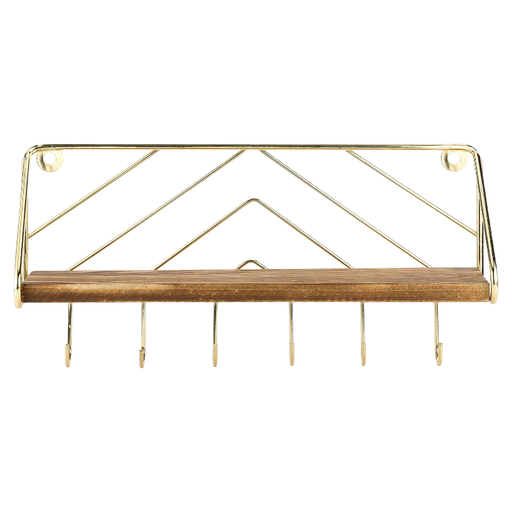
Why This Fits Their Persona: Ideal for those who need a compact solution in the hallway or entryway for keys, mail, and small decorative items. It combines a shelf and hooks in a small footprint.
The solid wood construction avoids the drawbacks of cheap particle board. The visible mounting eyelets ensure a stable and straightforward wall installation, unlike wobbly, invisible brackets.
Combines a shelf with hooks (6 total) and a display surface. The torched wood finish and brass accents provide an appealing rustic look.
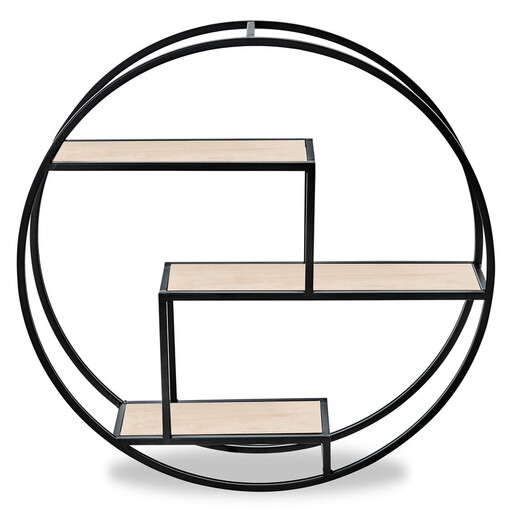
Why This Fits Their Persona: Perfect for anyone looking for a functional art piece. This shelf is a statement piece that serves as a decorative wall display while also providing space for select items.
The wrap-around metal frame provides a clean, stable structure and secure wall mounting. This bypasses the sagging issue that can occur with pure floating shelves. The material combination is clearly declared.
The abstract, geometric design makes it an eye-catcher. The combination of a black, powder-coated metal frame and Paulownia wood shelves has a modern and high-quality feel.
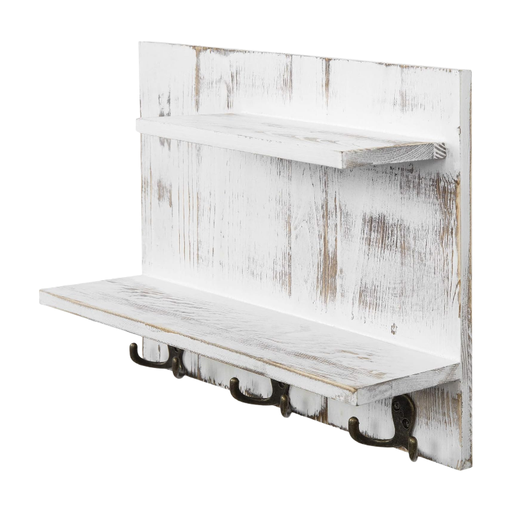
Why This Fits Their Persona: Suitable for users looking for a rustic wall shelf for the bathroom, kitchen, or hallway. It provides storage for everyday items and hooks for towels or jackets, fitting well with a farmhouse aesthetic.
By using solid wood with a protective whitewash finish, it is more resistant to moisture than unprotected particle board. The integrated construction with hooks is more stable than add-on solutions.
Offers two shelves and six hooks for maximum functionality. It mounts via discreet keyhole brackets on the back, ensuring a clean look.
We've curated a complete, up-to-date list of products that fully meet these strict selection criteria and comply with all relevant regulations.
The load capacity of a floating shelf depends on three factors: the design of the shelf itself, the quality of the included mounting hardware, and, most importantly, the type of wall you have. A shelf mounted on a solid concrete wall can support significantly more weight than the same shelf on a drywall. Always check the manufacturer's specifications for maximum load capacity and use special hollow-wall anchors for drywall.
Humidity is high in the bathroom, so material choice is critical. Recommended materials include solid wood with a water-repellent lacquer or oil finish, stainless or powder-coated steel, and high-quality plastic. Avoid unsealed MDF or particle boards, as they can swell and lose their shape when exposed to moisture.
For mounting on drywall, you should never use standard universal wall plugs. Instead, opt for special hollow-wall anchors (e.g., toggle bolts or metal expansion anchors). These anchor themselves behind the drywall panel and provide significantly greater stability. If possible, use a stud finder to locate the wood or metal studs in the wall and attach the shelf directly to them to ensure maximum load capacity.