
Lieferung heute & morgen

Qualitätsgarantie

Willkommens-Angebote freischalten: KOSTENLOSE Lieferung | Bis zu 80 % RABATT | Kostenlose 30-Tage-JoyPlus-Testphase
App herunterladen
A wall shelf might seem like a simple purchase, but the reality is often different. Many buyers end up frustrated with sagging boards, unusable mounting hardware, or a finish that looks cheap after just a few months. As your Joybuy Product Recommendation Officer, I'll help you identify the typical pitfalls and make an informed decision that suits your living space and your needs.
Before you decide on a model, you should be aware of the most common problems that often only become apparent after the purchase.
To avoid a bad purchase, you should check three core aspects. These will help you objectively assess the quality and suitability of a wall shelf.
The material determines not only the look but also the durability and where the shelf can be used.
The method of attachment is crucial for safety and maximum load-bearing capacity.
Consider the primary purpose the shelf will serve. A delicate decorative shelf in the living room has different requirements than a functional shelf with hooks in the hallway that needs to support heavy coats and bags. The depth of the shelf board is also relevant: you'll need more surface area for books than for spice jars.
Here are some recommendations tailored to different user profiles and needs.
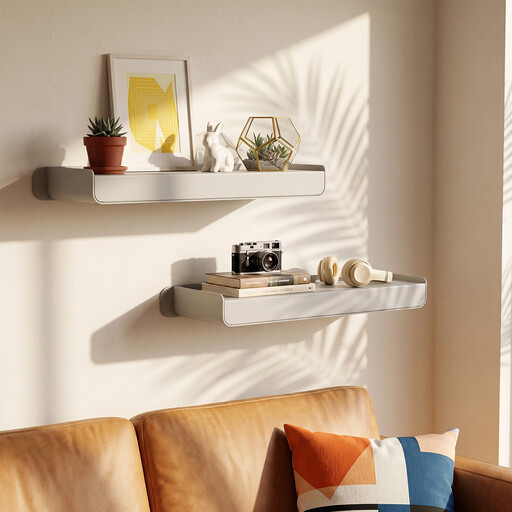
Why it's a great fit: Ideal for those who appreciate a clean aesthetic and high-quality materials. The minimalist design blends seamlessly into modern living concepts and serves as a stylish stage for decorative objects or books.
Crafted from robust aluminium, this shelf avoids the trap of low-quality materials. It's dimensionally stable, rust-resistant, and won't swell—unlike cheap particle board.
Winner of the German Design Award 2022. The back is fitted with a rubber pad that protects the wall and compensates for minor surface imperfections.
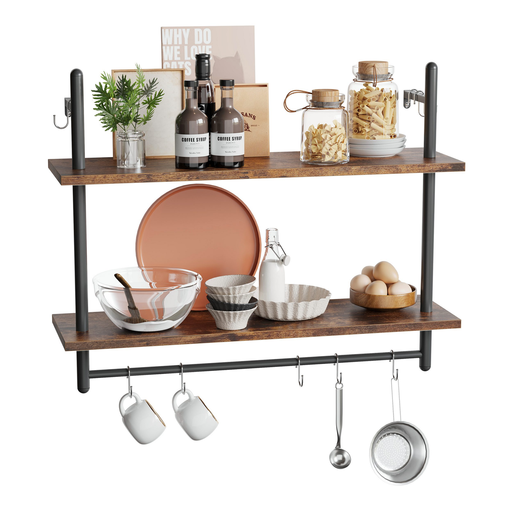
Why it's a great fit: Perfect for the kitchen, hallway, or bathroom where both shelf space and hanging options are needed. This shelf combines both in a space-saving, industrial-style design.
The sturdy construction of metal tubing and reinforced boards is designed for functionality and load capacity, thus avoiding the problem of sagging shelves found in purely decorative models.
Offers two shelves plus 8 S-hooks for flexible organisation of mugs, towels, or kitchen utensils. The load capacity per shelf is 9 kg, according to the manufacturer.
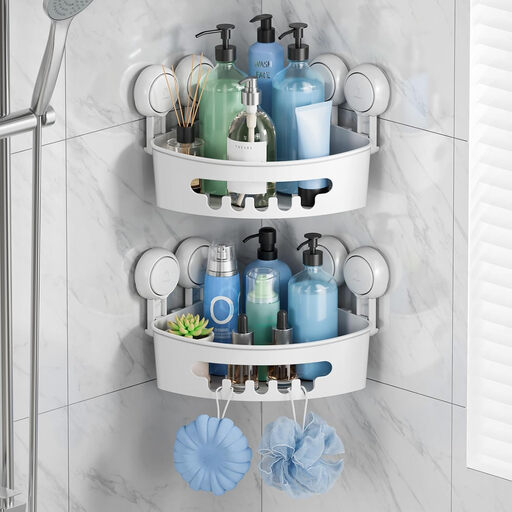
Why it's a great fit: The ideal solution for anyone needing extra storage in the shower or bathroom without damaging the tiles. Perfect for rental apartments and for quick, hassle-free organisation.
This system completely bypasses the pitfall of unsuitable wall plugs. The suction cup system is specifically designed for smooth, non-porous surfaces like tiles or glass, providing a secure hold.
Tool-free, no-drill installation. The design with drainage holes ensures that water runs off and toiletries stay dry. According to the manufacturer, it can hold up to 10 kg.
Bathrooms, in particular, have special requirements for materials and mounting. We have compiled a selection of products that meet these criteria.
The key to a secure installation is matching it to your wall. First, identify the wall type (e.g., concrete, brick, drywall). Then, use the appropriate anchors—hollow-wall anchors are suitable for drywall, while expansion anchors are for brick or concrete walls. Don't blindly rely on the included hardware. A spirit level will help you align the shelf perfectly straight.
Bathrooms have high humidity. Materials like aluminium, stainless steel, or high-quality ABS plastic are the right choice here, as they are rustproof and waterproof. If you prefer a wooden shelf, make sure it is made of solid wood with a protective lacquer or from engineered wood specially sealed for humid environments. Untreated particle board is unsuitable.
The actual load capacity of a floating shelf depends on three factors: the stability of the wall, the quality of the anchors used, and the construction of the shelf itself. While manufacturer specifications often range from 10 to 20 kg, it is advisable to assume a lower load for everyday use, especially on drywall. For heavy items like large coffee table books, a shelf with visible brackets is often the safer choice.