
Lieferung heute & morgen

Qualitätsgarantie

Willkommens-Angebote freischalten: KOSTENLOSE Lieferung | Bis zu 80 % RABATT | Kostenlose 30-Tage-JoyPlus-Testphase
App herunterladen
A wall shelf is more than just a storage surface. It creates order, utilises vertical space, and adds decorative accents. But the sheer number of options can be overwhelming, leading to buyer's remorse that only becomes apparent after installation. A sagging shelf or unsuitable mounting hardware are common frustrations. This guide will help you identify the crucial features to make an informed decision.
Many products promise more than they deliver. Pay attention to these three critical points to avoid disappointment:
To avoid the problems mentioned above, you should check the following three aspects before buying. They determine the shelf's durability, safety, and functionality.
The material is the foundation for both stability and aesthetics. A solid wood wall shelf is robust and durable but comes at a higher price point. A common and excellent alternative is E1-grade MDF board, which offers high density and dimensional stability. Look for this standard. For use as a kitchen shelf or bathroom shelf, a moisture-resistant surface, such as a high-quality PVC coating or lacquer finish, is essential. A simple white wall shelf or a striking industrial-style wall shelf with metal elements can also create targeted design accents.
The type of mounting determines both stability and appearance. A floating shelf (also known as a shelf board) creates a minimalist look with a concealed bracket. Here, the quality of the metal bracket and the condition of the wall are crucial. Check the specified maximum load capacity and compare it with your intended use. A wall-mounted bookshelf requires a higher load capacity than a shelf for light decorative items. For unused corners, a corner wall shelf is a clever solution that often gains extra stability from being anchored on two sides.
Consider exactly what purpose the shelf will serve. Do you need a simple surface or additional, concealed storage? A wall shelf with a drawer is ideal for stowing away small items like keys or charging cables. A modular hanging shelf system offers flexibility in arrangement. The depth of the shelf is also an important factor: a depth of at least 20 cm is recommended for books, while narrower models are sufficient for spices or picture frames.
Here are some recommendations tailored to specific user profiles and the quality criteria mentioned above.
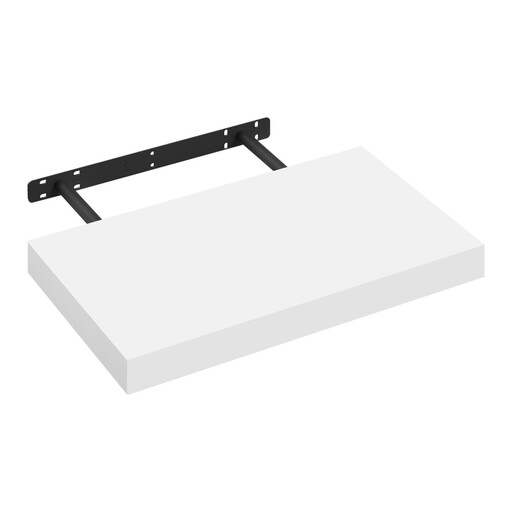
Why This Fits Their Persona: Ideal for anyone seeking a simple, modern, and affordable solution for displaying decor, small books, or plants. Its minimalist design fits into almost any room without being obtrusive.
The shelf is made from E1-grade MDF, a defined material standard. The clear specification of a 10 kg load capacity, when correctly mounted on a suitable wall, creates transparency and prevents overloading.
The concealed wall bracket provides a clean, floating shelf look. The matte, water-repellent surface is easy to clean and durable.
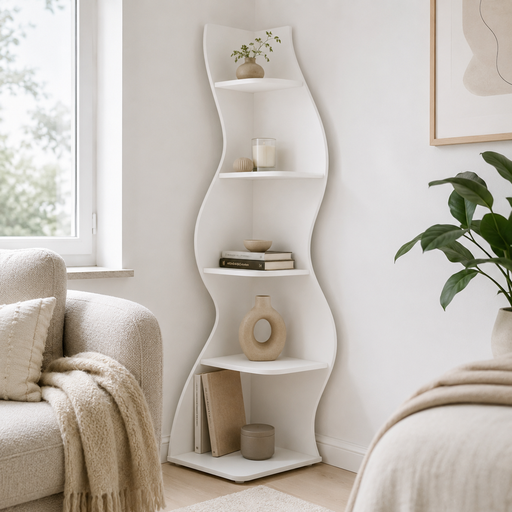
Why This Fits Their Persona: Perfect for those looking to transform unused corners into stylish storage. The unique design is an eye-catcher and offers five tiers of space for decor, plants, or books.
Instead of a single, potentially unstable shelf board, this model offers a well-designed vertical structure. Mounting it in a corner provides a high degree of stability that is difficult to achieve with a standard floating shelf.
Maximises the use of otherwise dead space in corners. The modern, curved design serves as both a functional piece of furniture and a decorative wall object.
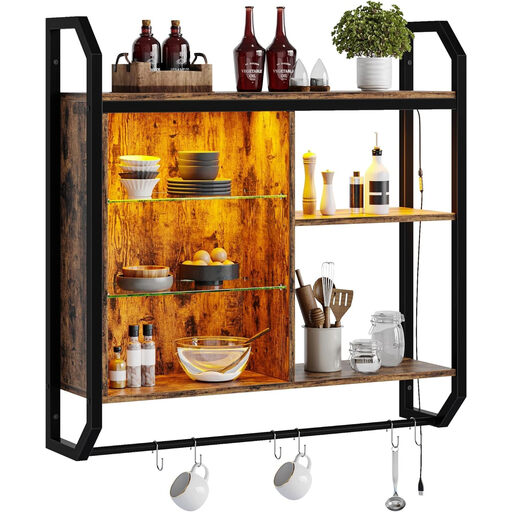
Why This Fits Their Persona: Engineered for environments that demand more than just a surface. With an integrated towel bar, S-hooks, and LED lighting, it's a multifunctional solution for the kitchen, bar area, or bathroom.
This shelf bypasses the pitfalls of weak materials and low load capacity with a robust construction of steel pipes and sturdy wood planks. The total load capacity of up to 68.5 kg is designed for demanding applications.
High load capacity and multifunctional features (LED light, hooks, bar) in a striking industrial design. The height-adjustable glass shelves offer additional flexibility.
We've compiled a complete, up-to-date list of products that fully meet these strict selection criteria and safety standards.
Solid walls made of concrete or brick offer the highest stability and are suitable for almost all types of shelves. Expansion anchors are typically used for these. For drywall or hollow walls, special hollow-wall anchors (e.g., toggle or spring-toggle anchors) must be used, as they expand behind the board. Before purchasing, check your wall type and whether the included mounting hardware is suitable. When in doubt, purchase appropriate anchors and screws from a hardware store.
The actual load capacity depends on three factors: the quality of the wall, the correctness of the installation, and the stability of the shelf itself. The manufacturer's specification is a guideline for optimal installation on a solid wall. As a rule of thumb, distribute the weight evenly and place heavy objects as close to the wall bracket as possible. When mounting on drywall, you should prudently reduce the stated maximum load by 30–50%.
Yes, as long as it is explicitly designated for that purpose. The surface seal is the crucial factor. An MDF shelf with a waterproof lacquer or a high-quality, seamlessly bonded PVC coating is suitable for humid environments. Untreated or thinly foiled MDF would swell and warp from the moisture. Look for product descriptions like "moisture-resistant" or "suitable for bathrooms".